Companion planting guide & chart
UK · updated June 2026
Some crops grow better together; others are best kept apart. This is the complete chart for all 40 vegetables in our database — what to plant next to each one, what to keep away, the flowers worth tucking in, and which old pairings actually hold up. Written from a real UK allotment, not copied from an almanac.
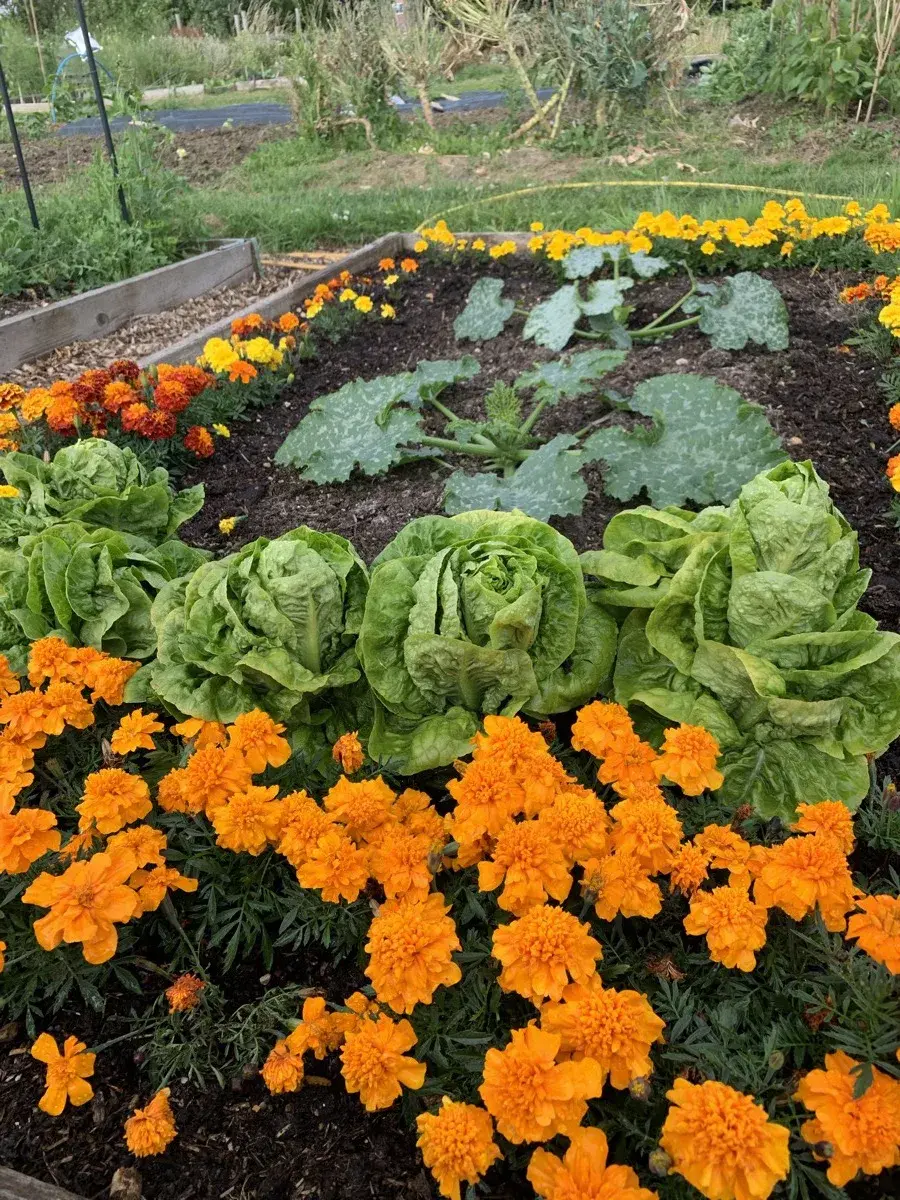
Why companion planting works
Plants interact. Some partnerships have proven benefits:
- Pest confusion — Carrots and onions mask each other's scent from carrot fly and onion fly
- Nitrogen fixing — Beans and peas pull nitrogen from the air and store it in the soil. Plant brassicas where legumes grew last year
- Living mulch — Low-growing lettuce or spinach under taller beans shades the soil, reducing weeds and keeping roots cool
- Physical support — The classic “three sisters”: sweetcorn supports beans, which fix nitrogen for squash, which shades the soil
Jump to a crop
Companion planting combinations, in detail
Crop by crop — what to grow alongside each one, the flowers worth tucking in, and what to keep apart. These are the pairings that have actually earned their place on our plot.

 Lettuce
 Spinach
 Carrots
 Radishes

 Broad beans
 Peas
Peas


 Beetroot
 Tomatoes
Flowers that belong on the veg patch
Flowers aren't just decorative on an allotment — they're some of the hardest-working companions you can plant. They attract pollinators, repel pests, and make the whole plot look better. These four earn their place on our plot every single year:
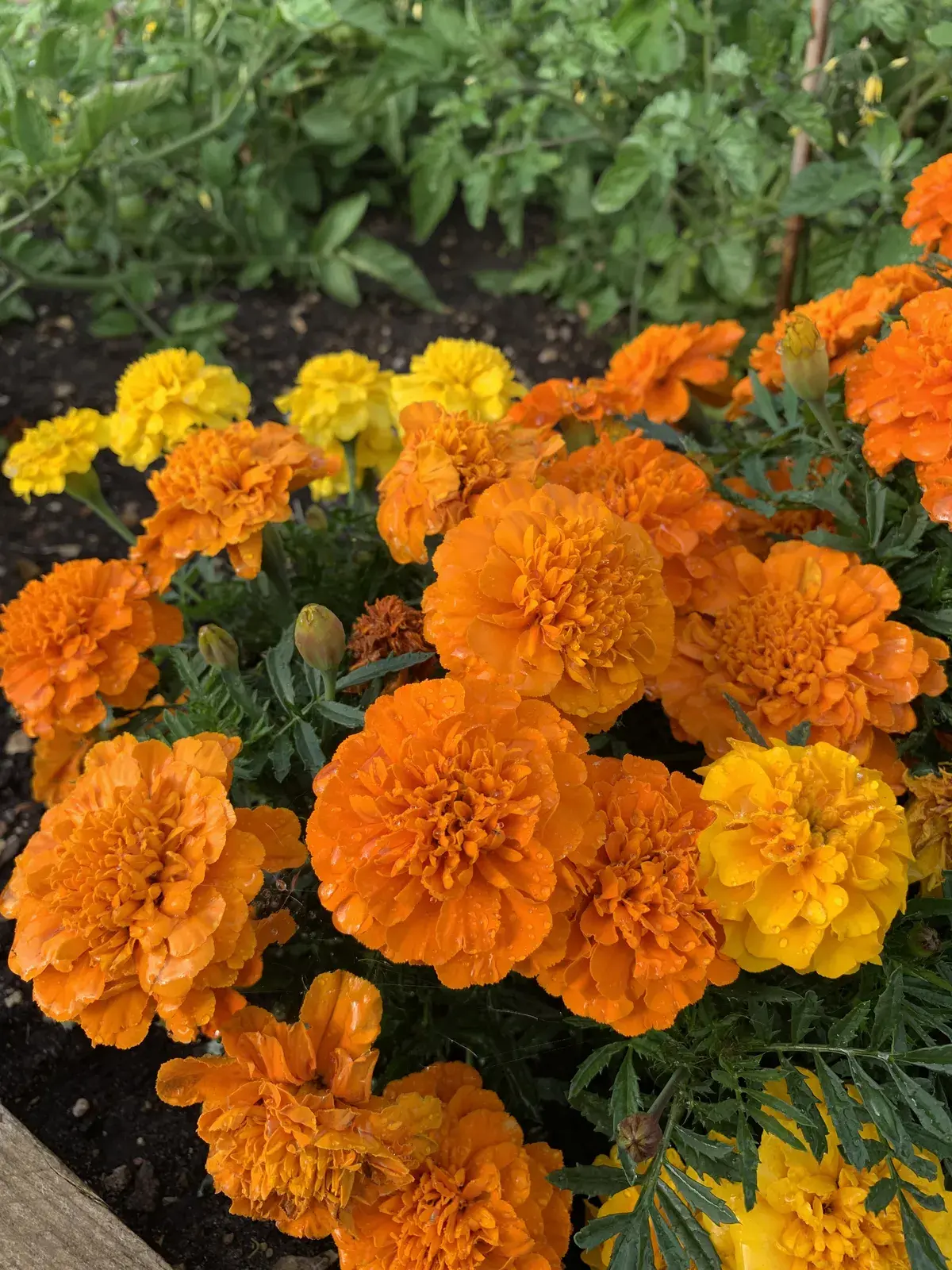
Marigolds (Tagetes)
The allotment essential. French marigolds repel whitefly from tomatoes and deter aphids. Their roots also release a chemical that discourages root-knot nematodes. Plant them around the edges of beds or between rows of tomatoes, peppers, and brassicas.
Plant with: Tomatoes, peppers, aubergines, beans, courgettes, cucumbers, brassicas
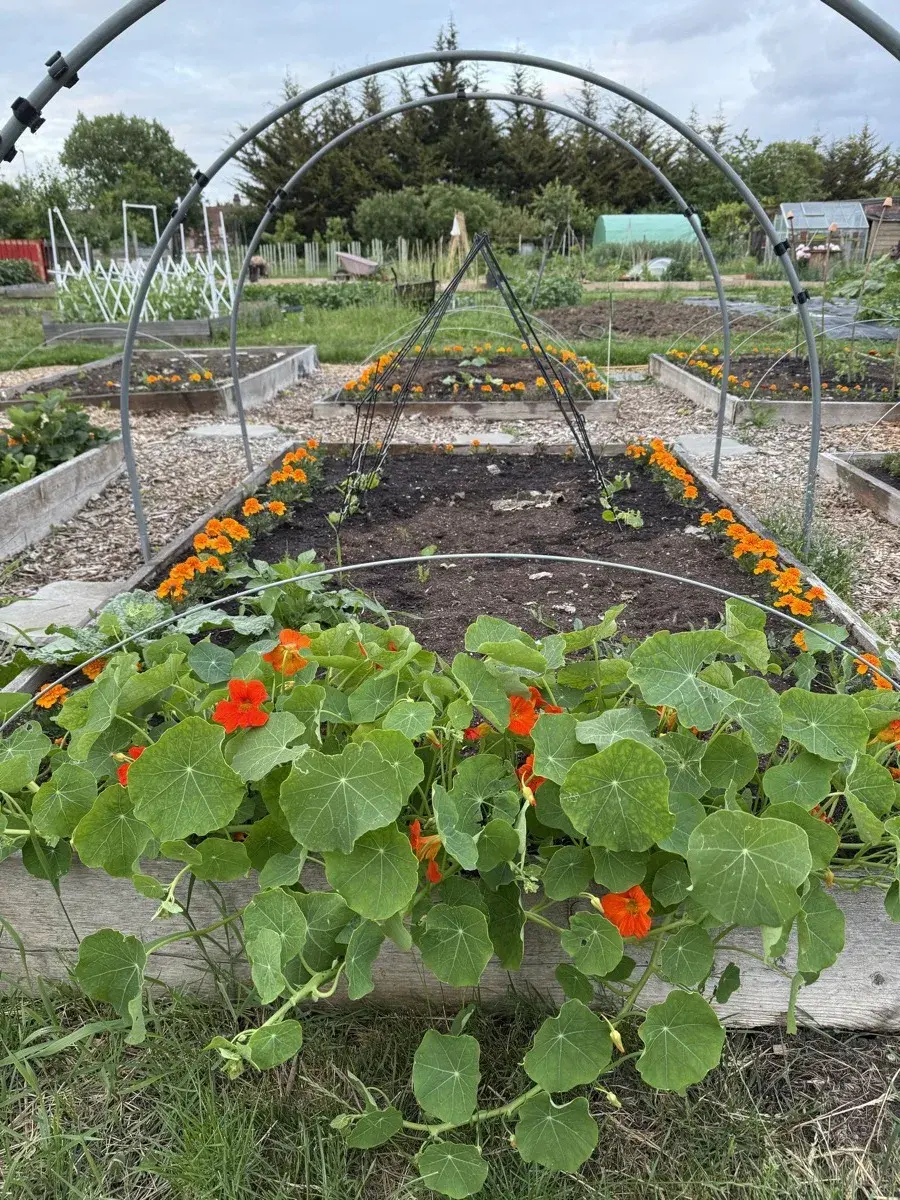
Nasturtiums (Tropaeolum)
Brilliant as a “trap crop” — blackfly and caterpillars prefer nasturtiums to your actual vegetables. The classic UK trick: grow a few near your broad beans, whose growing tips get swarmed with blackfly — the nasturtiums (and a pinch-out of the bean tips) draw them off. Plant near brassicas too, to lure cabbage whites away. The leaves and flowers are edible — peppery in salads.
Plant with: Broad beans, brassicas, courgettes, beans, cucumbers, squash
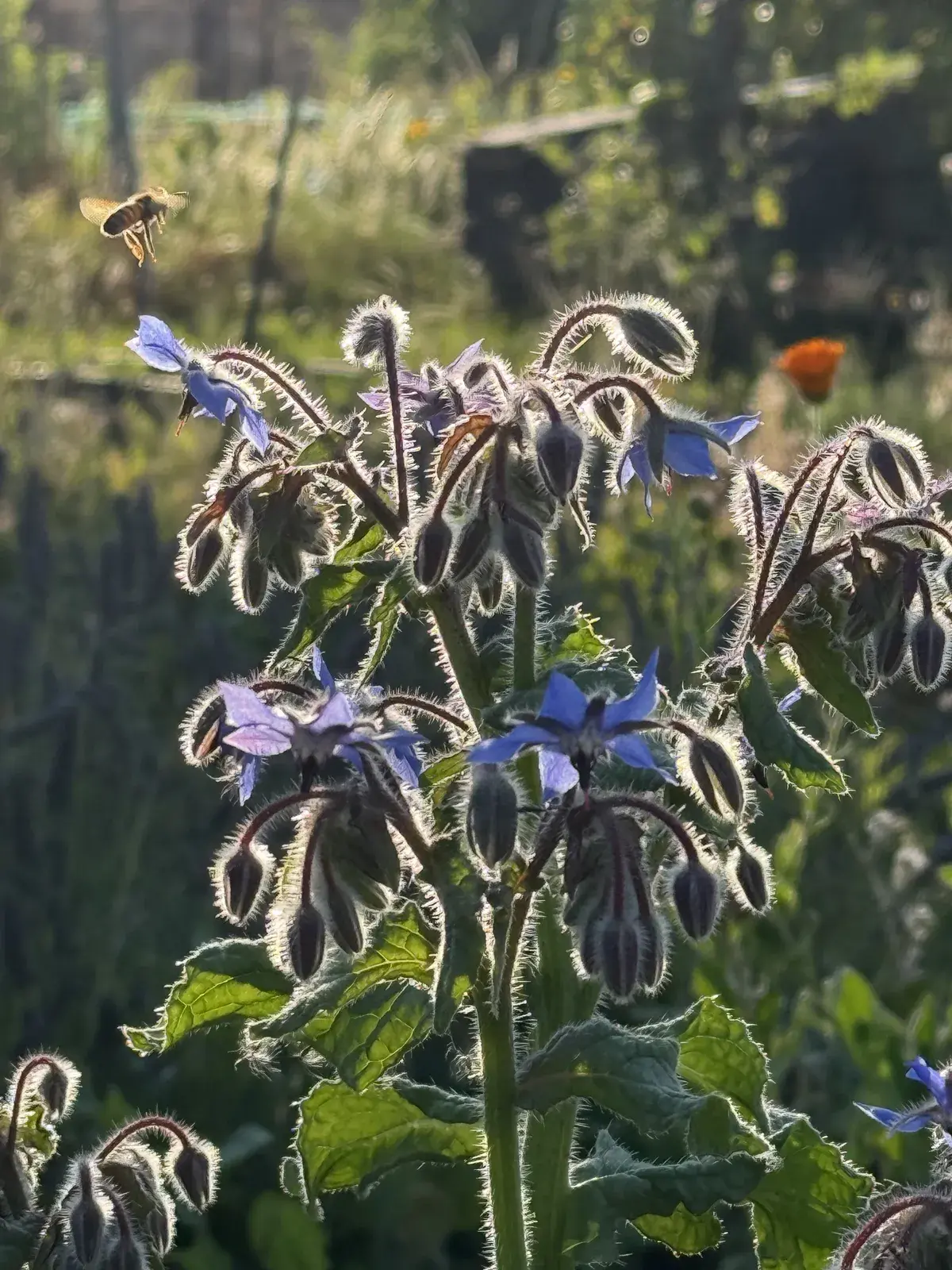
Borage
A pollinator magnet with striking blue flowers. Bees can't resist it. Plant near courgettes, squash, and runner beans to boost pollination rates. It also attracts hoverflies, whose larvae eat aphids. Self-seeds generously — you'll only need to plant it once.
Plant with: Courgettes, squash, runner beans, strawberries, tomatoes
Lavender
Attracts pollinators and repels carrot fly, moths, and fleas. Best planted along paths or bed edges where you'll brush past it, releasing the scent. Works well as a semi-permanent border plant.
Plant with: Carrots, brassicas, lettuce. Good as a bed border plant
Calendula (Pot marigold)
Not the same as French marigolds but equally useful. Attracts hoverflies and ladybirds (aphid predators), and acts as a trap crop for aphids. The petals are edible and make a natural food colouring. Easy from seed, self-sows freely.
Plant with: Tomatoes, peppers, asparagus, broad beans
Sweet alyssum
Low-growing (5–10cm) ground cover that attracts parasitic wasps and hoverflies. Excellent sown as a living mulch under taller crops. Flowers all summer with minimal care.
Plant with: Brassicas, potatoes, onions. Use as ground cover between rows
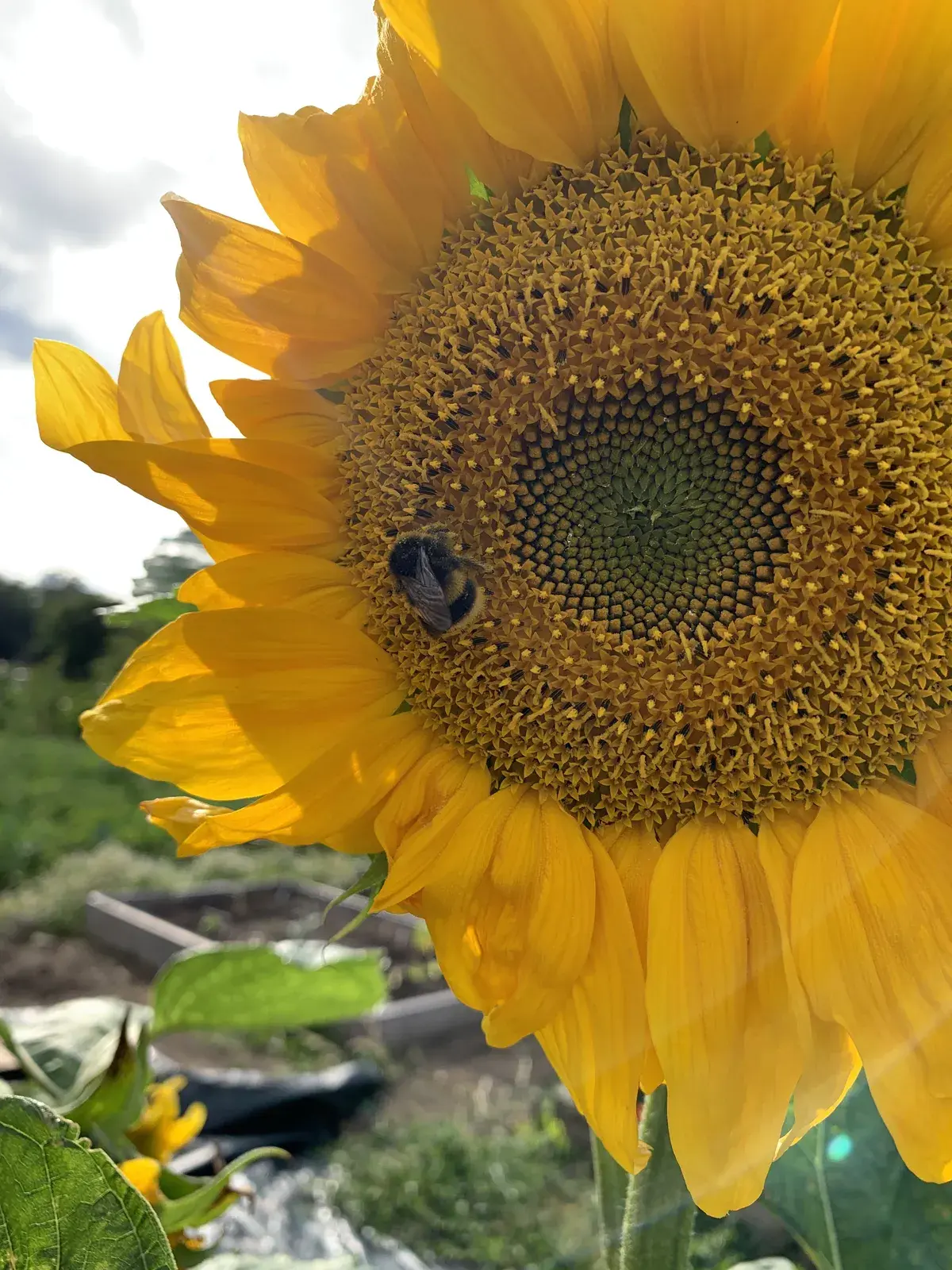
Sunflowers
Tall varieties act as a windbreak and support for climbing beans. They attract pollinators and seed-eating birds that also eat pests. Plant at the back of beds or along north-facing edges where they won't shade other crops.
Plant with: Sweetcorn, runner beans, courgettes, squash
Phacelia
One of the best bee plants you can grow. Purple flowers attract a huge range of pollinators. Also works as a green manure — sow in autumn on empty beds, dig in before spring planting. Fast-growing and unfussy.
Plant with: Any crop. Brilliant as a bed border or green manure
Poached egg plant (Limnanthes)
A British favourite and one of the most useful flowers you can sow. Its white-and-yellow blooms are irresistible to hoverflies, whose larvae are voracious aphid-eaters — a living pest-control patrol. Low, spreading, hardy, and it self-seeds happily once you have it.
Plant with:Anything prone to aphids — brassicas, beans, along bed edges
Marigolds and nasturtiums earn their place every year on our plot — we tuck them around the tomatoes and along the bed edges, and they pull their weight all summer. If you fancy doing the same, here's where to find the seeds.
Some links are affiliate links — we may earn a little, at no extra cost to you, towards the allotment shed.
Beyond pairs: polyculture
Companion planting is really just the first step towards polyculture— growing a diverse mix of crops together in the same bed, rather than neat rows of a single vegetable (a monoculture). It's how nature actually grows, and on an allotment it pays off:
- Pests get confused — when a crop is dotted among others rather than lined up in a block, pests struggle to find and move between their target plants.
- The soil stays covered — mixing tall, low and sprawling crops shades out weeds and keeps moisture in.
- You harvest more from the space — quick crops (radish, lettuce) fill the gaps while slow ones (brassicas, leeks) get going.
- There's always something for the pollinators — especially with flowers woven through.
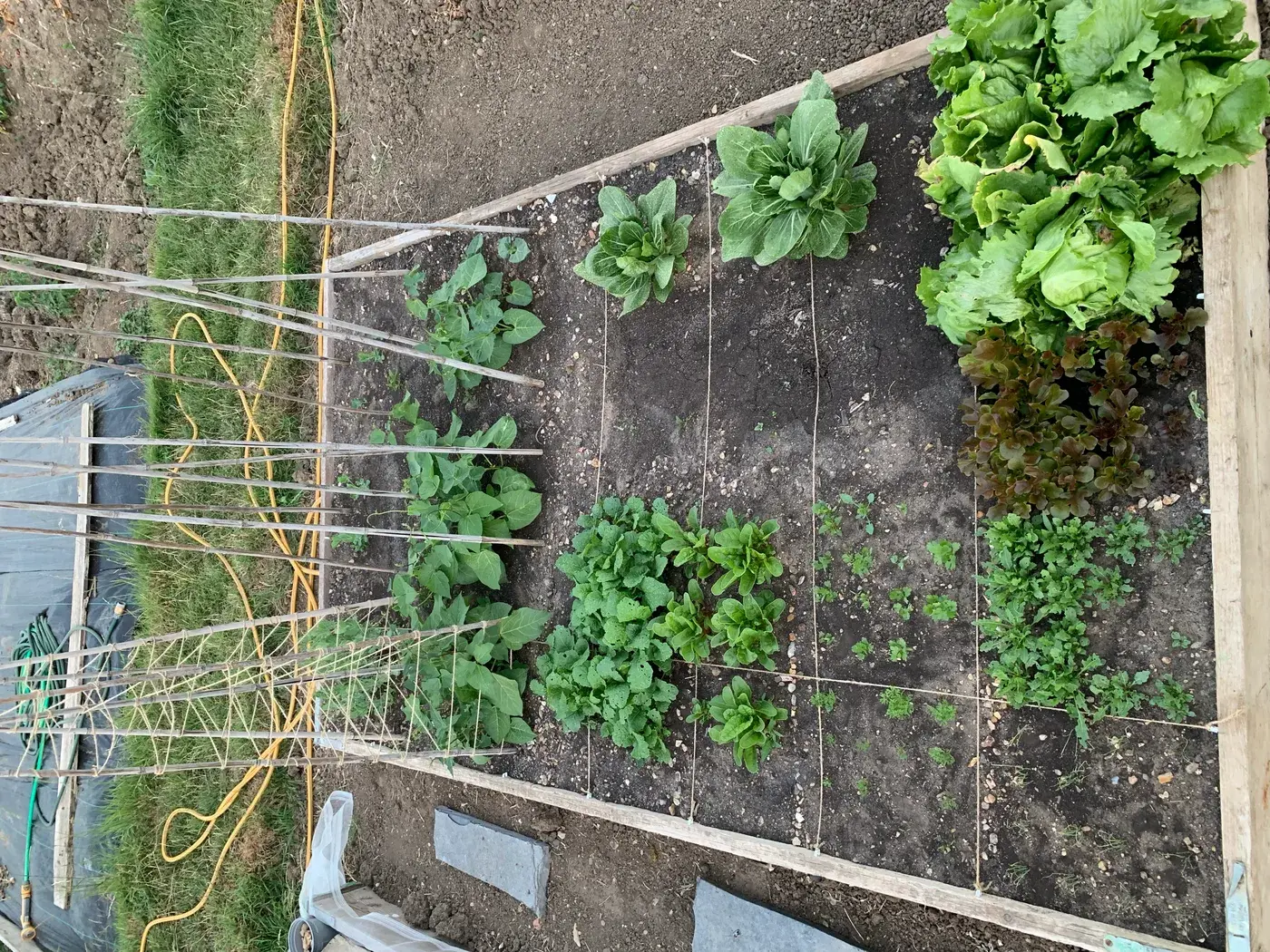
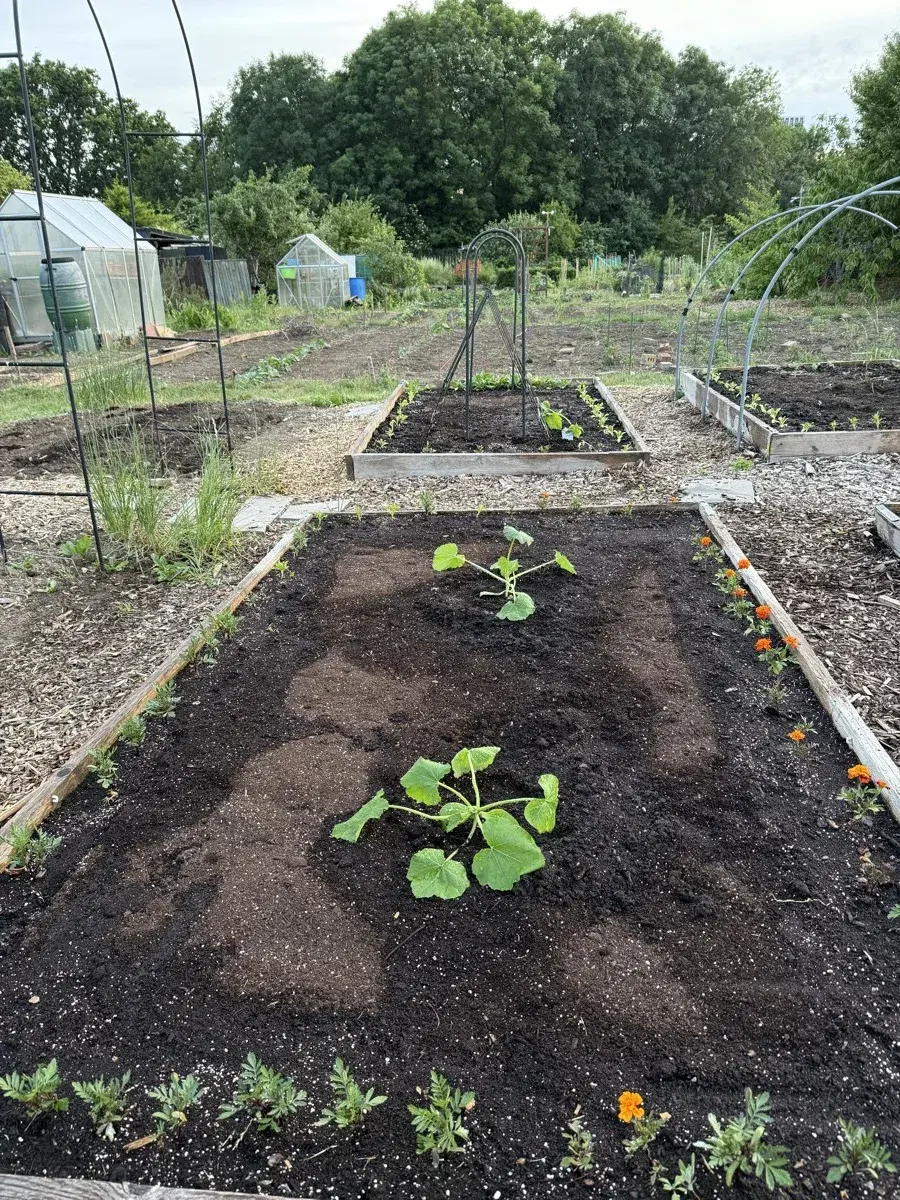
The easiest way to do it on purpose is square planting— dividing a bed into a grid and giving each square its own crop. You get all the diversity of a polyculture, but tidy enough to keep track of. Here's how I plant my beds the square-foot way → The colour-coded seeding square I use is on Amazon.
How to lay them out
Knowing what goes together is one thing — here's how to actually arrange a few of the best combinations in a standard bed. Tall things go to the back or middle so they don't shade the rest; flowers go to the edges where they can do their work.
Tomatoes, basil & marigolds
Tomatoes along the back (they grow tall), basil tucked between them, marigolds edging the front to pull whitefly and bring in hoverflies.
Carrots & onions, in alternating rows
Sow each in its own dense row and alternate them down the bed — a row of carrots, a row of onions, and so on. Each row's scent masks the other, confusing carrot fly and onion fly.
Alternating rows like these are far easier to keep straight with two cheap things in your pocket: a dibber for marking even holes and station-sowing, and a few seed markers so you remember which row is which once the carrot and onion seedlings look alike. Both live in my kit bag all season.
The Three Sisters
Sweetcorn in a block in the middle (it pollinates better in a block), climbing French beans planted to scramble up the corn, and squash around the outside to sprawl and cover the soil.
A North American classic — with a UK caveat
The Three Sisters is the oldest companion planting of all, from Indigenous North American gardens. Use climbing French beans, not runners (runners swamp the corn). Sow the cornfirst, add beans when it's a hand high, and tuck squash around the edge.
Honest word for UK growers:it comes from a warmer climate, and in a cool British summer the corn and squash can struggle to ripen. Worth a go for the fun of it — give it your sunniest spot, start under cover, and treat a good crop as a bonus.
What actually holds up — and what's folklore
Plenty of companion charts online repeat the same pairings without saying which are backed by evidence and which are simply tradition. Here's the honest split, so you can spend your effort where it counts.
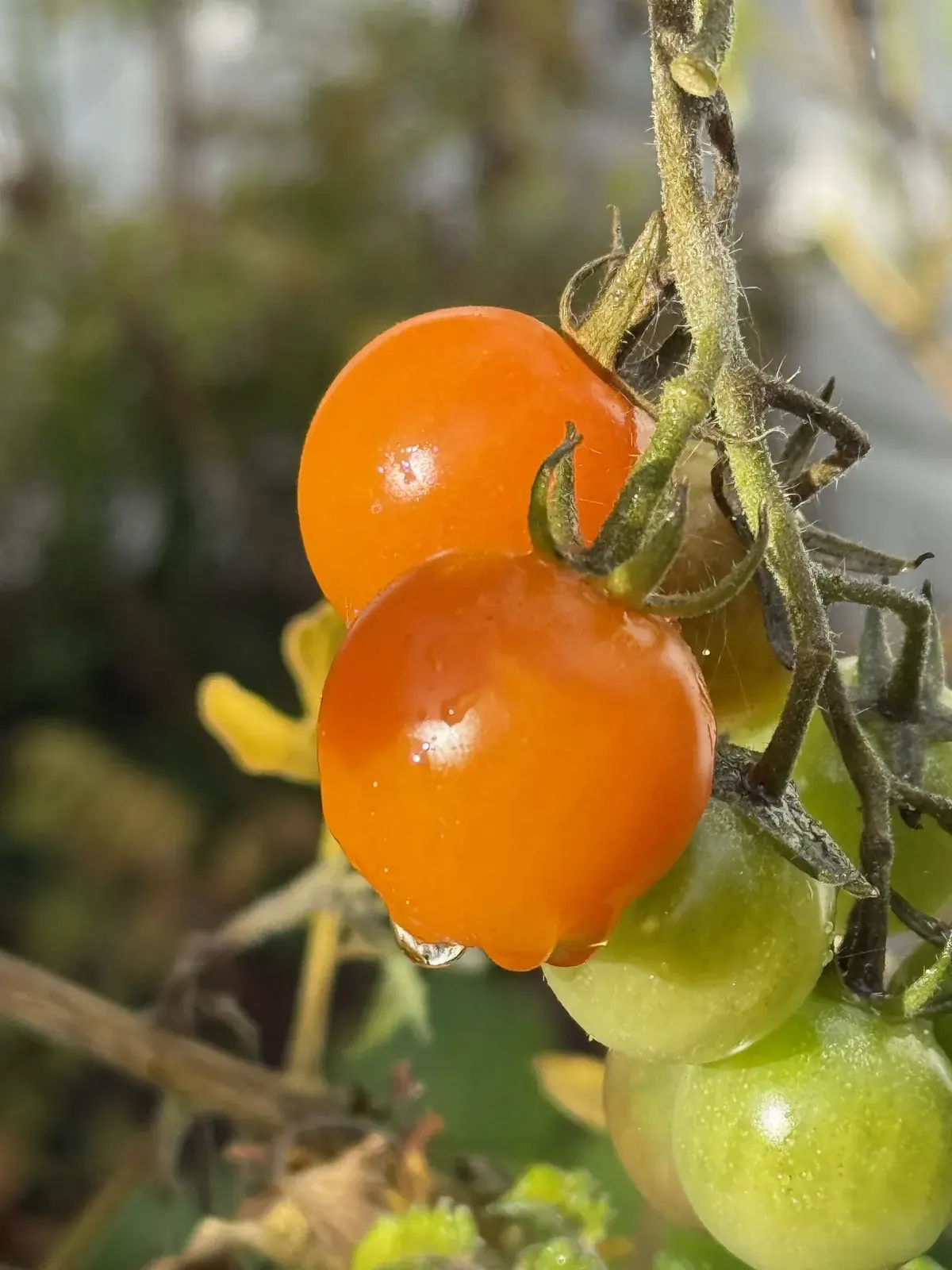
This is one of the better-evidenced pairings in a UK context: RHS trials found French marigolds (Tagetes) growing among greenhouse tomatoes measurably reduced whitefly. Out on the plot they also pull in the hoverflies and ladybirds that deal with aphids.
Worth doing — good evidence
- Legumes (beans, peas) fixing nitrogen for hungry crops that follow.
- Tall + low layering for space and shade (the three sisters; lettuce under taller crops).
- Strong-scented alliums and herbs masking a crop's scent — carrots with onions against carrot & onion fly.
- Flowers (marigolds, nasturtiums, calendula) pulling in pollinators and predatory insects, and luring aphids away as a trap crop.
Treat with a pinch of salt
- Most specific “X hates Y” rules — largely traditional, rarely tested. Won't hurt to follow, but don't fret.
- Real exceptions worth respecting: keep tomatoes and potatoes apart (shared blight), and keep fennel in its own corner (it genuinely suppresses neighbours).
- No amount of companion planting replaces healthy soil, decent spacing, and crop rotation.
A few UK myths worth retiring
Some companion “rules” get repeated endlessly on British gardening sites but don't stand up. Save yourself the bother:
“Marigolds keep carrot fly away.” They don't. Carrot fly finds carrots by scent, low to the ground — the things that actually work are a fine insect-mesh or fleece barrier, sowing thinly to avoid thinning (the bruised foliage is what draws them), and growing alongside onions or garlic.
“Basil makes tomatoes taste better.” A lovely idea with no evidence behind it. Basil is still a fine neighbour for tomatoes — it may deter a few flies, and it crops in the same warm spot — but it won't change the flavour of the fruit.
“Borage improves strawberry flavour.” Borage is genuinely worth growing — it's a magnet for bees, and better pollination can mean better-set strawberries. But it's the pollinators doing the work, not some change to the taste.
“Plant mint to repel pests.” Strong-scented mint may muddle a few pests, but it spreads ferociously and will take over a bed in a season. If you grow it, keep it in a buried pot — never loose in the ground.
Practical tips
Don't overthink it. Companion planting is a helpful guideline, not a rule book. If you only have one bed and need to grow beans next to onions, do it — they'll still grow.
The most reliable companions are the ones that solve a specific problem: carrots next to onions to confuse pests, lettuce under sweetcorn for shade, marigolds around tomatoes for whitefly. For the full picture on dealing with pests, see our pest prevention guide.
If you're new to growing, focus on getting things in the ground first. Companion planting is refinement, not a prerequisite.
Common questions
What is companion planting?
Growing certain crops near each other because they benefit from the relationship. Benefits include pest deterrence, improved pollination, better use of space, and nutrient sharing.
What vegetables should not be planted together?
Some common combinations to avoid: potatoes and tomatoes (both nightshades, share blight), onions and beans (onions inhibit bean growth), fennel near most vegetables (inhibits growth), and brassicas near strawberries.
Does companion planting actually work?
Some effects are well-documented — carrots and onions confusing each other's pests, marigolds repelling aphids, nitrogen-fixing by beans. Others are based on generations of gardener observation rather than controlled studies. The low-risk, high-reward nature means it's worth doing.
What can I plant with tomatoes?
Basil, marigolds and nasturtiums are the classic friends — plus carrots, lettuce and onions. Keep tomatoes away from potatoes (shared blight) and fennel.
What grows well with carrots?
Onions, leeks and garlic — their scent helps hide carrots from carrot fly, and vice versa — along with lettuce, radishes and peas. Keep carrots away from dill and fennel.
Do marigolds really repel pests?
Yes, usefully so — French marigolds draw in aphid-eating hoverflies and ladybirds, deter root-knot nematodes, and act as a trap crop. One of the few companion flowers with real evidence behind it.
Can I companion plant in a small bed or pots?
Definitely — square-foot growing is companion planting on a small scale. Pair a tall crop with a low one and tuck a few flowers in among the veg.
Books worth having
A companion chart gets you started; these are the ones I'd point any UK grower to — the companion-planting classic, plus the two grow-your-own books I actually reach for.
The original companion-planting reference — plain-English, and the book most companion-growers end up with.
The no-dig bible — nurture the soil, weed less, grow more. The method behind most modern UK allotments.
How to grow an abundance from a single raised bed, month by month — the perfect first grow-your-own book.
Amazon & seed links here are affiliate links — we may earn a little, at no extra cost to you, towards the allotment shed.
Companion planting, crop by crop
Want the detail for one crop? These go deeper than the chart above — the best partners for each, the flowers worth tucking in, and the neighbours to keep well apart.