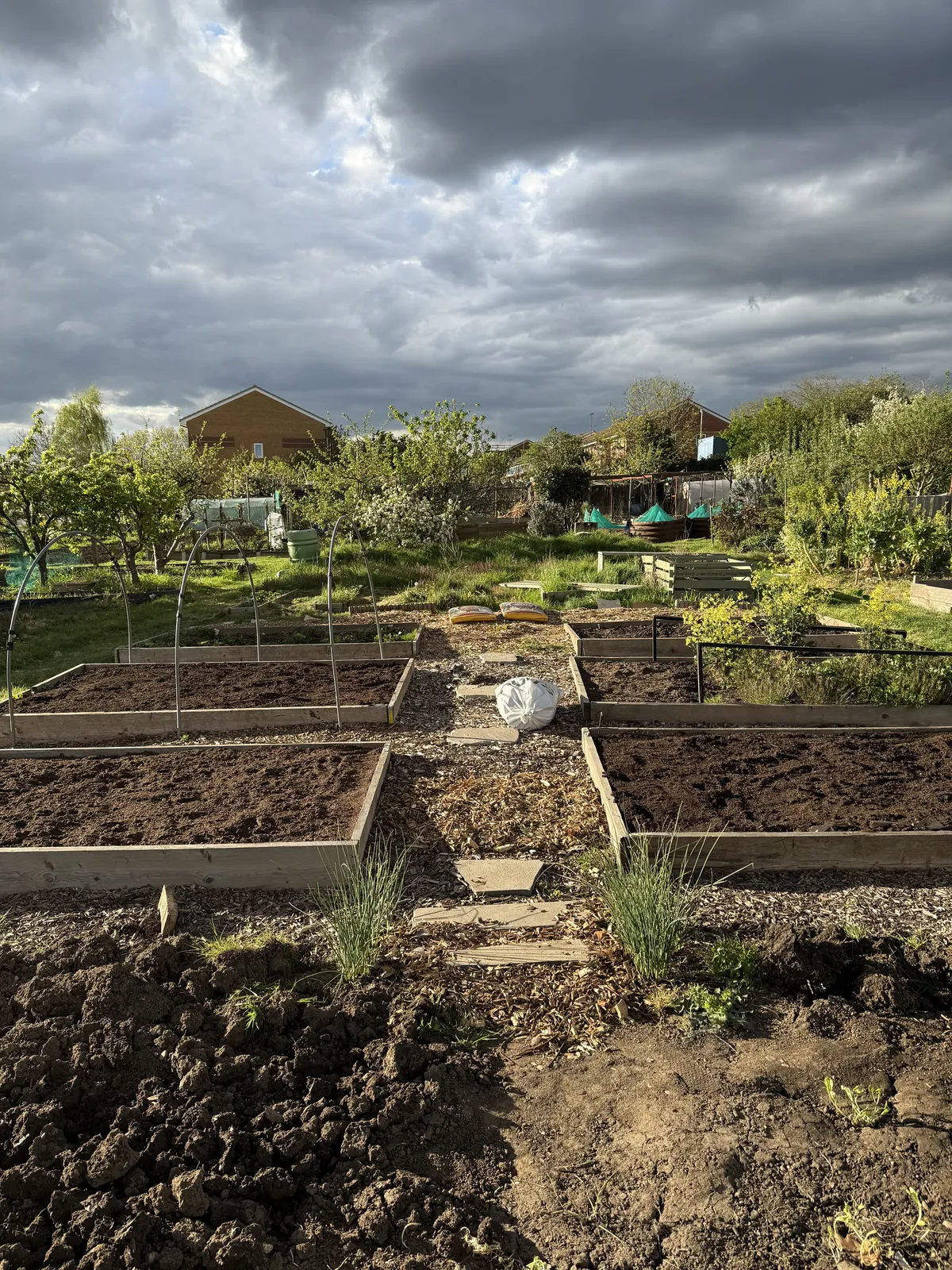
Allotment for beginners
You've got the keys. The plot is a mess. Everyone on the site seems to know what they're doing. Deep breath. Here's how to start.
Don't try to do everything at once
The single biggest mistake new allotment holders make is clearing the whole plot in the first month, planting everything they can think of, and burning out by July. Don't do this.
Start small. Clear one bed — maybe two. Grow a handful of things well. Get some food on the table. Expand next year when you know the soil, the sun, and the slugs.
The 5 easiest crops to start with
These are forgiving, fast, and satisfying. They'll give you results even if you get things slightly wrong.
- 1Radishes
Ready in 4 weeks. Sow directly, thin to 3cm apart, harvest. The instant gratification crop. Sow a short row every fortnight and you'll never run out.
- 2Lettuce
Pick outer leaves and it keeps growing. Sow from March to August for months of salad. Partial shade is fine — it actually prefers it in summer.
- 3Courgettes
One plant produces more courgettes than you can eat. Sow indoors in April, plant out after frost. The problem isn't growing them — it's keeping up with them.
- 4Runner beans
Spectacular plants — tall, lush, covered in flowers. Sow after frost, give them a wigwam of canes, and pick every few days. They stop producing if you let the pods get big.
- 5Potatoes
Nothing beats digging up your own potatoes. Plant in March or April, earth them up as they grow, harvest from June. First earlies are the quickest — 10–12 weeks from planting.
Know your frost date
Half of knowing when to plant is knowing when frost stops. Every seed packet says “sow after last frost” — but when is that, exactly, for where you are?
Enter your postcode and we'll tell you. A grower in Bristol might be frost-free by mid-April. In Sheffield, it could be early May. In the Scottish Highlands, late May or even June.
What to do in your first month
Notice where the sun falls, where water pools, which areas have the best soil. Talk to your neighbours — they know the site.
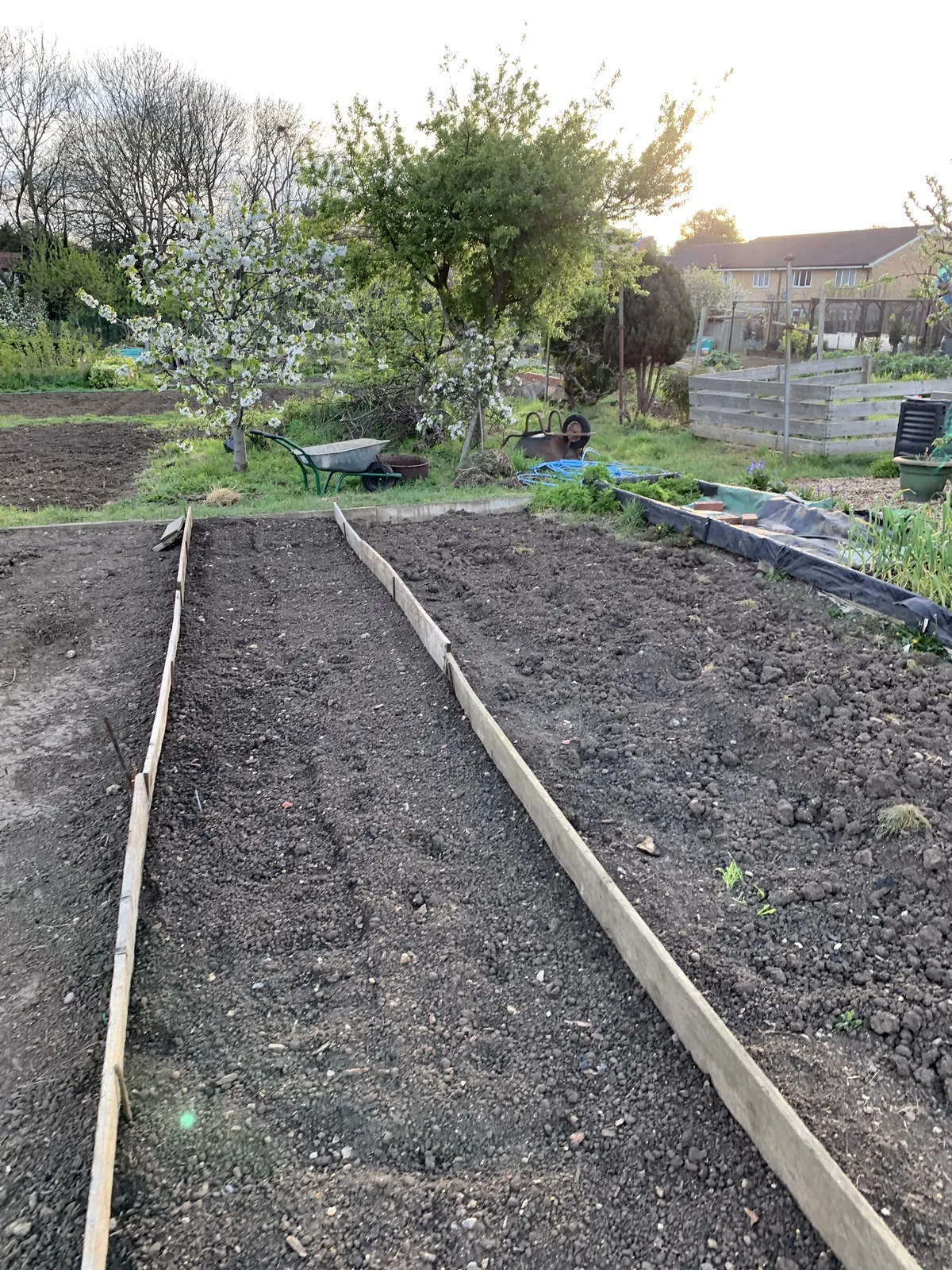
Remove weeds, fork the soil, add compost if you have it. One well-prepared bed is all you need to start.
Even if it’s just radishes in a pot. The sooner you start, the sooner you learn.
Enter your postcode at whattosow.co.uk for a personalised list based on your location and the time of year.
Don't spend a fortune
You don't need a greenhouse, a raised bed system, or an irrigation setup. You need a fork, a trowel, some seeds, and water. Everything else is nice to have, not need to have.
Seeds are cheap. A packet of lettuce seeds costs about £2 and contains enough for an entire season. A bag of seed potatoes is under £4.
Common questions
What should I grow first on a new allotment?
Start with easy, fast-growing crops: radishes (ready in 4 weeks), lettuce, courgettes, runner beans, and potatoes. These are forgiving, grow quickly, and give you visible results to keep you motivated.
When should I start planting on my allotment?
It depends on where you are in the UK. Hardy crops like broad beans, peas, and onion sets can go out from February/March. Tender crops like tomatoes and courgettes must wait until after your last frost date, typically late April to early June depending on your location. Check your frost date.
How big should my first allotment bed be?
Start with a small area you can manage — even a quarter plot (about 62 square metres). It's better to have a small, well-tended space than a large one full of weeds. You can always expand in your second year.
Personalised to your postcode.
Compost, temperature, light — the full guide.
What to buy (and what to skip) when you're starting seeds.
Clay, sand, or loam — and how to improve it.
What to plant together and what to keep apart.
Strawberries, raspberries, currants — plant once, harvest for years.