Understanding your soil
Get to know what you're working with. Less wasted time, less money, better food.
Why soil matters
Soil does three jobs: it anchors roots, holds water and nutrients, and hosts billions of organisms that break down organic matter into food your plants can use. Poor soil doesn't mean you can't grow — it just means you need to understand what you're dealing with and work with it, not against it.
The good news is that almost any soil can be improved. And you don't need to spend a fortune doing it. Compost, patience, and a bit of knowledge go a long way.
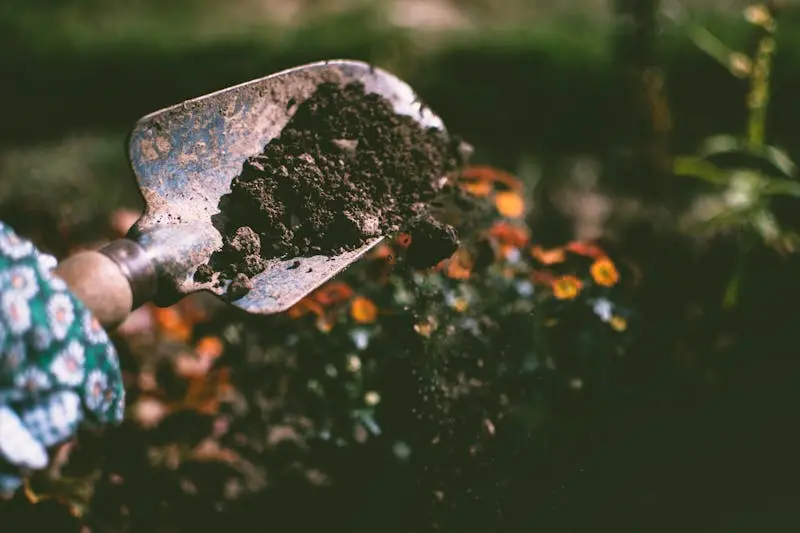
UK soil types
Most UK gardens and allotments sit on one of six soil types. Yours might be a blend, but one will dominate. Here's how to tell them apart.
Clay
Heavy, sticky when wet, rock-hard when dry. Slow to warm up in spring but holds nutrients well. Very common across England, especially the Midlands and South East.
Squeeze test: Feels smooth and sticky. Holds its shape. Rolls into a long thin ribbon between your fingers.
Sandy
Light, gritty, drains fast. Warms up quickly in spring, which is a real advantage for early sowings. But nutrients wash through easily, so you'll need to feed more often. Common in East Anglia, Surrey heaths, and coastal areas.
Squeeze test:Feels gritty. Falls apart when you open your hand. Won't form a ribbon at all.
Silt
Smooth and silky, fertile, holds moisture well. Easier to work than clay but can compact if you walk on it when wet. Found in river valleys and floodplains — parts of Lincolnshire and the Fens.
Squeeze test:Feels silky smooth, like flour. Holds shape loosely but won't ribbon well.
Loam
The one everyone wants. A balanced mix of clay, sand, and silt with good drainage, decent moisture retention, and plenty of nutrients. If you've got it, count yourself lucky and just keep adding compost.
Squeeze test: Holds together in a ball but crumbles easily when poked. Slightly gritty, slightly smooth.
Chalky
Shallow, stony, and alkaline. Drains freely and can be low in nutrients. You'll often find white lumps of chalk or flint in it. Common across the Downs, Chilterns, and Yorkshire Wolds. Acid-loving crops will struggle here.
Squeeze test: Pale, stony, crumbly. Often fizzes if you pour vinegar on it (the calcium carbonate reacts).
Peat
Dark, spongy, high in organic matter. Naturally acidic and moisture-retentive. Rare in gardens but found in parts of East Anglia, the Somerset Levels, and Scottish Highlands. Great for acid-lovers but may need liming for most vegetables.
Squeeze test: Very dark, spongy, almost like a wrung-out tea bag. Holds a lot of water.
Soil pH: what it means and why it matters
pH measures how acidic or alkaline your soil is, on a scale from 1 (very acid) to 14 (very alkaline), with 7 being neutral. Most vegetables grow best between pH 6.0 and 7.0— slightly acidic to neutral. At this range, nutrients in the soil are most available to roots.
Testing is cheap and easy. Pick up a soil pH test kit from any garden centre for a few pounds — the basic liquid kits work fine. Take samples from a few spots around your plot, mix them together, and follow the instructions. Test in spring before you start adding anything.
What different crops prefer
- Brassicas(cabbage, broccoli, kale, cauliflower) — prefer slightly alkaline soil, pH 6.5–7.5. Add garden lime in autumn if your soil is acidic.
- Potatoes— prefer slightly acidic soil, pH 5.0–6.0. Liming encourages scab, so avoid it on your potato bed.
- Blueberries— need acid soil, pH 4.5–5.5. Grow in containers of ericaceous compost if your soil is neutral or alkaline.
- Most other veg (carrots, beans, courgettes, lettuce, onions, peas) — happy between pH 6.0–7.0.
Improving your soil
Whatever soil type you have, the answer to improving it is almost always the same: add organic matter. It opens up clay, helps sandy soil hold water, feeds soil life, and builds structure over time.
Garden compost
The best thing you can make for free. Kitchen scraps, weeds (before they seed), cardboard, and garden waste all break down into rich, dark compost. If you only do one thing for your soil, start a compost bin.
Well-rotted manure
Horse, cow, or chicken — but it must be well-rotted (aged at least a year). Fresh manure burns roots and can contain weed seeds. Many stables give it away free. Brilliant for hungry crops like courgettes and squash.
Leaf mould
Collect autumn leaves, bag them up, and leave them for a year or two. The result is a beautiful, crumbly soil conditioner that's especially good for improving heavy clay. Free, easy, and endlessly useful.
Green manures
Sow fast-growing crops like phacelia, field beans, or crimson clover on empty beds. They protect the soil from rain, suppress weeds, and add nutrients when chopped and left on the surface. Field beans are especially good over winter on heavy soil.
The no-dig approach
No-dig is exactly what it sounds like. Instead of turning the soil each year, you spread a thick layer of compost on top (5–10cm) and let worms and soil organisms pull it down. Popularised in the UK by Charles Dowding, it works brilliantly on allotments and raised beds alike.
Why does it work? Digging disrupts fungal networks that help plants access nutrients, destroys soil structure, and brings buried weed seeds to the surface. By leaving the soil alone and feeding from the top, you build better structure over time with far less effort.
Lay cardboard over weeds, cover with 10–15cm of compost, and plant straight into it. The cardboard smothers weeds underneath while worms break everything down. You can plant into it the same day.
Raised beds: the shortcut
If your soil is truly terrible — solid clay, full of rubble, contaminated, or just unknown — raised beds let you start from scratch. Fill them with a mix of topsoil and compost and you've got perfect growing conditions from day one.
They also drain better, warm up faster in spring, and save your back. You don't need to spend a fortune — scaffold boards, old pallets, or even mounded rows without sides all work. The soil underneath will gradually improve too as worms move between the layers.
Soil temperature and sowing
Air temperature is one thing. Soil temperature is what actually matters for germination. Seeds sit in cold, wet ground and rot if the soil isn't warm enough. A cheap soil thermometer (under £5) takes the guesswork out entirely.
| Soil temp | What you can sow |
|---|---|
| 5–7°C | Broad beans, peas, onion sets, garlic |
| 7–10°C | Carrots, beetroot, lettuce, spinach, radish, parsnips |
| 12°C+ | French beans, runner beans, courgettes, sweetcorn, squash |
| 15°C+ | Tomatoes, peppers, aubergines, cucumbers (outdoor sowing) |
Check your local frost dates to get a sense of when the ground warms up in your area. South-facing plots and raised beds warm up fastest.
Common mistakes
- Walking on wet clay. Compacts the structure and makes drainage worse. Lay planks to stand on, or stick to paths.
- Over-liming. Adding lime without testing pH first can make soil too alkaline, locking out iron and manganese. Test first, then add only what's needed.
- Ignoring organic matter. Fertiliser feeds plants but doesn't build soil. Without regular organic matter, soil structure degrades, drainage suffers, and you end up on a treadmill of ever-more inputs.
- Digging wet soil. If it sticks to your boots, it's too wet to work. Wait for it to dry out or you'll create clods that take months to break down.
- Sowing too early. Enthusiasm in March is great, but cold soil kills seeds. Wait until the ground is genuinely warm enough — a fortnight's patience can mean weeks of faster growth.
Common questions
How do I find out what soil type I have?
The squeeze test is the simplest method. Take a handful of moist soil and squeeze it. Sandy soil feels gritty and falls apart. Clay feels smooth and sticky, holding its shape. Loam holds together loosely but crumbles when poked. You can also try rolling it into a ribbon between your fingers — clay rolls into a long, thin ribbon while sandy soil won't form one at all.
What pH should vegetable garden soil be?
Most vegetables grow best between pH 6.0 and 7.0. Brassicas prefer slightly alkaline conditions around 6.5–7.5, while potatoes and blueberries do better in more acidic soil. A cheap test kit from any garden centre will tell you where you stand.
How can I improve clay soil for growing vegetables?
Add organic matter to the surface every year — compost, well-rotted manure, or leaf mould. Avoid digging when it's wet. A no-dig approach works especially well on clay: spread 5–10cm of compost on top each autumn and let worms do the mixing. You'll see a real difference within two to three years.
When is soil warm enough to sow seeds?
Most vegetable seeds need at least 7°C. Hardy crops like broad beans and peas can manage from around 5°C. Tender crops like courgettes and beans need 12°C or warmer. A soil thermometer costs a few pounds and saves a lot of failed sowings.
Is no-dig gardening better for soil?
No-dig preserves soil structure, protects fungal networks that help plants access nutrients, and reduces weed germination by not bringing buried seeds to the surface. You add compost on top each year and let soil organisms do the work. It's especially effective on heavy clay and saves a lot of effort.