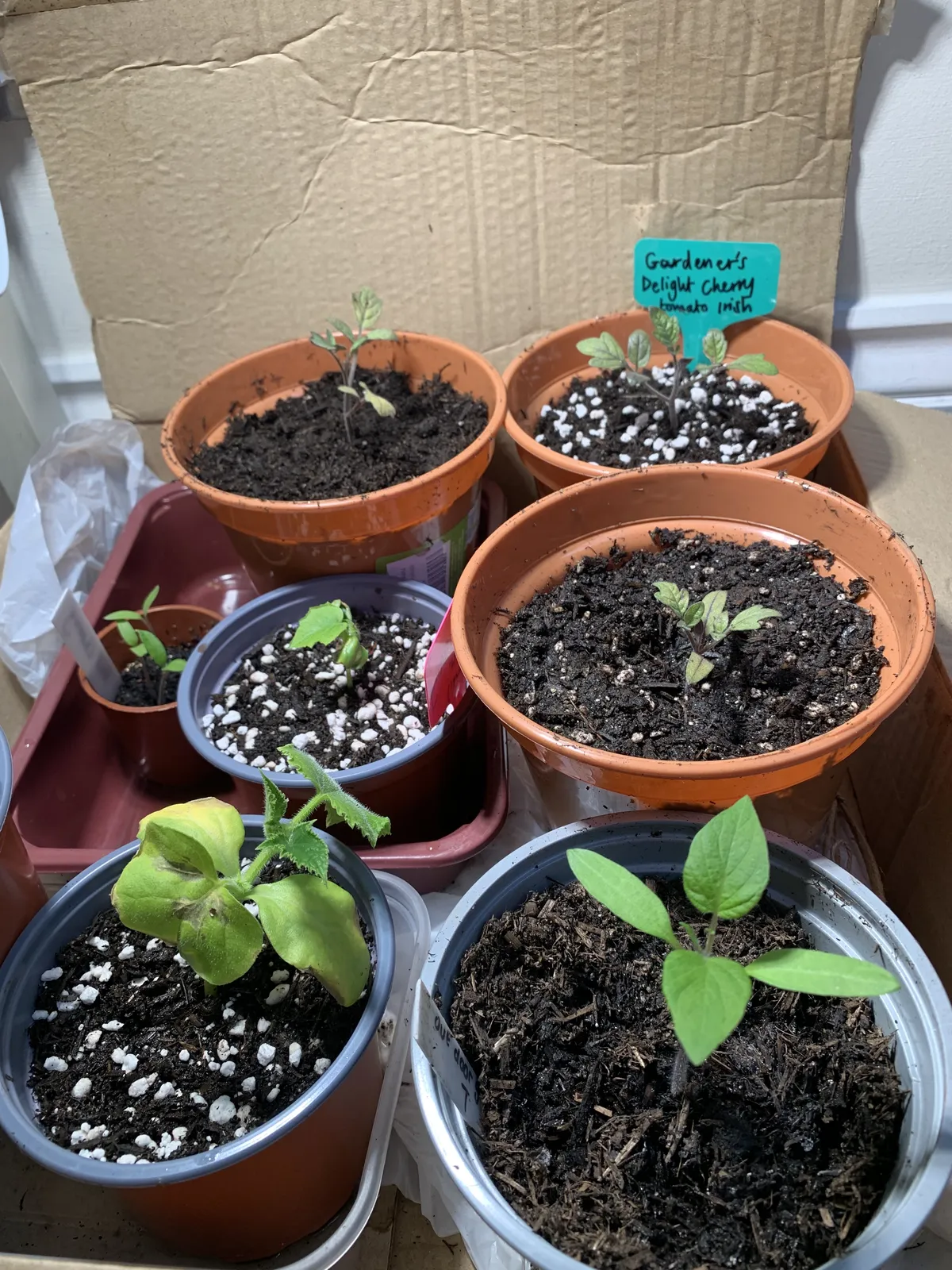
How to start seeds
The cheapest, most satisfying way to fill your plot. Here's everything you need to know.
Why grow from seed
A packet of seeds costs a couple of quid and contains enough to fill a bed. The equivalent as plug plants would cost ten times that. But price isn't the only reason.
- More variety— Garden centres stock maybe a dozen tomato varieties. Seed catalogues have hundreds. That's where you find the interesting stuff.
- Better timing— You control exactly when seedlings are ready, matched to your local conditions and last frost date.
- Stronger plants— Seedlings raised in your own conditions don't need to recover from the stress of transport and shop shelf neglect.
- It's satisfying— There's no shortcut to the feeling of harvesting something you started from seed on your windowsill in February.
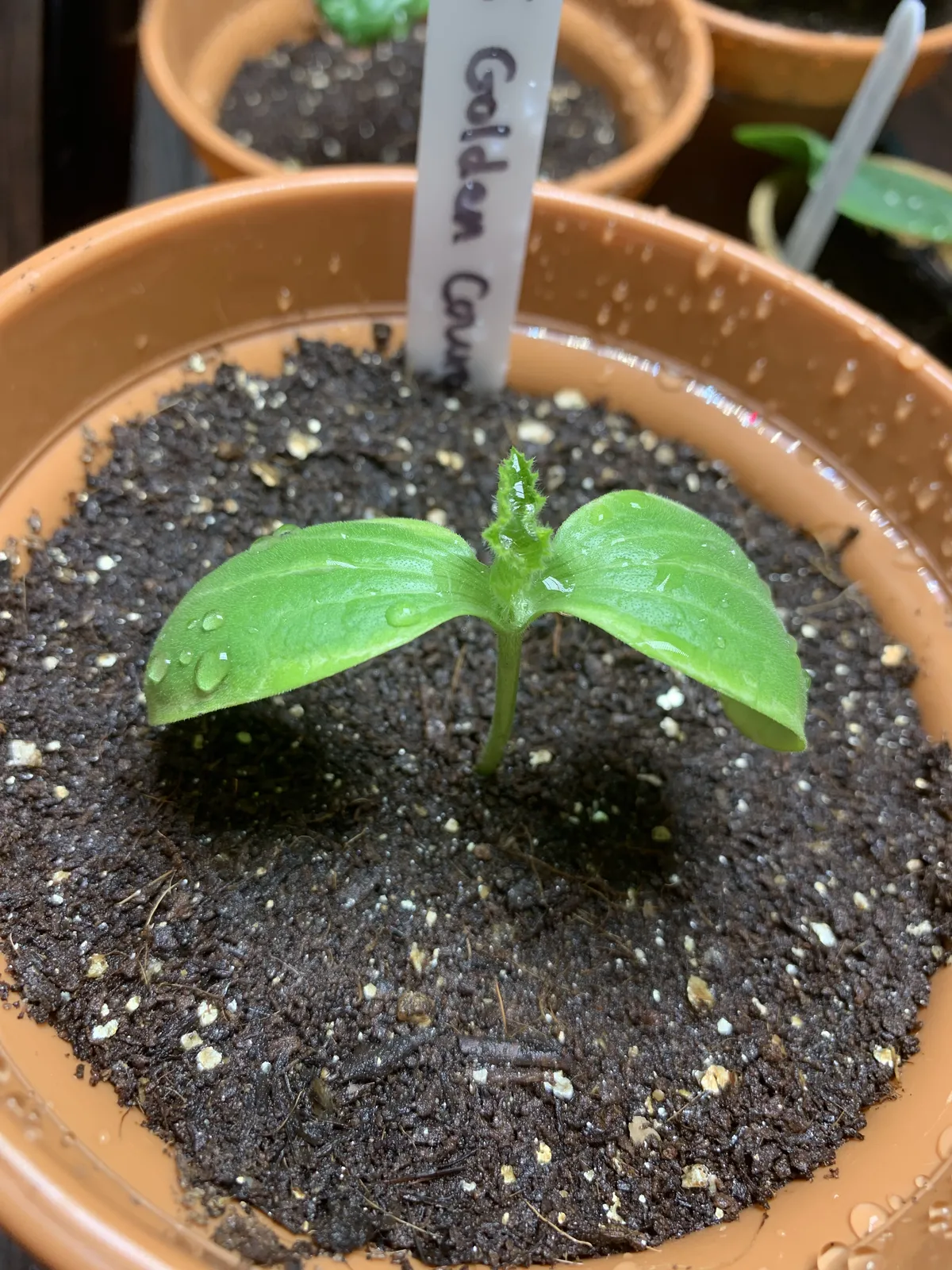
What you need
You don't need much kit. Here's what actually matters:
Seed compost vs multi-purpose
Seed compost is finer and lower in nutrients, which is what tiny seedlings want. Multi-purpose is often too chunky and rich — seedlings can drown in it or get burned by the fertiliser. For small seeds (lettuce, tomatoes, celery), always use seed compost. For big seeds like beans, squash, or sweetcorn, multi-purpose is fine. If you're making your own, see our composting guide.
Modules, trays, and pots
Module trays are brilliant because each seedling gets its own root space, which means less root disturbance when you plant out. Small modules (cell trays) work for most things. Use larger 9cm pots for bigger seeds like courgettes or squash that need more room early on. Yoghurt pots with drainage holes punched in the bottom work perfectly well too.
Labels
Label everything. You will not remember what's what in three weeks. Use a pencil, not a marker — markers fade in sunlight.
How deep to sow
The rule of thumb: sow at twice the depth of the seed's size. In practice that means:
- Tiny seeds(lettuce, celery, celeriac) — scatter on the surface and cover with a light dusting of vermiculite or sieved compost
- Medium seeds(tomatoes, peppers, brassicas) — about 1cm deep
- Large seeds(beans, peas, squash, sweetcorn) — 2–3cm deep
Temperature and where to start them
Most seeds need warmth to germinate — not light, warmth. A warm room (18–22°C) is enough for the majority of crops. Here's how the main options compare:
Windowsill
Free and works for most things. South-facing is best. Watch out for cold windowsills at night — temperatures can drop sharply once the heating's off. Move trays away from the glass overnight if needed.
Heated propagator
A small electric propagator gives consistent bottom heat, which speeds up germination significantly. Worth it for peppers, aubergines, and chillies that need 25°C+ to germinate reliably. You can pick one up for under £20.
Unheated greenhouse or cold frame
Good for hardy crops from March onwards, but no use for tender crops until after frost risk has passed. Great for hardening off (more on that below). If you're weighing one up, see our cold frames & greenhouses guide.
Watering seedlings
Overwatering kills more seedlings than underwatering. The compost should be moist, not sodden. If you squeeze a handful and water drips out, it's too wet.
Bottom-water wherever possible. Sit your tray in a shallow dish of water and let the compost draw it up from below. This keeps the surface drier and reduces the risk of damping off — the fungal disease that makes seedlings keel over at the base overnight.
Light and leggy seedlings
Once seeds have germinated, light becomes critical. Seedlings that don't get enough light stretch towards it, producing thin, pale, floppy stems. This is called “legginess” and it's the single most common problem with windowsill growing.
- Use your brightest south-facing windowsill
- Rotate trays 180° daily so seedlings grow straight
- If seedlings are still leggy, sow later in spring when daylight hours are longer — a March sowing often overtakes a February one
- A cheap LED grow light can help if you don't have a good window, but it's not essential
Pricking out and potting on
If you've sown into a seed tray rather than individual modules, you'll need to prick seedlings out once they have their first pair of “true leaves” (the second set, after the initial seed leaves).
Hold the seedling by a leaf — never the stem. Use a pencil or dibber to lever the roots out gently. Drop it into a hole in fresh compost in a module or pot, and firm in lightly. Water from below.
Potting onmeans moving a seedling into a larger pot as it outgrows its current one. You'll know it's time when roots start poking out the bottom or growth stalls despite watering. Move up one pot size at a time.
Hardening off
This is the step people skip, and it's the one that matters most. Plants grown indoors have soft, sheltered growth. Put them straight outside and they'll get battered by wind, scorched by sun, and shocked by cold nights.
Hardening off takes 7–10 days:
A cold frame makes this much easier — just prop the lid open a bit more each day. If you don't have one, a sheltered spot by a south-facing wall works fine.
Start indoors vs direct sow
Not everything needs starting on a windowsill. Some crops prefer being sown straight into the ground and actually resent transplanting.
Start indoors
Tomatoes, peppers, chillies, aubergines, courgettes, squash, pumpkins, cucumbers, sweetcorn, celeriac, celery, leeks. These all benefit from a head start in warmth.
Direct sow outdoors
Carrots, parsnips, beetroot, radishes, turnips, peas, broad beans, French beans, runner beans, spring onions. Root vegetables especially dislike being transplanted — their roots fork if disturbed.
Either works
Lettuce, spinach, kale, chard, brassicas (cabbage, broccoli, cauliflower), onions. These can be started in modules for transplanting or sown directly, depending on the time of year and what suits you.
Common mistakes
Sowing too early
The most common mistake by far. Starting tomatoes in January means weeks of leggy, struggling plants on a dark windowsill. A March sowing, with more light and warmth, often catches up and overtakes. Check your local frost date and work backwards.
Sowing too deep
Burying small seeds too deep means they exhaust their energy reserves before reaching the surface. Remember: twice the seed's size for depth, and surface-sow anything tiny.
Overwatering
Soggy compost starves roots of oxygen and creates perfect conditions for damping off. Bottom-water, let the surface dry slightly between waterings, and make sure your containers drain freely.
Skipping hardening off
Weeks of careful growing undone in one afternoon. Even a few days of gradual acclimatisation makes a huge difference. Don't rush this step.
Sowing everything at once
Succession sowing — sowing a small batch every 2–3 weeks — gives you a longer harvest and means you're not drowning in lettuce one week and empty-handed the next.
Common questions
When should I start seeds indoors in the UK?
It depends on the crop. Tomatoes, peppers, and aubergines need starting in February or March. Courgettes and squash can wait until April. Hardy crops like broad beans and peas are usually better direct-sown outdoors.
Do I need seed compost or can I use multi-purpose?
Seed compost is better for small seeds — it's finer and lower in nutrients. Multi-purpose works for larger seeds like beans and squash. When in doubt, seed compost is the safer bet.
How deep should I sow seeds?
Twice the depth of the seed's size. Tiny seeds sit on the surface. Medium seeds go about 1cm deep. Large seeds go 2–3cm deep.
What is hardening off?
Gradually acclimatising indoor-grown seedlings to outdoor conditions over 7–10 days. Without it, transplanted seedlings get scorched, wilted, or stunted by the sudden change in environment.
Why are my seedlings tall and spindly?
Almost always insufficient light. Rotate trays daily, use your brightest south-facing window, and consider sowing later in spring when daylight hours are longer. A later sowing often produces sturdier plants.
More tools and guides
Personalised sowing dates for your postcode.
What grows well together and what to keep apart.
Find your last frost date by region.
Just got a plot? Start here.
Germinate earlier and beat leggy seedlings — what to buy.