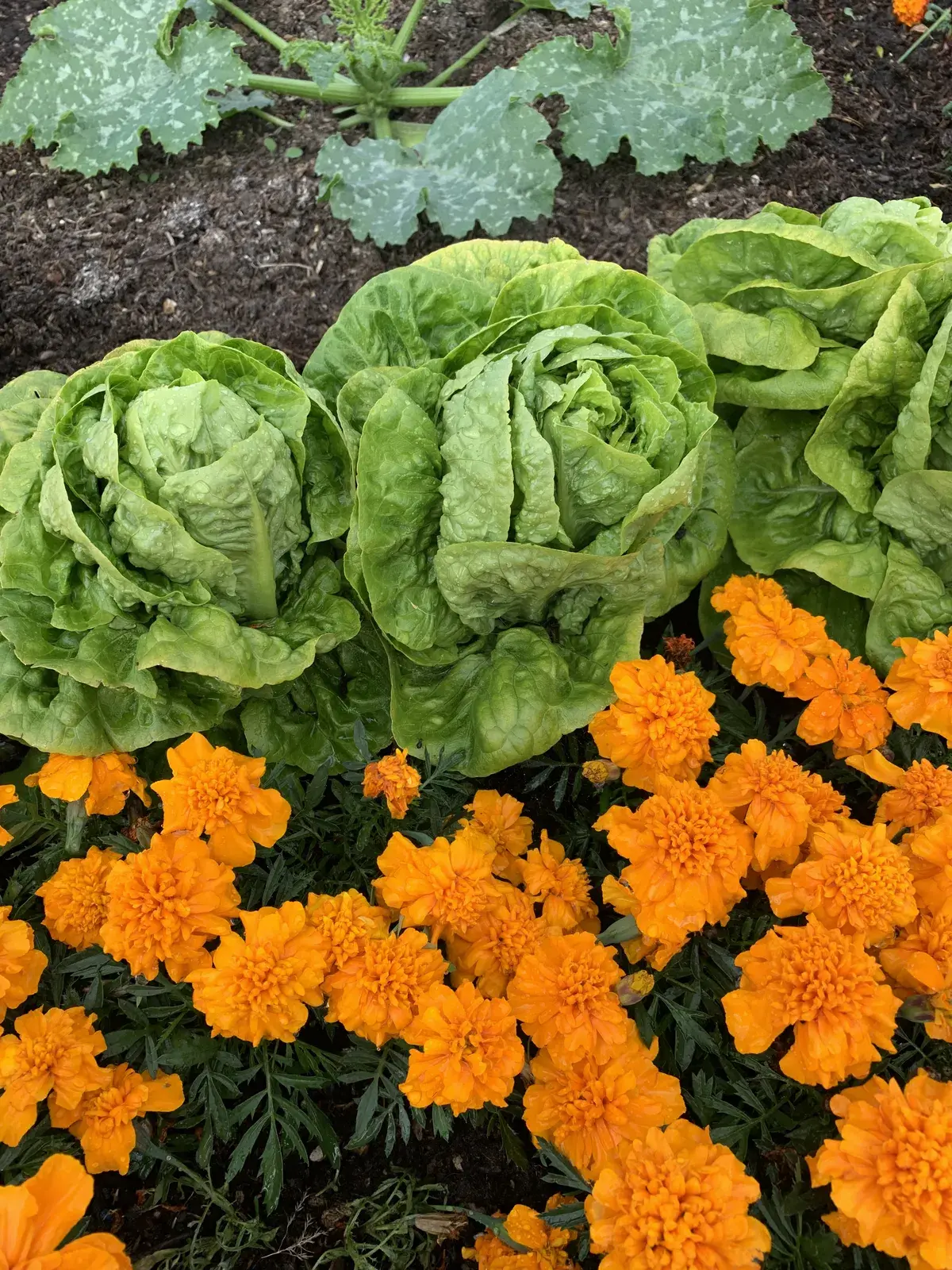
Why marigolds?
French marigolds (Tagetes patula) are the most commonly recommended companion plant for vegetable gardens. The theory is that their strong scent deters aphids, whitefly, and other pests, while their bright flowers attract pollinators. Some gardeners say they repel nematodes in the soil too.
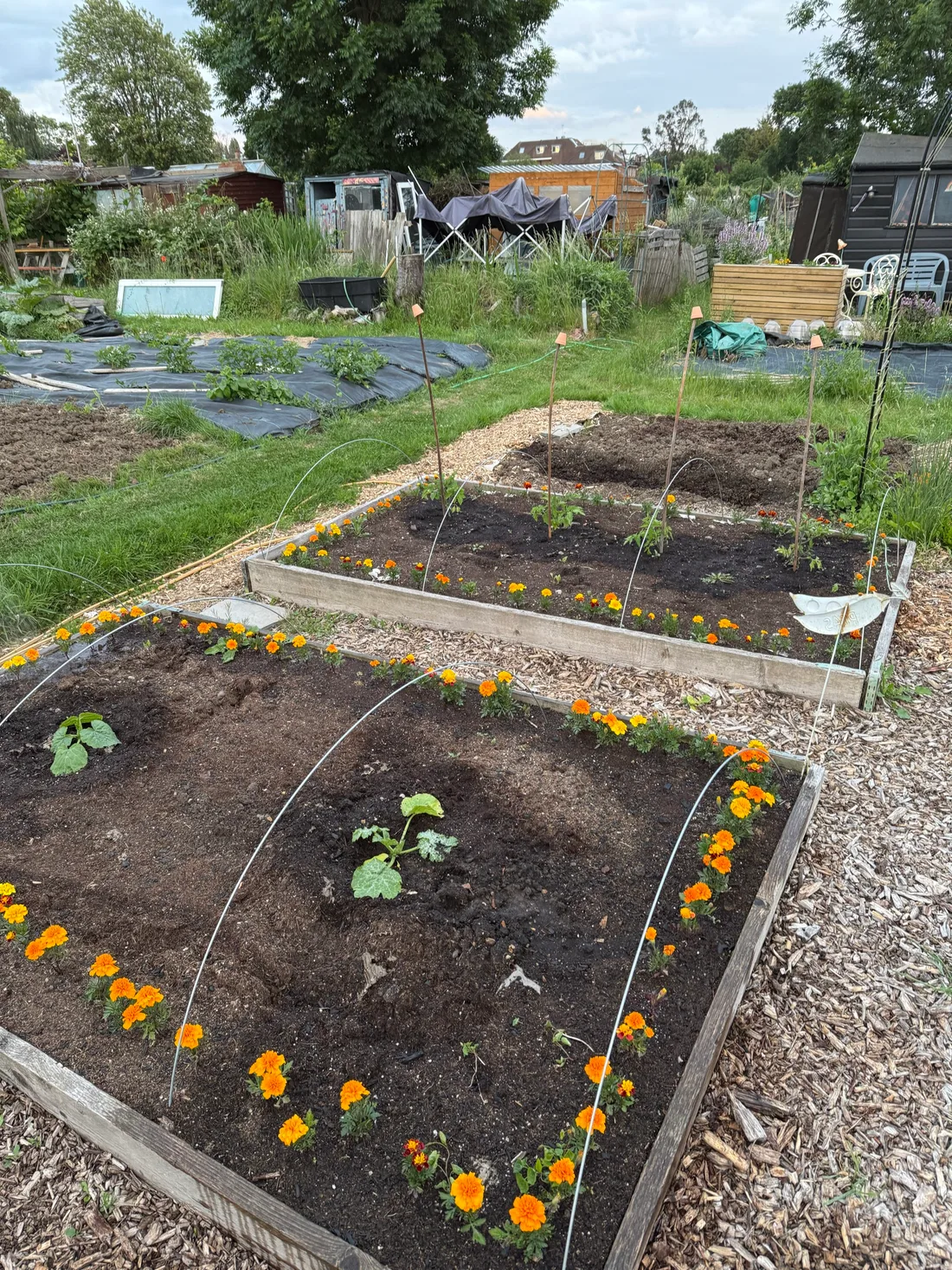
I wanted to test this properly, so I bought several trays of mixed French marigolds and planted them as borders around every raised bed on my allotment.
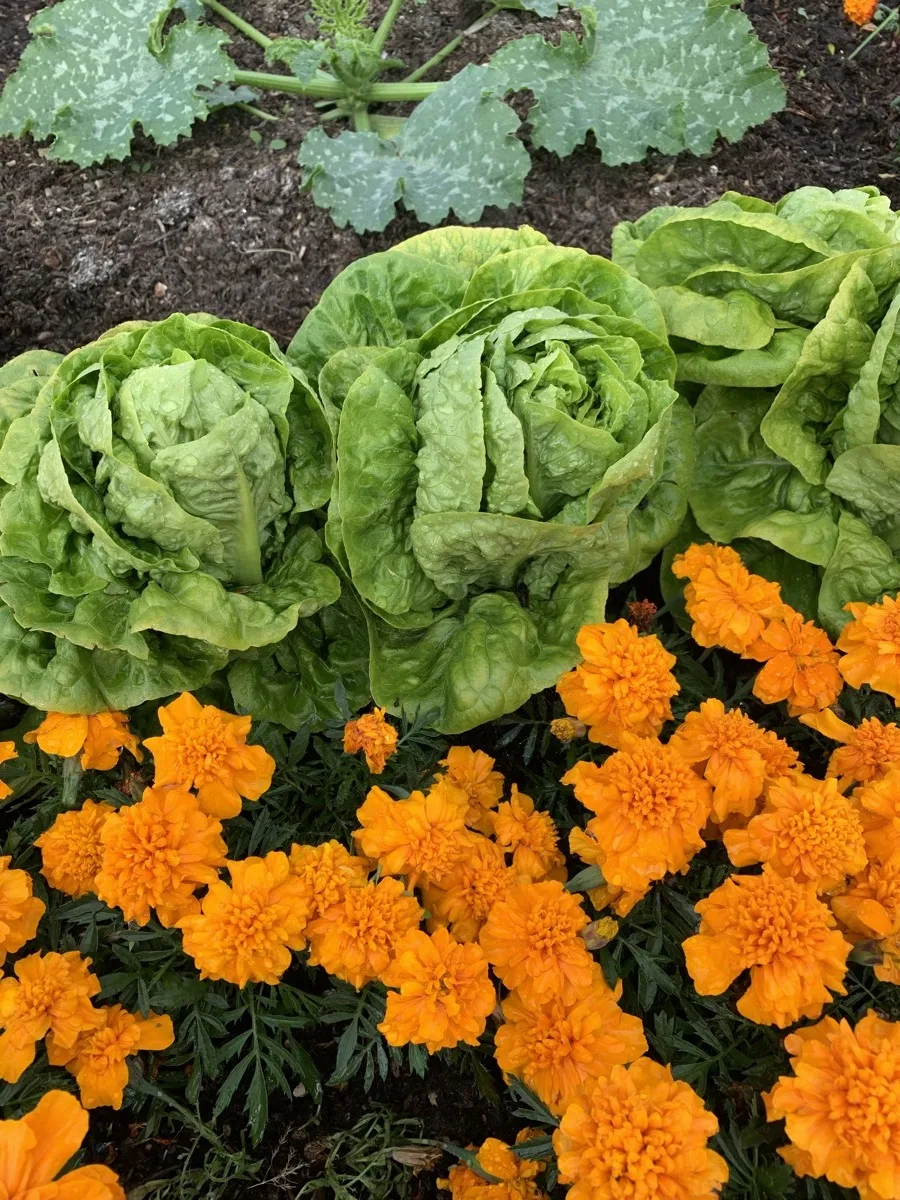
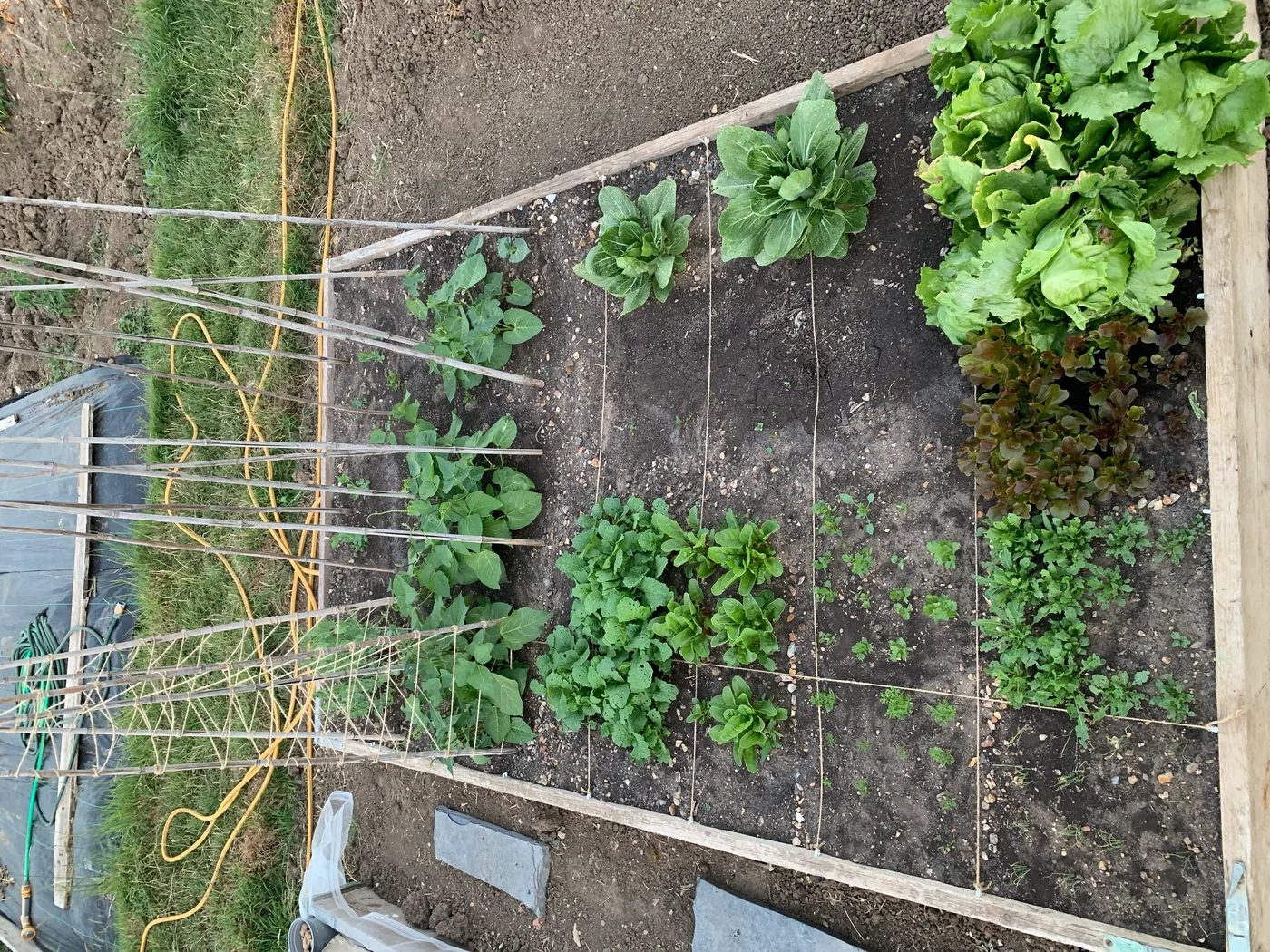
Marigolds with lettuce
This was the combination that looked the best. The bright orange marigold border framing rows of green butterhead lettuce was genuinely beautiful — like something from a magazine. But did it help the lettuce?
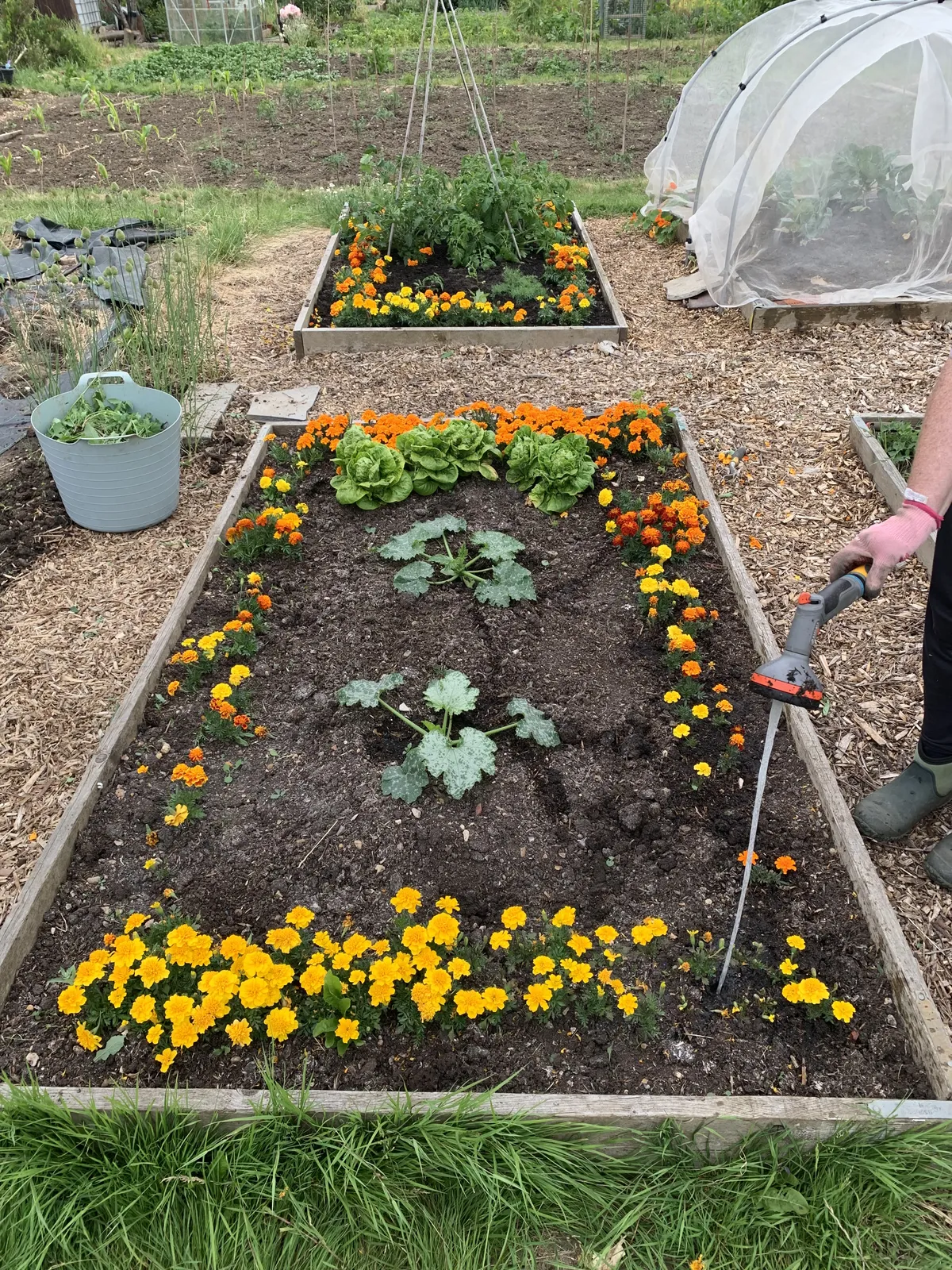
Honestly — the slugs still got through. Marigolds do not stop slugs. But I noticed significantly fewer aphids on the lettuce compared to previous years. Whether that was the marigolds or just a good year for ladybirds, I cannot say for certain. But the bed looked so good that I will do it again regardless.
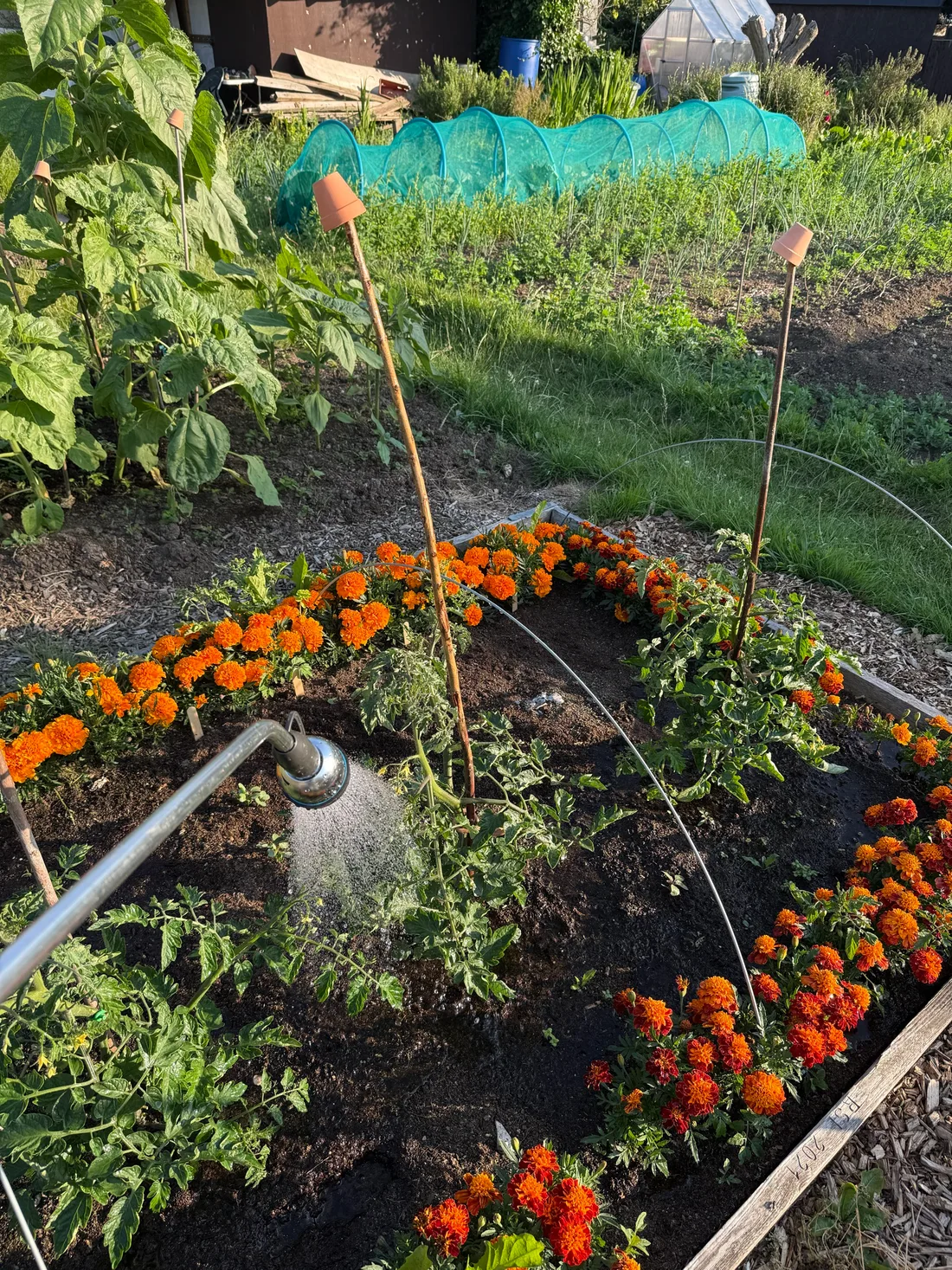
Marigolds with tomatoes
This is the classic combination, and it genuinely seemed to work. My tomato plants had very few whitefly problems, and the marigold scent was strong enough that I could smell it every time I went to water. The bright flowers also brought in hoverflies, whose larvae eat aphids.
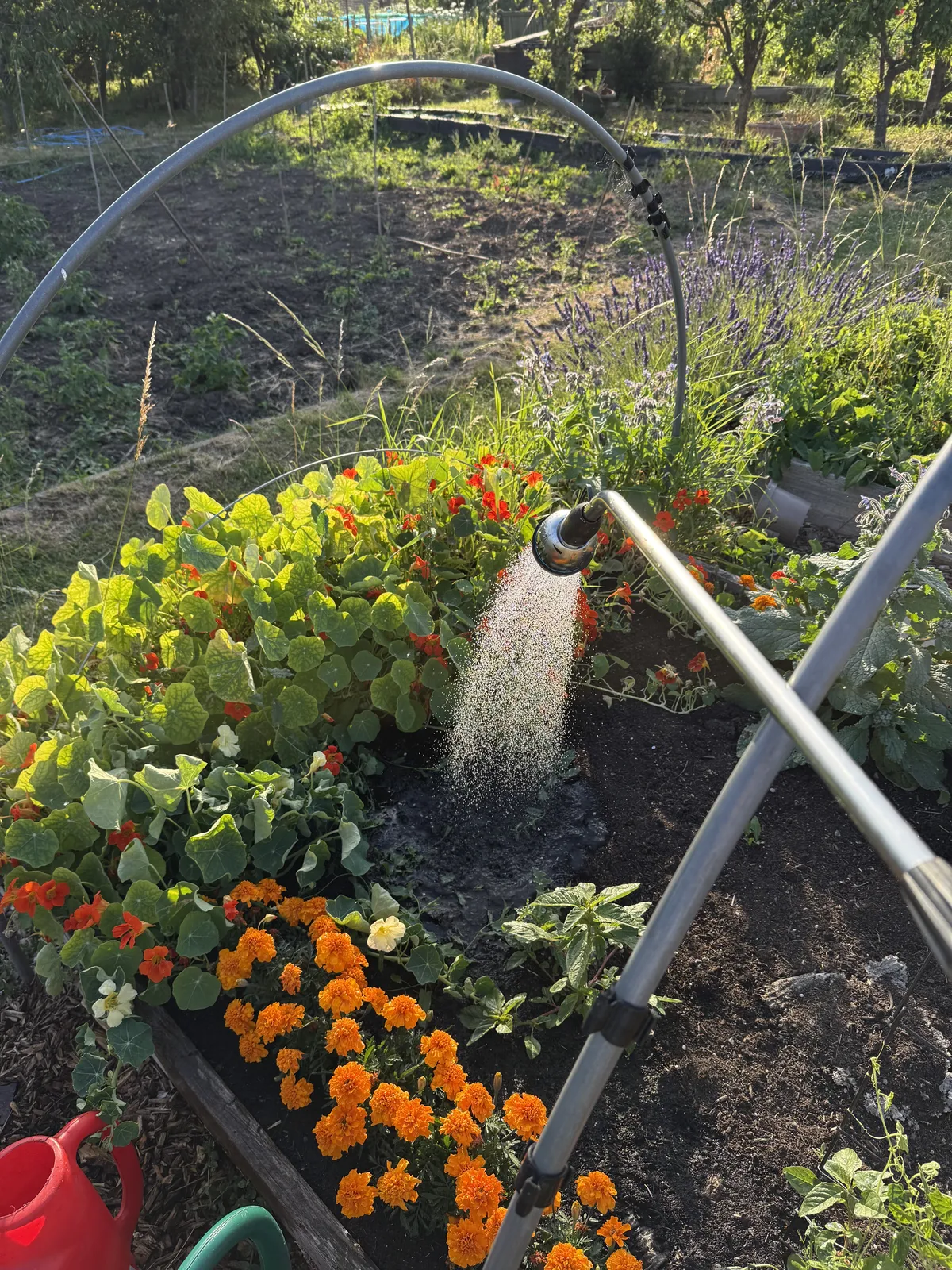
The full plot in summer
By midsummer, the marigolds had transformed the look of the entire allotment. Every bed had a bright orange border, the bees were everywhere, and the plot went from functional to genuinely beautiful. Other allotment holders kept stopping to comment on it.
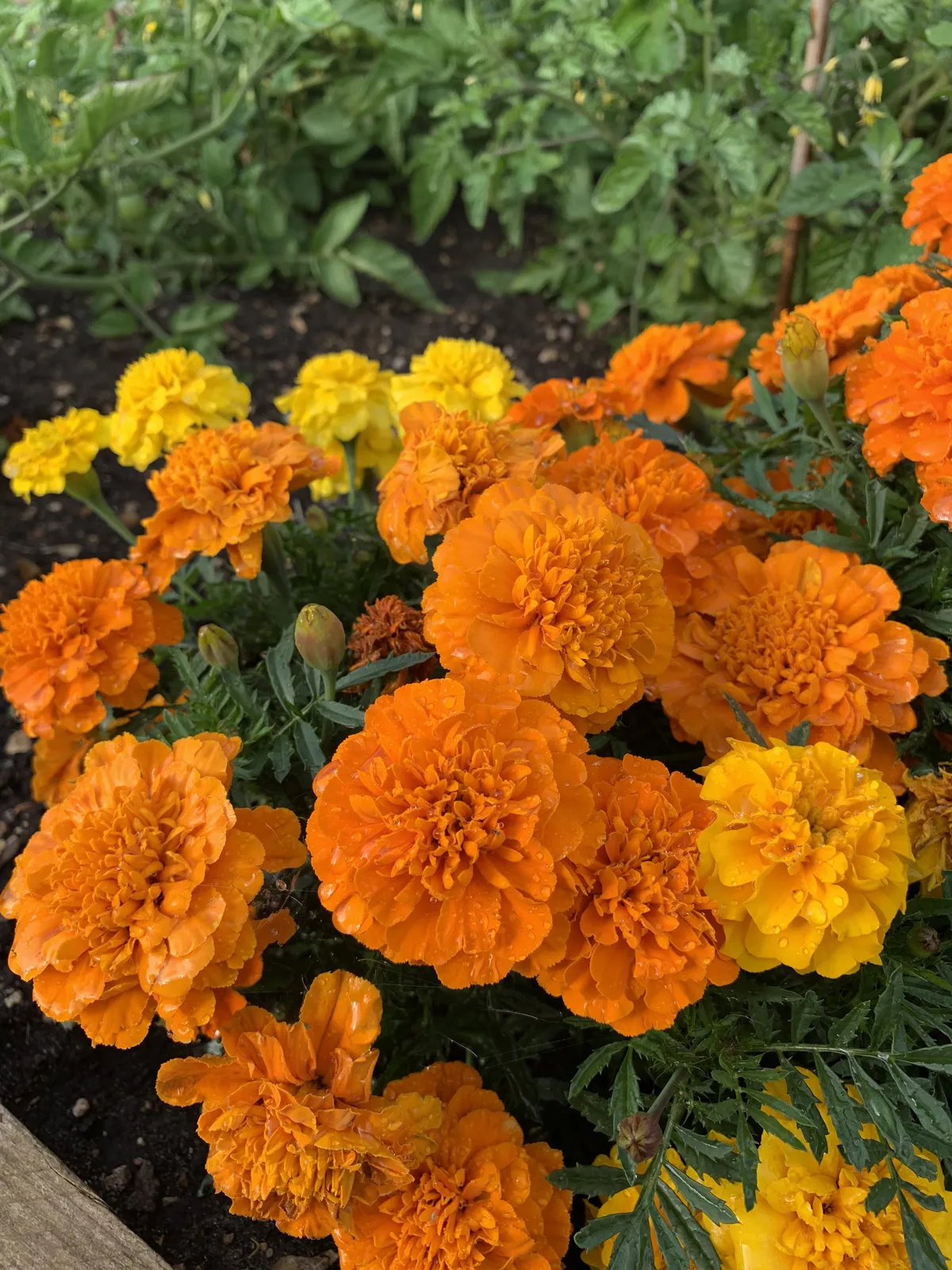
The verdict
Did marigolds solve all my pest problems? No. Slugs still ate my lettuce seedlings. The cabbage white butterflies still found the brassicas. But the aphid pressure was noticeably lower, the pollinators were abundant, and the plot looked absolutely stunning.
For the cost of a few trays of plug plants (under a fiver), marigolds are the best investment you can make on an allotment. I will plant them every year from now on. The pest control benefits are real but modest — the beauty and the pollinators are the main reasons to grow them.
Sow French marigold seeds indoors in April, or buy plug plants in May. Plant them 20-25cm apart around the edges of raised beds. Deadhead regularly to keep them flowering all season.

Get personalised dates for your postcode
Every veg patch is different. Enter your postcode and we'll work out your frost date and tell you exactly what to sow right now.
Enter your postcode