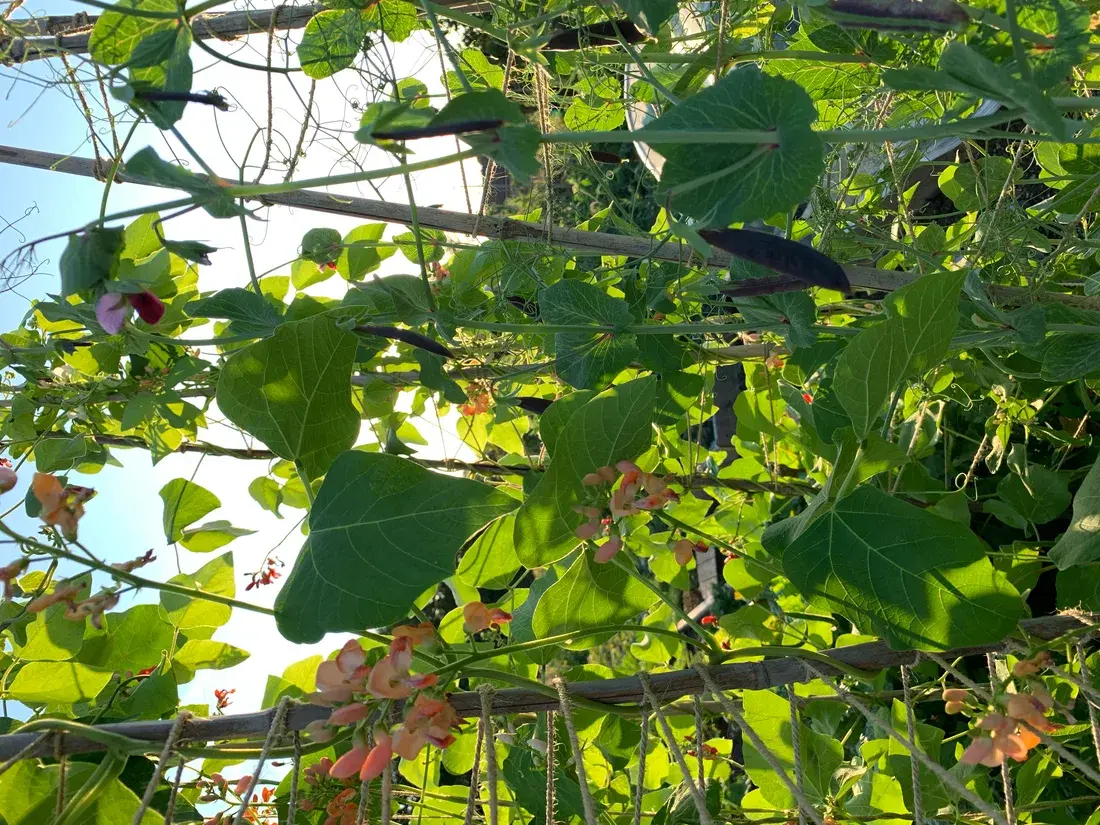
Beans (and peas) have a quiet superpower: with the help of bacteria on their roots they pull nitrogen out of the air and bank it in the soil, leaving the ground richer for whatever follows. That makes them excellent companions for leafy, nitrogen-hungry crops nearby.
Their main pest is blackfly, which clusters on the soft growing tips — so a sacrificial nasturtium to draw it away, and flowers to bring in ladybirds and hoverflies, are the most useful neighbours. Runner beans in particular need pollinators to set pods well, so anything that brings bees to the wigwam is earning its place.
Grow these alongside
Beans climb the corn and feed it nitrogen — the heart of the Three Sisters.
Sprawl beneath the beans, shading the soil and keeping weeds and moisture in check.
The traditional 'bean herb' — said to deter blackfly and lovely with the beans in the pot.
Leafy crops that lap up the nitrogen the beans leave behind.
Use the cool ground at the base of the climbers without competing for height.
Keep these apart
Their root secretions can check the growth of beans and peas — keep them in a separate bed.
Inhibits nearby plants generally; give it its own corner.
Flowers worth tucking in
The blooms that pull pests away and bring in the bees — beauty that earns its keep.
Sacrificial blackfly magnet — draws the aphids onto themselves.
Hoverflies and ladybirds in, aphids down.
Climb alongside, bring in bees, and scent the whole plot.
Common questions
What grows well with runner beans?
Sweetcorn and squash (the Three Sisters), leafy crops like lettuce and spinach that enjoy the nitrogen beans leave behind, and flowers such as nasturtiums and sweet peas to lure blackfly away and bring in the bees runner beans need for good pods.
Can you plant beans and onions together?
Best not to. Alliums (onions, garlic, leeks, chives) can inhibit the growth of beans and peas, so keep them in separate beds.
Do beans really improve the soil?
Yes — beans and peas fix nitrogen from the air into nodules on their roots. Cut the plants off at ground level at the end of the season and leave the roots in, and that nitrogen stays to feed next year's leafy crops.
Want the whole picture?
The complete companion planting guide →