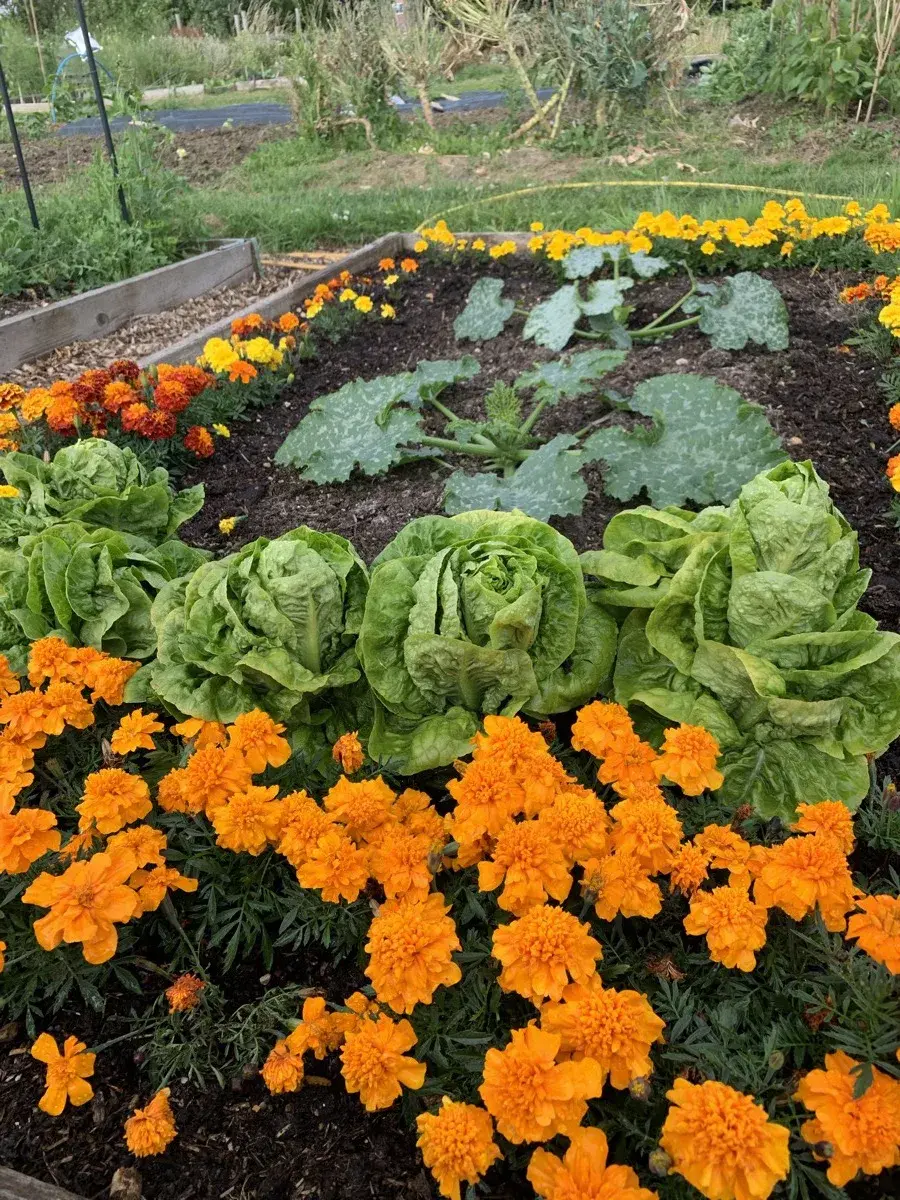
A vegetable bed with flowers in it isn't decoration — it's pest control and pollination working for free. Some flowers act as decoys, drawing aphids and blackfly onto themselves; some bring in the hoverflies, ladybirds and lacewings whose larvae devour aphids; and some are simply irresistible to bees, which means more fruit set on everything from courgettes to beans. A few do all three.
They're also the thing that makes a plot somewhere you actually want to be — and a flower-filled bed is exactly the sort of thing people stop and photograph. Here's what each of the workhorses does.
Flowers worth tucking in
The blooms that pull pests away and bring in the bees — beauty that earns its keep.
The all-rounder — pull whitefly off tomatoes and bring in hoverflies that eat aphids. The first flower to add to any veg bed.
Sacrificial trap crop: blackfly and aphids swarm these instead of your beans and brassicas. Edible flowers and leaves too.
A relentless bee magnet — superb for pollinating courgettes, squash and beans. Self-seeds happily and the flowers are edible.
Brings in beneficial insects all season, copes with poor soil, and the petals are edible. Endlessly cheerful.
Climb alongside beans, bring in pollinators, and scent the whole plot — the most fragrant way to feed the bees.
A low carpet of hoverfly-pulling flowers — superb aphid control, and it self-seeds to come back each year.
Common questions
What flowers should I plant in my vegetable garden?
Start with French marigolds (pest control and hoverflies), nasturtiums (a sacrificial aphid trap), and borage (the best bee magnet for pollination). Add calendula, sweet peas and poached egg plant and you've covered decoys, predators and pollinators all at once.
Which flowers attract pollinators to vegetables?
Borage is the standout for bees, with sweet peas, calendula and poached egg plant close behind. More bees means better fruit set on courgettes, squash, beans and tomatoes.
Are these flowers edible?
Several are — nasturtium flowers and leaves are peppery in a salad, borage flowers are lovely in a drink, and calendula petals brighten a plate. Marigolds and sweet peas are best left for the insects (sweet peas in particular are not for eating).
Want the whole picture?
The complete companion planting guide →