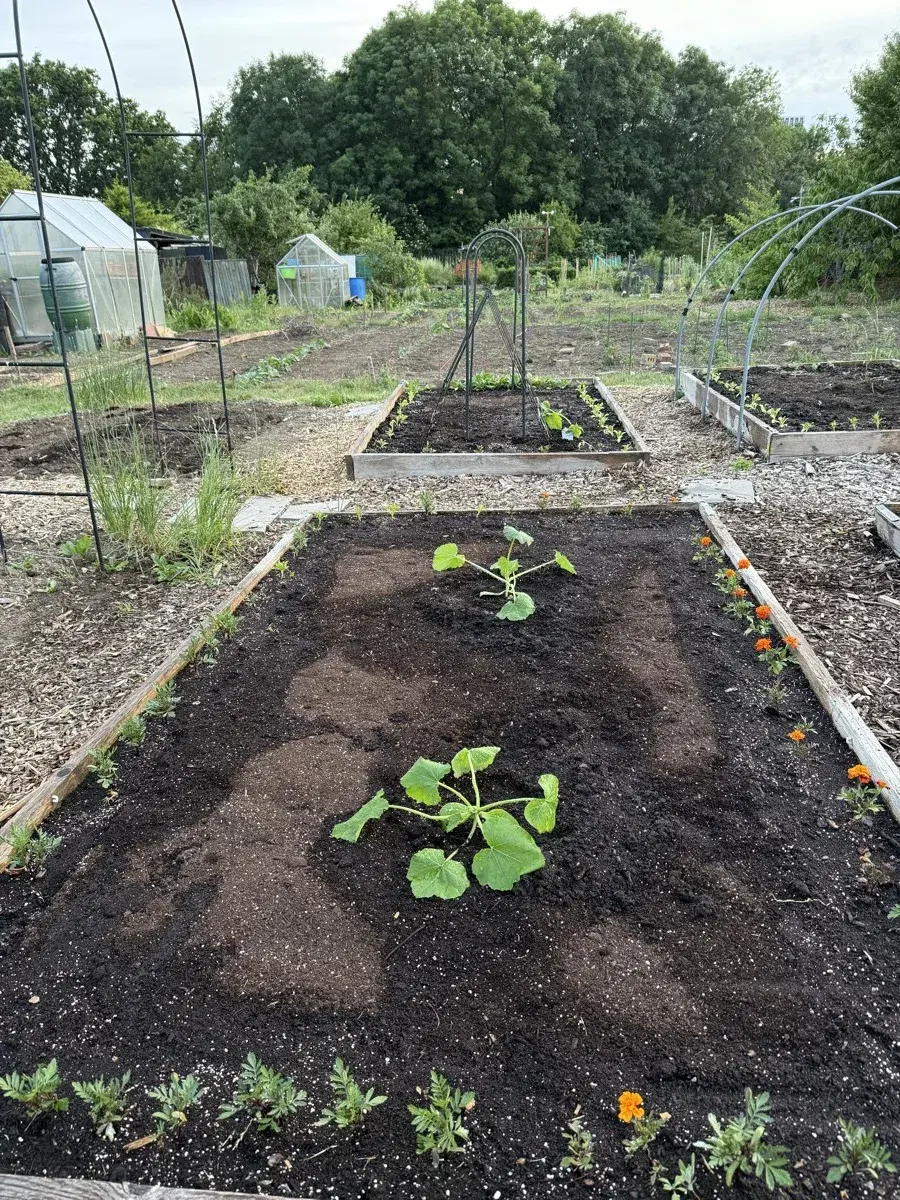
The squash family produces separate male and female flowers, and a bee has to carry pollen from one to the other for a fruit to swell — so the single most valuable thing you can do is plant flowers that pull pollinators in. A bed full of bees is a bed full of courgettes.
They also cast dense shade with those big leaves, which is a gift: it keeps the soil moist and smothers weeds. That makes them the 'squash' of the Three Sisters, sprawling at the feet of sweetcorn and beans. Just give everything plenty of room and plenty of muck — these plants are hungry.
Grow these alongside
A relentless bee magnet — the best single flower for pollinating squash, and edible too.
Lure aphids away and bring in pollinators; they ramble happily among the squash.
The Three Sisters — corn for height, beans for nitrogen, squash to cover the ground.
Bring in hoverflies and bees and keep the soil edges cheerful.
Attracts pollinators and predatory insects when allowed to flower.
Keep these apart
Greedy for the same nutrients and water, and awkward to harvest under sprawling squash.
Squash need elbow room and plenty of food — don't make them fight for it.
Flowers worth tucking in
The blooms that pull pests away and bring in the bees — beauty that earns its keep.
The number-one pollinator plant for squash.
Aphid trap and pollinator draw in one.
Beneficial insects and an edible, cheerful edge.
Common questions
How do I get more courgettes to set fruit?
Most 'failed' courgettes are simply un-pollinated. Plant pollinator flowers like borage and nasturtiums nearby to bring the bees in, and in cool or quiet weather you can hand-pollinate: pick a male flower (the one on a thin stalk), strip the petals, and dab its pollen into the centre of the female flowers (the ones with a tiny fruit behind them).
What grows well with pumpkins and squash?
Sweetcorn and beans (the Three Sisters), and pollinator flowers such as borage, nasturtiums and calendula. Give them all space — squash sprawl further than you expect.
What should not be planted with courgettes?
Keep them away from potatoes, which compete for the same food and water and make harvesting a tangle, and don't crowd them with other greedy feeders.
Want the whole picture?
The complete companion planting guide →