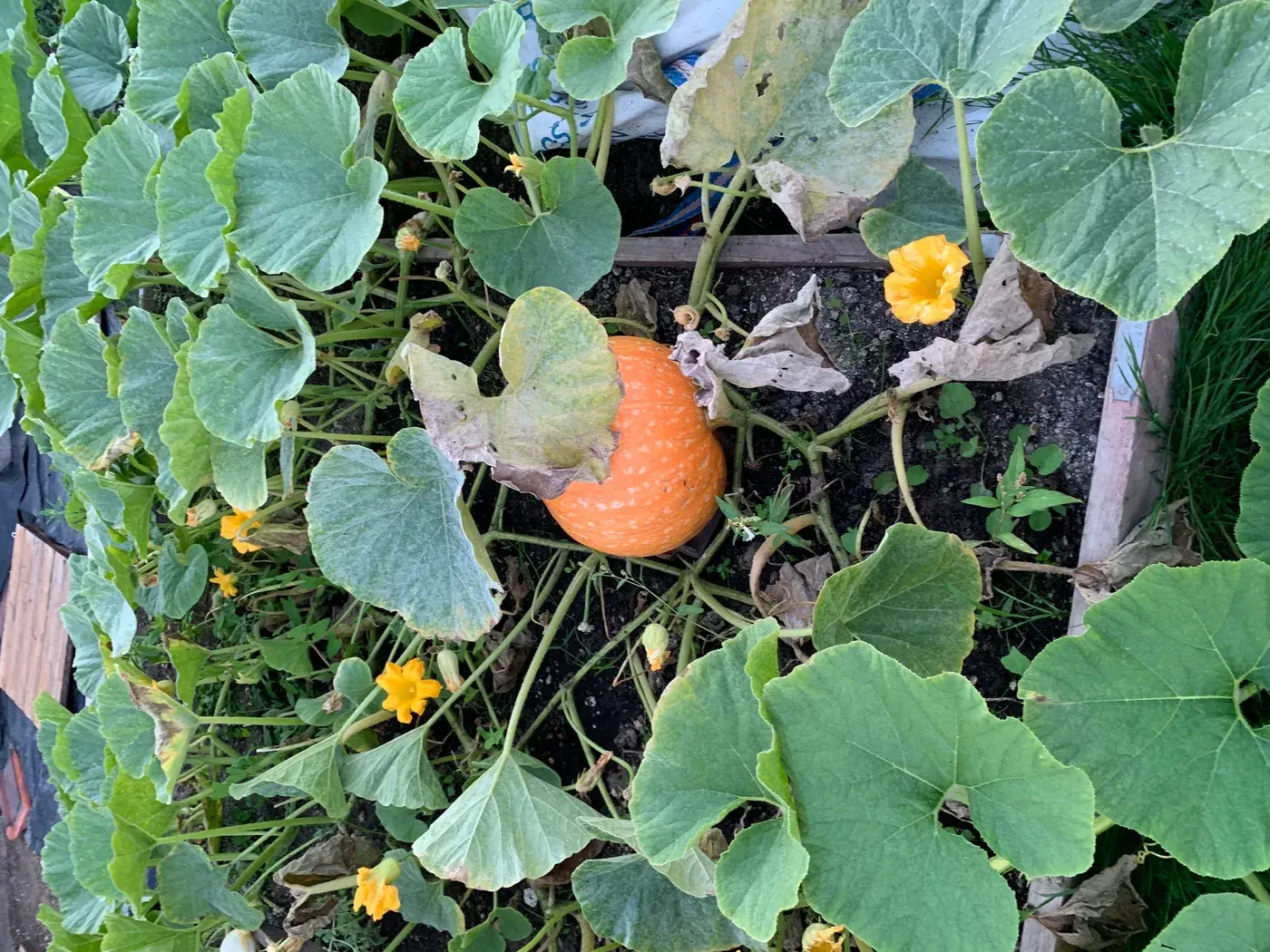
A ripening orange pumpkin nestled among its leaves in the pumpkin patch at a UK allotment
Half-hardy — needs some protection

When to plant
pumpkins in the UK

Limit each plant to 2-3 fruits for bigger pumpkins. Sit them on a tile or slate to stop rot from underneath.

22wto harvest
120cmspacing
8°Cmin soil temp
half-hardyhardiness
Plan it for your plot

Work out your own dates

Starts from the recommended sow date for your area. Sowed on a different day, or planted out late? Adjust below and the harvest moves with it.

Using the UK-average last frost · 15 April · add your postcode to tune it

Sow18 March
Plant out29 Aprilpredicted
Harvest from19 August

Growing journey

Last frost
Sow indoors4w before frost
Plant out2w after frost
Harvest24w after frost

22 weeks from planting out to harvest · Start indoors 6 weeks before planting out

Get pumpkins seeds

Links may be affiliate links. We may earn a small commission at no extra cost to you.

What pumpkins need

Full sun. Very rich soil. Lots of water. Lots of space.

Spacing

120cm

120cm between plants

These plants need serious room. Plan for at least a square metre each.

the varieties

Varieties worth growing

The classic carving pumpkin that looks exactly like the emoji. Grows to a satisfying size, carves easily, and — let's be honest — the kids are going to demand one. The flesh isn't the best for eating, but the seeds roast brilliantly.

in the kitchen

Roasted pumpkin seeds

Rinse the seeds, toss with olive oil, smoked paprika, and flaky salt. Roast at 180C until golden and crunchy. The best bit of the carving pumpkin, and the only bit most people eat.

A deeply ribbed, flat, burnt-orange French heirloom that looks like it belongs in a still life painting. The flesh is intensely sweet and musky — 'muscade' — and the flavour is in a different league from carving pumpkins. The one you grow for eating, not decorating.

in the kitchen

Pumpkin ravioli with brown butter and sage

Roast the flesh until sweet and concentrated, blitz with ricotta and nutmeg, fill fresh pasta. Serve with brown butter, crispy sage, and a grating of parmesan. The kind of dish that makes people go very quiet.

The competition pumpkin. Feed it, water it, talk to it, and it can grow to over 100kg. Not great for eating, but absolutely thrilling to grow if you want to win a village fete or just see the look on your neighbours' faces.

in the kitchen

Pumpkin pie (if you insist)

Roast the flesh, puree, mix with eggs, cream, cinnamon, ginger, and nutmeg, pour into a pastry case and bake until just set. The flavour won't match a Muscade, but the bragging rights are unmatched.

The proper pie pumpkin. Small, sweet, dense-fleshed, and bred for eating rather than carving. A single pumpkin is enough for a pie, and the compact plant size means you can actually grow it in a normal garden.

in the kitchen

Pumpkin pie

Roast the flesh, puree, mix with eggs, cream, cinnamon, ginger, and nutmeg, pour into a pastry case and bake until just set. The dense, sweet flesh of Small Sugar makes this a proper pie rather than a watery disappointment.

Pumpkinsdrink heavily through summer — a good soak at the roots beats a daily sprinkle. How I water, and the lance I use →

When to sow pumpkins

Sow indoorsMarchApril
Plant outAprilMay

Based on UK average frost date. Enter your postcode for exact dates, or find your city.

Seeds

Where to buy pumpkins seeds

Links may be affiliate links. We may earn a small commission at no extra cost to you.

Kit

What you'll need for pumpkins

The stuff beginners wish they'd bought sooner.

Organic slug pelletsAmazon

Ferric phosphate — pet-safe and organic-approved. Young plants are slug magnets. One night can finish them.

Straw mulchAmazon

Keep developing pumpkins off wet soil. Straw prevents rot and keeps the base dry.

Links go to Amazon. We earn a small commission at no extra cost to you.

Get your exact dates

Enter your postcode for personalised planting dates for pumpkins.

Keep exploring

Other crops to grow

Broad beans

Pinch out the growing tips once the first pods form to discourage blackfly. They

Peas

Sow every 3 weeks for a continuous harvest. Pick regularly to keep them producin

Lettuce

Sow a short row every 2 weeks and you'll never buy a supermarket bag again. Pick

Spinach

Bolts the moment it gets hot. Best in spring and autumn. Pick little and often —

Radishes

The quickest crop you can grow — seed to plate in 4 weeks. Sow between slower cr

Carrots

Sow thinly to avoid thinning — the smell of crushed leaves is a dinner bell for

Beetroot

Each seed cluster produces several seedlings — thin to the strongest. Don't chuc

Onion sets

Push sets into the soil with the tip just showing. Easiest way to grow onions —

Potatoes (maincrop)

Plant a few weeks after earlies. Earth up as haulms grow. Harvest when foliage d

Potatoes (early)

Chit (sprout) seed potatoes on a windowsill before planting. Earth up as they gr

Kale

Gets sweeter after a frost. One of the hardiest crops — can harvest all winter.

Parsnips

Very slow to germinate (2-4 weeks). Use fresh seed every year. Sow radishes alon

Spring onions

Sow a pinch every few weeks and you'll have spring onions all season. Dead easy

Swiss chard

Beautiful and productive. Pick outer leaves and it keeps going for months. Rainb

Turnips

Harvest when golf-ball sized for the sweetest flavour. Leave them too long and t

Leeks

Drop seedlings into deep holes and just water in — no need to fill the hole. The

Broccoli

Cut the main head first and you'll get side shoots for weeks. Purple sprouting i

Cabbage

Different varieties for each season — spring, summer, autumn, and winter types.

Cauliflower

Fold outer leaves over the curd to keep it white. Cauliflower leaves are delicio

Brussels sprouts

Grow through summer, harvest from autumn through winter. Flavour improves after

Garlic

Plant individual cloves Oct-Nov, pointed end up, 2.5cm deep. Garlic needs a cold

Parsley

Slow to germinate (3-4 weeks) — don't give up on it. Soak seeds overnight in war

Tomatoes

Pinch out side shoots on cordon types. Feed weekly with tomato feed once the fir

Peppers

Start early — they're slow growers. Pinch out the first flower to encourage bush

Chillies

Need heat to germinate — use a propagator or the warmest windowsill you've got.

Cucumbers

Outdoor varieties are tougher and easier than greenhouse ones. Keep picking and

Runner beans

Build a strong frame — they get seriously heavy. Pick every 2-3 days or they go

Aubergine

Start very early — January isn't too soon. Limit to 5-6 fruits per plant if you

Basil

Pinch out flower buds to keep leaves coming. Harvest from the top to encourage b

Strawberries

Plant runners in spring or late summer and you will be picking fruit the followi

Raspberries

Plant bare-root canes in winter for the cheapest option. Summer varieties fruit

Blackberries

Cultivated blackberries produce bigger, sweeter fruit than wild ones and are tho

Gooseberries

One of the easiest fruit bushes for UK allotments. Plant a bare-root bush in win

Blackcurrants

Blackcurrants are packed with vitamin C and make the best jam and cordial. Plant

Redcurrants

Beautiful jewel-like berries that hang in trusses. They tolerate more shade than

Rhubarb

Plant a crown in winter, do not harvest the first year, and it will reward you w