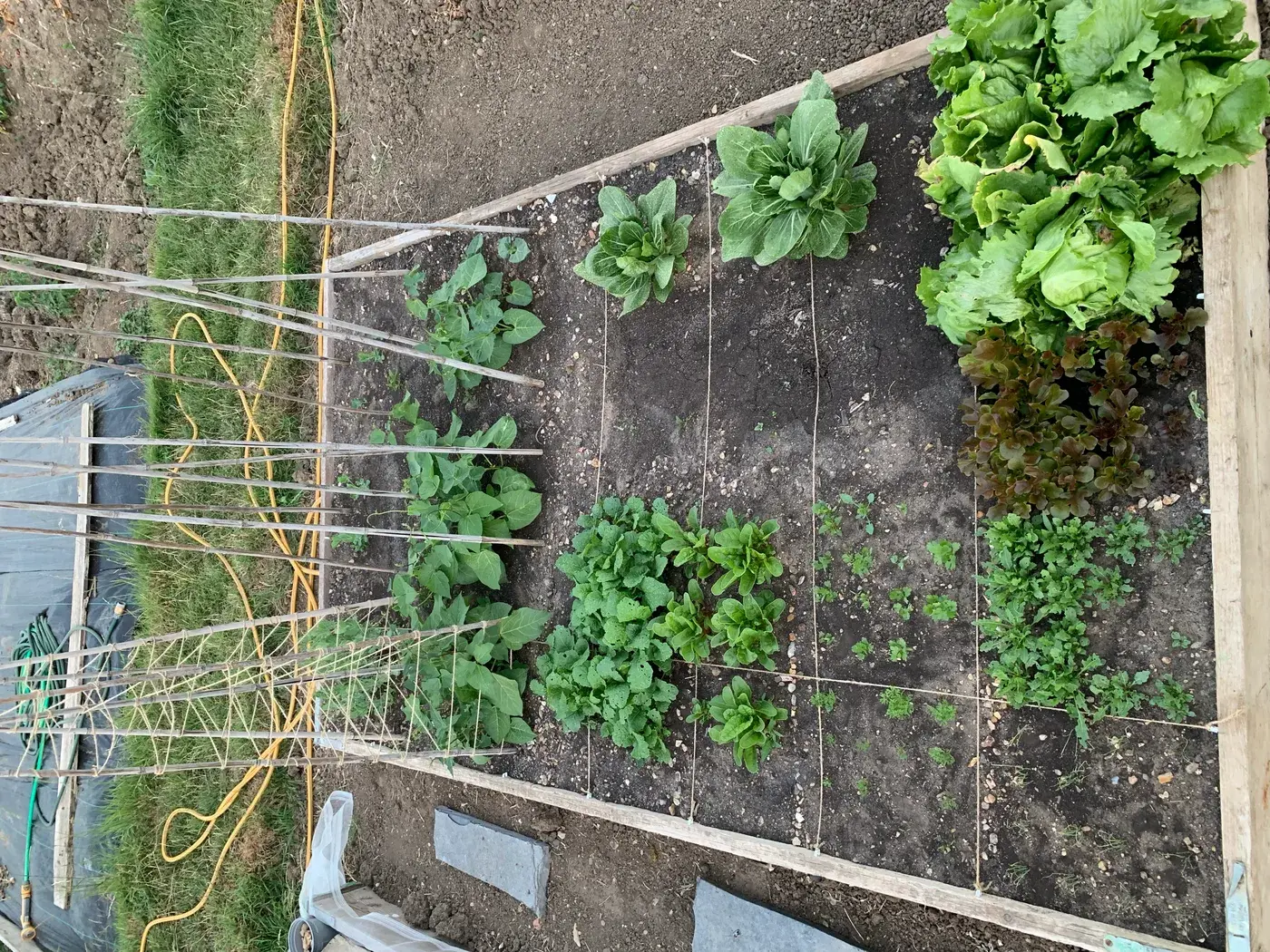
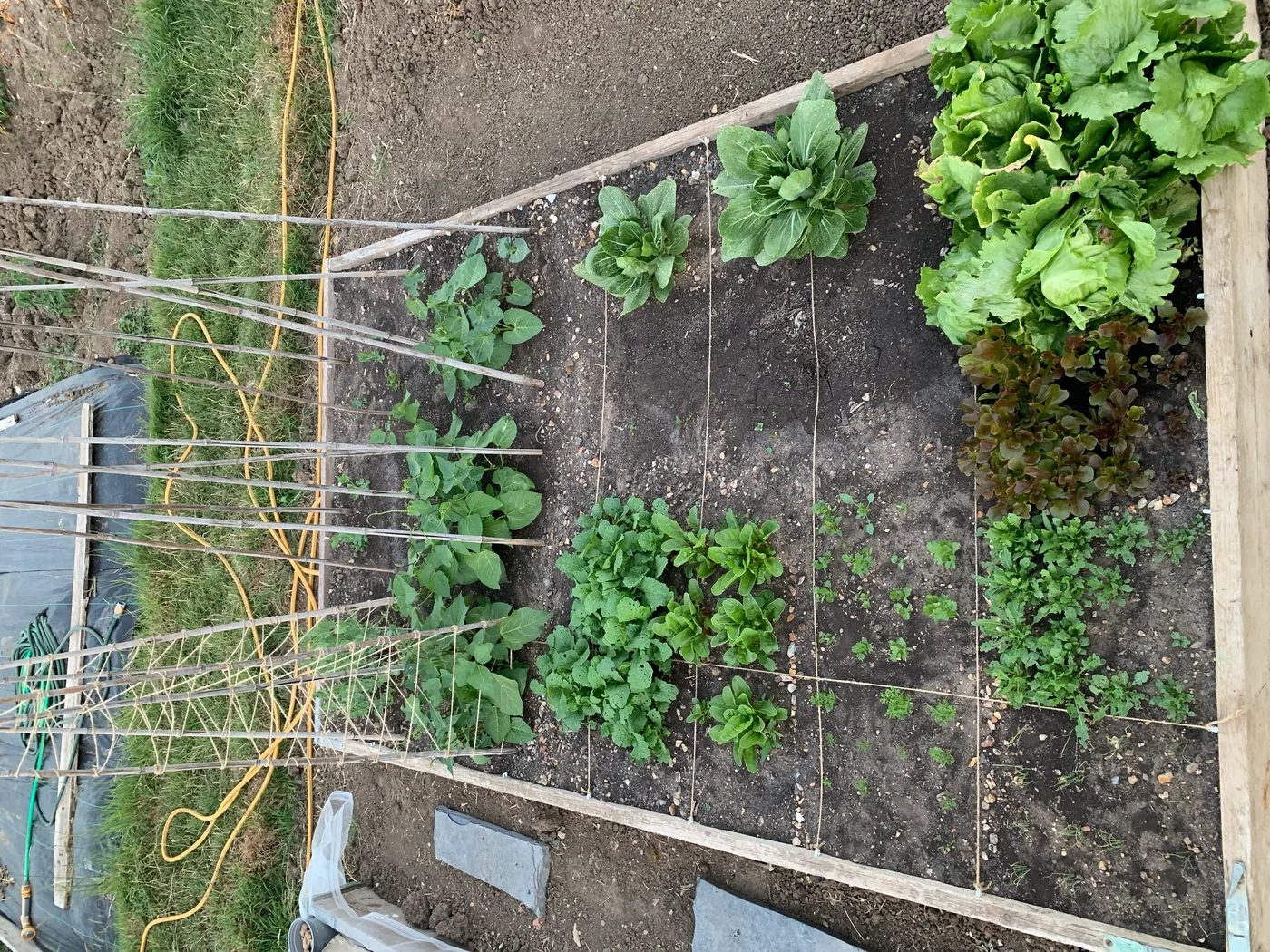
The idea is simple. Instead of long rows with bare earth between them, you divide a bed into a grid of squares — and each square gets its own crop, spaced to suit it. A square of lettuces here, a square of radishes there, carrots, beetroot, spring onions, all cheek by jowl. You fit far more into a small bed, there's almost no wasted ground, and weeds have nowhere to hide.
What made it easy (and, honestly, a lot of fun) was a little tool I bought: a colour-coded seeding square. It has different hole patterns pressed into it — one big hole for the things that need room, lots of little ones for the close-spaced crops — so you just press it into the soil, sow into the dimples in the right pattern, and move on to the next square. No measuring, no guesswork. I direct-sowed nearly everything that first summer straight through it.
Seeding Square — colour-coded seed spacer
The colour-coded square I used — press it into the soil and it gives you the right number of holes, in the right pattern, for whatever you're sowing (1, 4, 9 or 16 to a square). It turns spacing into something quick and oddly satisfying, and it's brilliant for getting children involved too.
Press, sow into the dimples, move on — no measuring.
The other lovely thing is how naturally it works with companion planting. Once you're sowing different crops side by side in neighbouring squares, you can put good companions together on purpose — lettuce in the shade of taller things, carrots near alliums, flowers tucked in to pull the pollinators. It's the same idea, just on a tidy little grid.
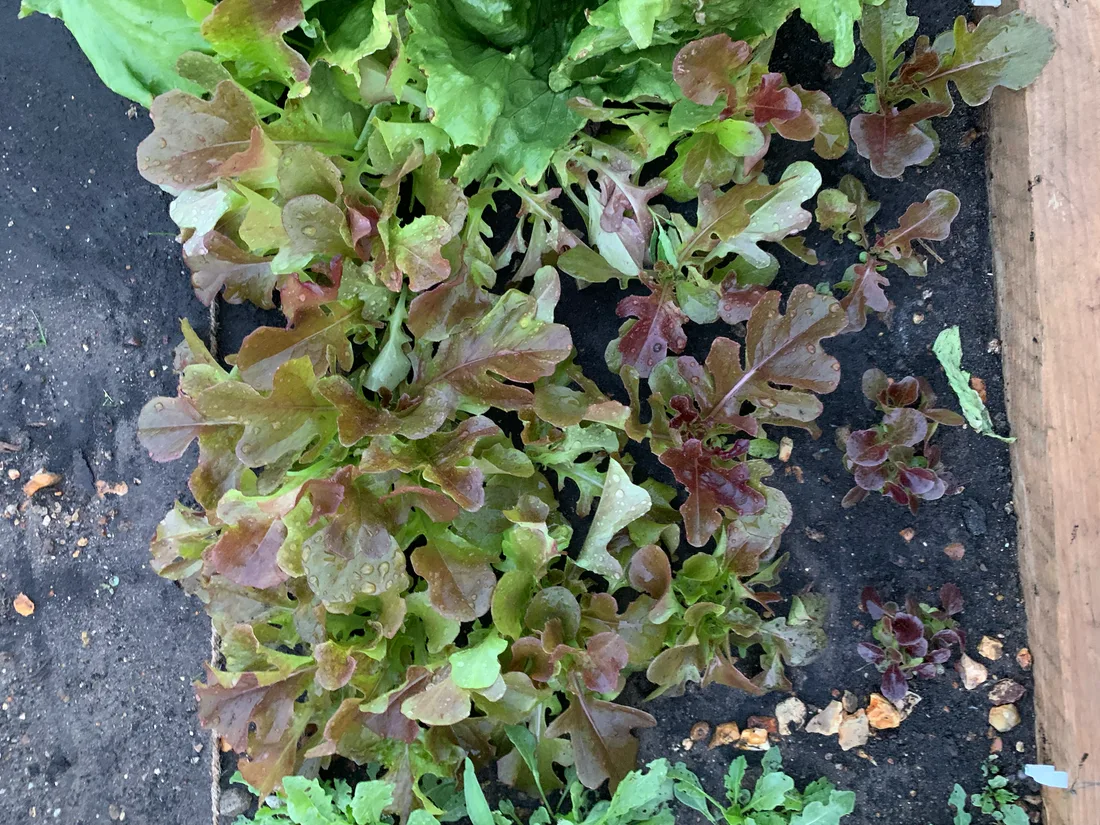
If you're starting a new plot and the bare beds feel daunting, this is the gentlest way in I know. Grid it up, sow a square at a time, and a month later you'll have a patchwork of green that looks like you knew exactly what you were doing all along.

Get personalised dates for your postcode
Every veg patch is different. Enter your postcode and we'll work out your frost date and tell you exactly what to sow right now.
Enter your postcode