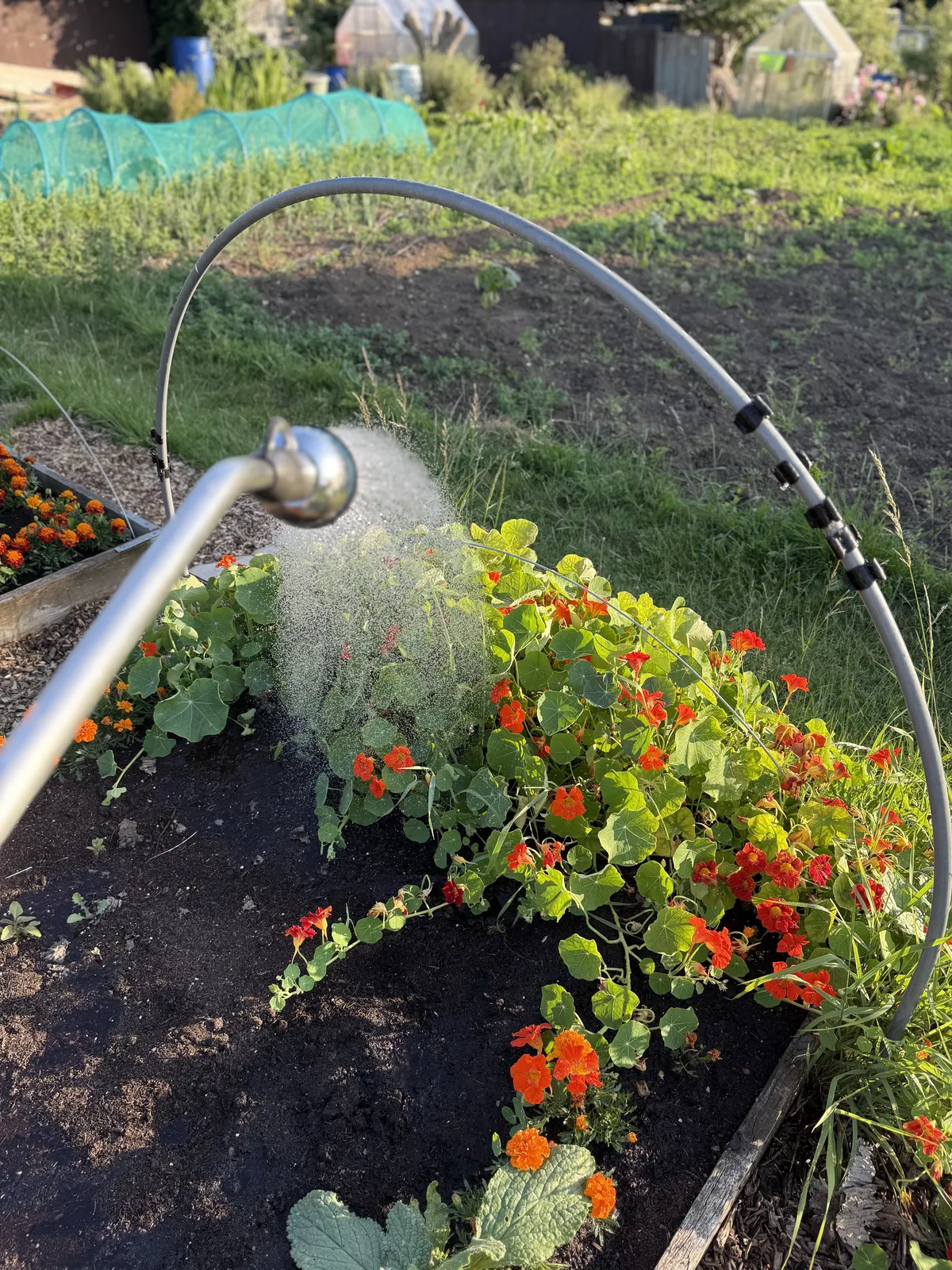
Watering vegetables
Watering sounds simple enough, but getting it wrong causes more problems than most people realise. Blossom end rot, bolting lettuce, split carrots — half the time the culprit is inconsistent watering.
Why watering matters more than you think
Plants can cope with a lot — poor soil, a bit of shade, even the odd pest. But erratic watering throws everything off. When the soil swings between bone dry and soaking wet, roots can't take up calcium properly (hello, blossom end rot), skins harden then crack when water finally arrives, and leafy crops panic and bolt to seed before you've had a single harvest.
The goal isn't to water constantly. It's to water consistently. Get that right and you'll solve half the problems on your plot without even trying.
When to water: morning vs evening
There's a long-running debate about this. Evening watering loses less to evaporation because the sun is low and the air is cooler — more of the water reaches the roots. Morning watering has the advantage of letting foliage dry during the day, which can reduce fungal problems like blight and mildew.
The honest answer? The best time to water is whenever you actually can. If you only get to the allotment after work, water in the evening. If you're an early riser, water in the morning. Consistency beats timing every time.
How much water: the "good soak, less often" principle
A light sprinkle every day is worse than a thorough soak two or three times a week. Why? Shallow watering keeps roots near the surface where they dry out fastest. Deep watering encourages roots to grow downwards, where the soil stays moist for longer. The plant becomes more resilient and you water less overall.
As a rough guide, aim for enough water to soak the top 15–20cm of soil. That's about a full watering can (10 litres) per square metre. Push your finger into the soil a few hours after watering — if it's moist a knuckle deep, you're doing fine.
The easiest way to get that soak down to the roots rather than the leaves is a long watering lance — it reaches the back of the bed and in under the foliage without you trampling a thing. Here's the one I use, and why I love it →
What different crops need
Not all vegetables are equally thirsty. Knowing which crops need the most attention saves time and water.
Thirsty crops
Tomatoes, courgettes, runner beans, cucumbers, and celery. These need consistent, deep watering throughout the growing season, especially once they start flowering and fruiting. Tomatoes in particular — irregular watering is the number one cause of blossom end rot and split fruit.
Moderate needs
Peas, broad beans, lettuce, and spinach. These need regular watering but can tolerate a slightly less rigid schedule than the thirsty group. Lettuce and spinach will bolt in hot, dry spells though, so keep an eye on them in summer.
Drought-tolerant once established
Carrots, parsnips, onions, and garlic. Once these are up and growing, their roots go deep and they cope well with drier conditions. In fact, overwatering onions and garlic can cause rot. Water them in well when you plant, then ease off unless it's genuinely bone dry.
Seedlings vs established plants
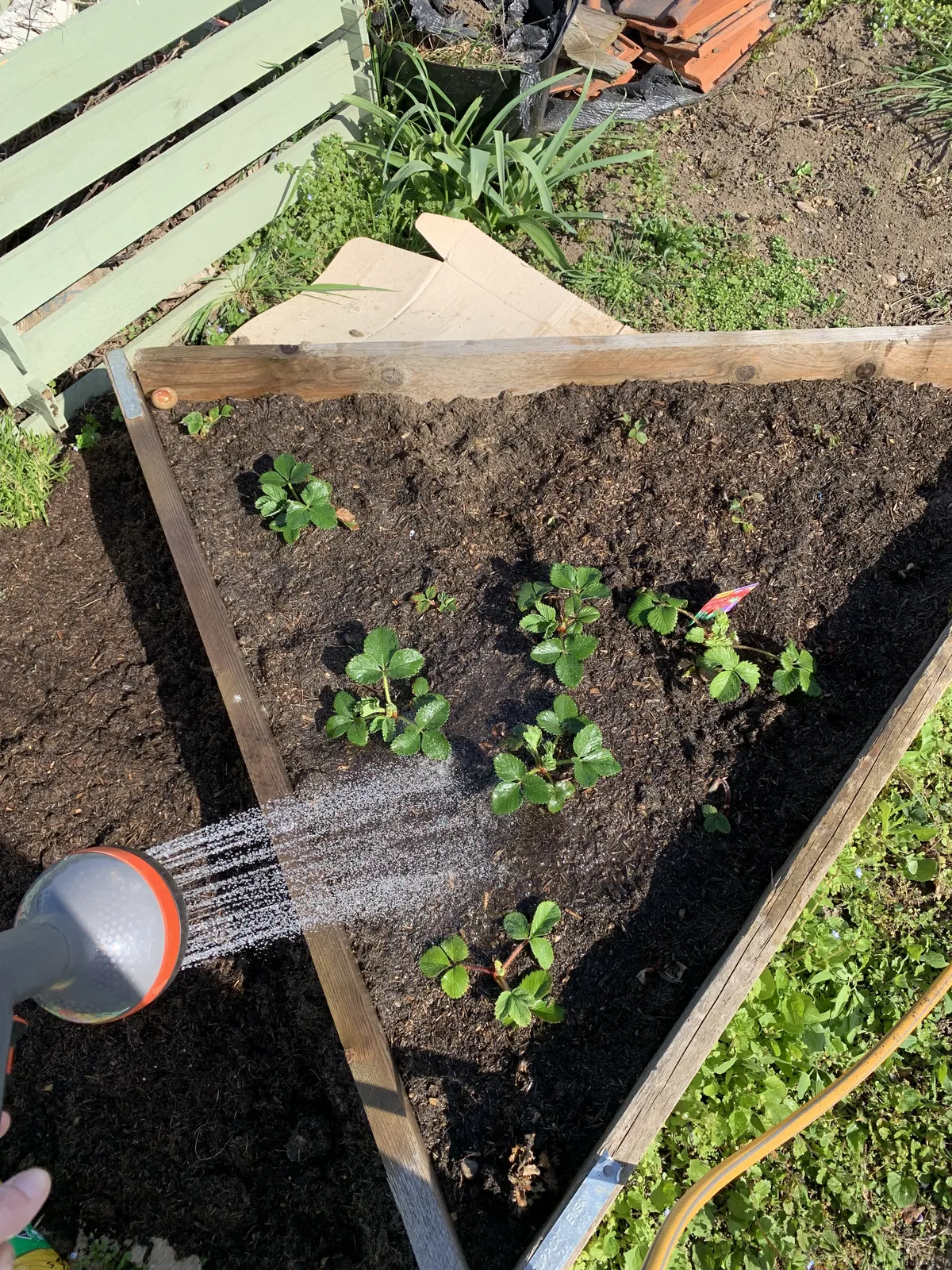
Seedlings are the exception to the "deep soak, less often" rule. Their roots are tiny and shallow, so they dry out fast. Water seedlings little and often — sometimes twice a day in hot weather — using a fine rose on your watering can so you don't flatten them.
Once plants are established and growing strongly, switch to deeper, less frequent watering to encourage those roots downwards. The transition usually happens a few weeks after transplanting, once you can see new growth coming through.
Mulching: the single best thing you can do
If you take one thing from this guide, make it this: mulch your beds. A 5cm layer of compost, straw, or grass clippings on the soil surface massively reduces evaporation, keeps roots cool in summer, and suppresses weeds into the bargain.
On a hot day, unmulched soil can lose litres of water to evaporation. Mulched soil stays moist for days longer. It's free if you use your own compost or grass clippings, and it improves the soil as it breaks down. Apply it after watering, once the soil is already moist.
Water butts: every allotment should have one
A basic 200-litre water butt costs £25–40 and connects to the downpipe of any shed, greenhouse, or polytunnel roof. Rainwater is actually better for plants than tap water — it's at ambient temperature (no cold shock) and free of chlorine.
Position it on a few stacked bricks or a stand so you can fit a watering can underneath the tap. If you have the space, chain two butts together with an overflow connector — you'll be amazed how quickly they fill during a proper British downpour.
Overwatering vs underwatering: how to tell
Signs of underwatering
- Wilting in the afternoon (recovers overnight in mild cases)
- Dry, crispy leaf edges
- Slow growth and small fruit
- Soil pulls away from the edges of pots
- Flowers dropping without setting fruit
Signs of overwatering
- Yellowing lower leaves
- Mushy stems near the soil line
- Soil stays constantly soggy or smells sour
- Fungal growth or green algae on the compost surface
- Roots that are brown and soft rather than white and firm
When in doubt, stick your finger into the soil. If it's moist a few centimetres down, hold off. If it's dry, water. Simple as that.
Container growing needs more water
Pots and grow bags dry out far faster than open ground. The roots have nowhere to go and the container itself heats up in the sun. In midsummer, containers may need watering twice a day — once in the morning, once in the evening.
Bigger pots dry out more slowly, so go as large as you can. Self-watering pots with a reservoir at the bottom are genuinely useful if you can't water daily. And yes, mulch the surface of your pots too — it makes a real difference.
Hosepipe bans and saving water
Hosepipe bans are a regular feature of UK summers, particularly in the South East. Even when there isn't a ban, being water-wise is just good practice.
- Water butts— your first line of defence. Rainwater isn't affected by hosepipe bans.
- Grey water— washing-up water (without bleach or strong detergent) is fine for most crops. Let it cool first and don't use it on seedlings.
- Mulch everything— reduces evaporation by up to 70%.
- Water at the base— direct water to roots, not leaves. A watering can is more efficient than a sprinkler.
- Prioritise— in a drought, focus water on fruiting crops and seedlings. Established root veg and alliums can tough it out.
For a full rundown of what to keep on your plot, see our allotment kit guide.
Watering kit that's actually worth buying
You don't need much, but the right watering gear makes a genuine difference. A cheap plastic can with no rose will blast seedlings flat. A decent one lasts decades and makes the job quicker and easier.
Watering cans
Haws 8.8L Long Reach
~£40The one you see on every allotment for good reason. Beautifully balanced, holds enough for a proper soak, and the long spout gives you precision without bending double.
The long spout gives a gentle flow that won't flatten seedlings.
10L Plastic Watering Can
~£8Perfectly fine for getting started. Look for one with a detachable rose. It won't last forever but it'll do the job while you decide if you want the Haws.
View on AmazonHose & attachments
Hozelock Multi Spray Gun
~£15Multiple spray patterns including a gentle shower for seedlings and a jet for cleaning pots. Locks on so you're not gripping it the whole time.
View on AmazonHozelock Auto Reel
~£65Wall-mounted reel that retracts the hose automatically. A luxury, but if you're sick of wrestling a tangled hose every visit, it's life-changing.
View on AmazonWater butts
Ward 210L Slimline Water Butt
~£45Slim enough to fit against a shed wall without eating into your growing space. 210 litres is a decent capacity — enough for a couple of weeks of careful watering.
One butt per shed downpipe. Two is better — you'll be amazed how fast they empty in July.
Water Butt Diverter Kit
~£8Connects your downpipe to the butt and diverts overflow back into the drain when it's full. Dead simple to fit — ten minutes with a hacksaw.
View on AmazonSeep hose
Hozelock Porous Soaker Hose
~£15A porous hose that seeps water gently along its entire length. Brilliant for rows of beans, courgettes, or tomatoes — delivers water right to the roots with almost zero waste.
Lay it under mulch along your rows. Connect to a water butt or timer. Saves hours of standing around with a hose.
Affiliate links— This guide contains links to Amazon. If you buy through them, we earn a small commission at no extra cost to you. We only recommend things we'd actually use on our own plot.
Common questions
How often should I water my vegetable garden?
Most established vegetables do best with a thorough soak two to three times a week rather than a light sprinkle every day. Seedlings and containers need more frequent attention — sometimes daily in hot weather. Push your finger into the soil: if it's dry a few centimetres down, water.
Is it better to water in the morning or evening?
Evening watering loses less to evaporation. Morning watering lets foliage dry during the day, reducing fungal risk. Both are fine — the best time is whenever you can do it consistently.
How do I tell if I'm overwatering?
Yellowing lower leaves, mushy stems near the soil, constantly soggy compost, and a sour smell are all signs of overwatering. The soil should feel moist a few centimetres down, not waterlogged. If in doubt, wait a day before watering again.
Do tomatoes need a lot of water?
Yes — tomatoes are one of the thirstiest crops, especially once they start setting fruit. The key is consistency: irregular watering causes blossom end rot and split fruit. Water at the base, keep the amount steady, and mulch around the stems.
Should I use a water butt on my allotment?
Without question. A 200-litre butt costs £25–40, gives you free rainwater that's actually better for plants than tap water, and isn't affected by hosepipe bans. It's one of the best investments you can make on a plot.
Personalised to your postcode.
Good soil holds water better. Start here.
What to grow together and what to keep apart.
Get seedlings off to a strong start.
Free rainwater all season — which butt to buy.