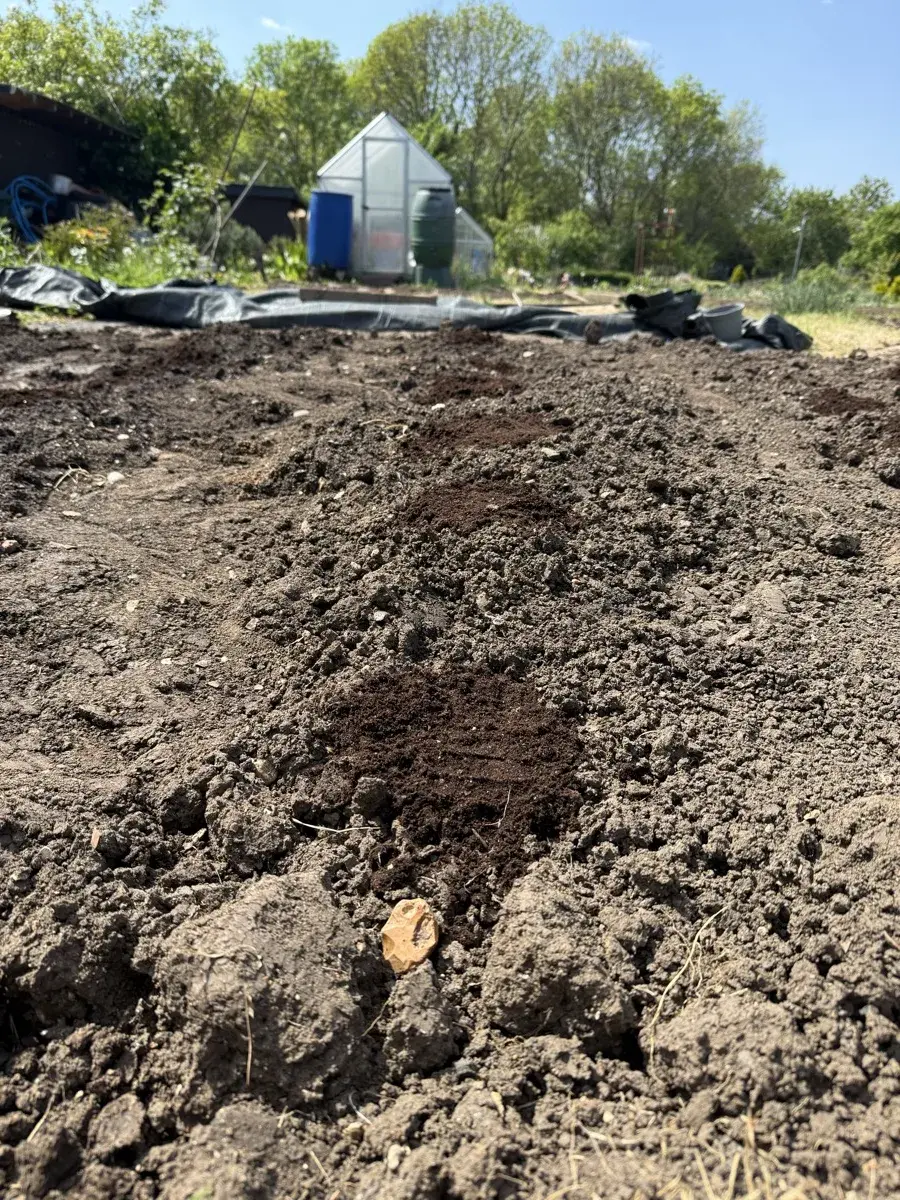
Clearing first
Before anything else, get the weeds out. Pull up everything that is growing and get the roots if you can. Annual weeds go on the compost. Perennial weeds — dock, couch grass, bindweed — need more care; even a small fragment of root will come back. This is the part nobody photographs, but it matters most.
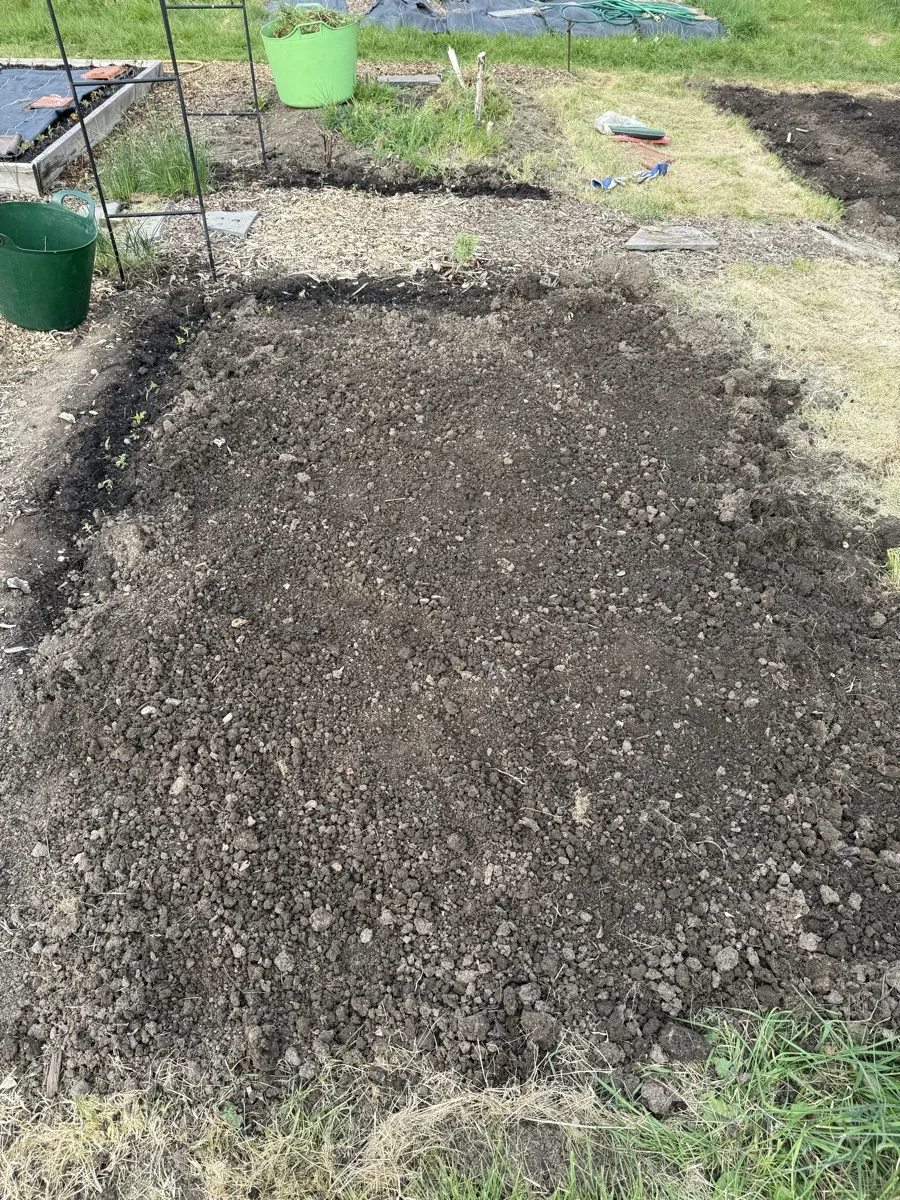
Digging over
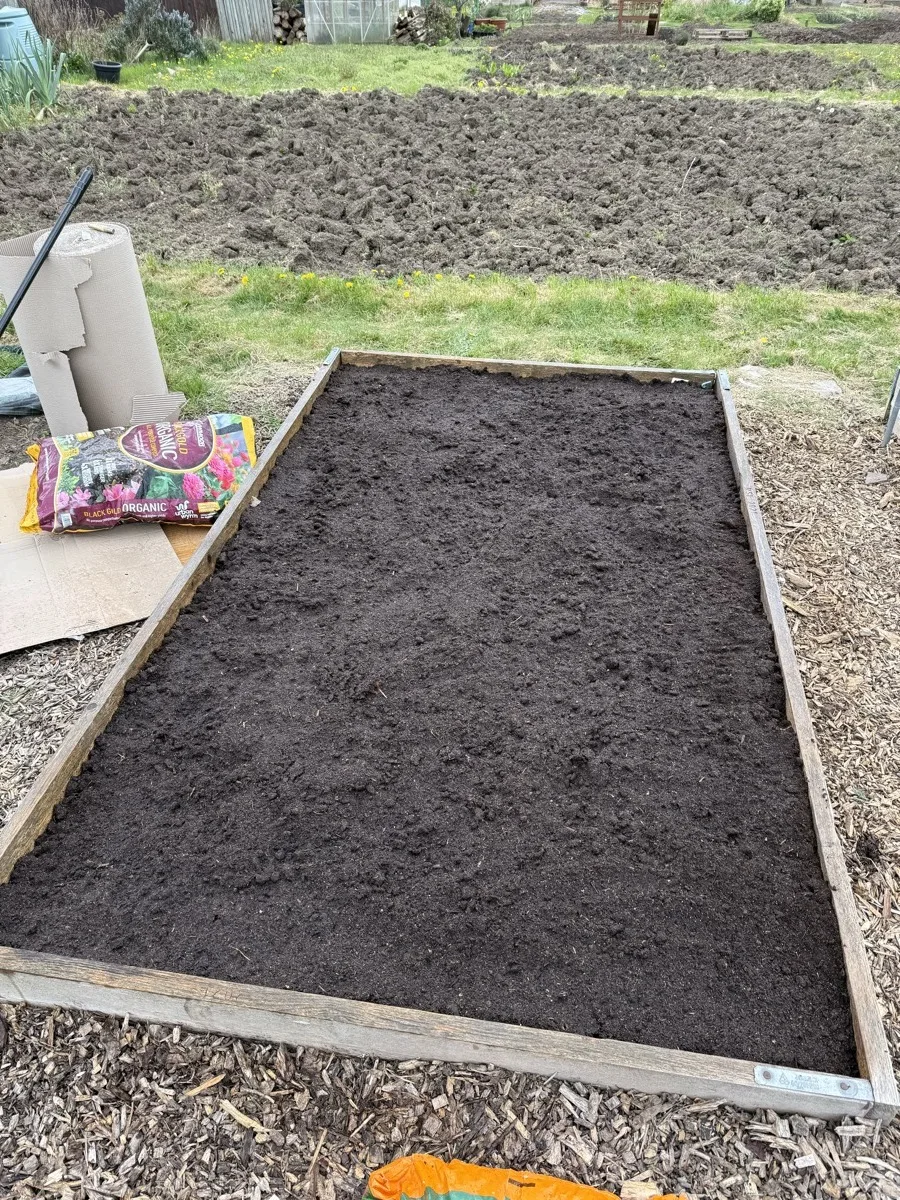
I use a fork rather than a spade — it loosens the soil without inverting it and bringing the subsoil up. Work from one end, push the fork in to its full depth, lever forward. If you have compost or manure, work it in as you go. The soil should end up dark and crumbly. If it is still coming up in heavy wet clods, wait a few days — working wet soil does more harm than good.
If it sticks to your boots in clumps, wait. Wet soil worked into clods is hard to recover.
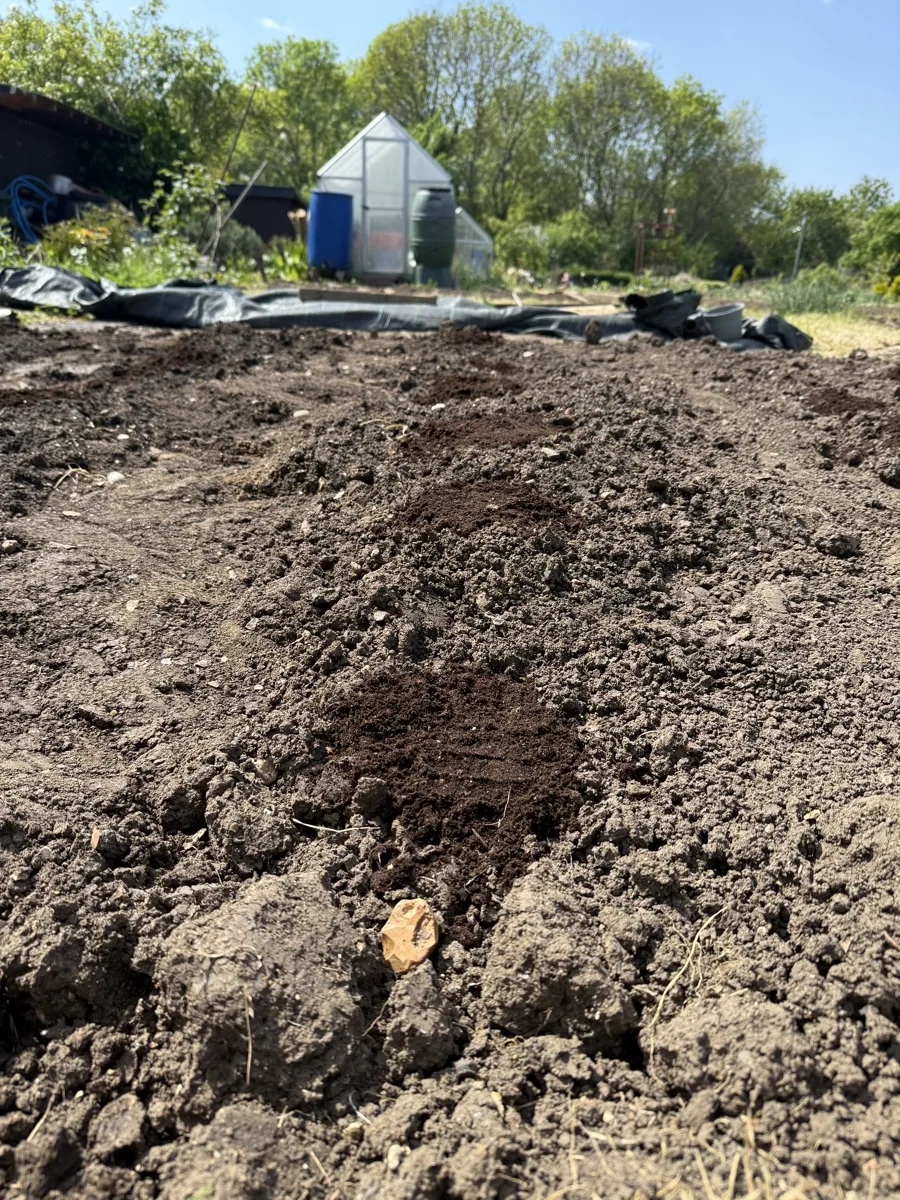
Raking a seed bed
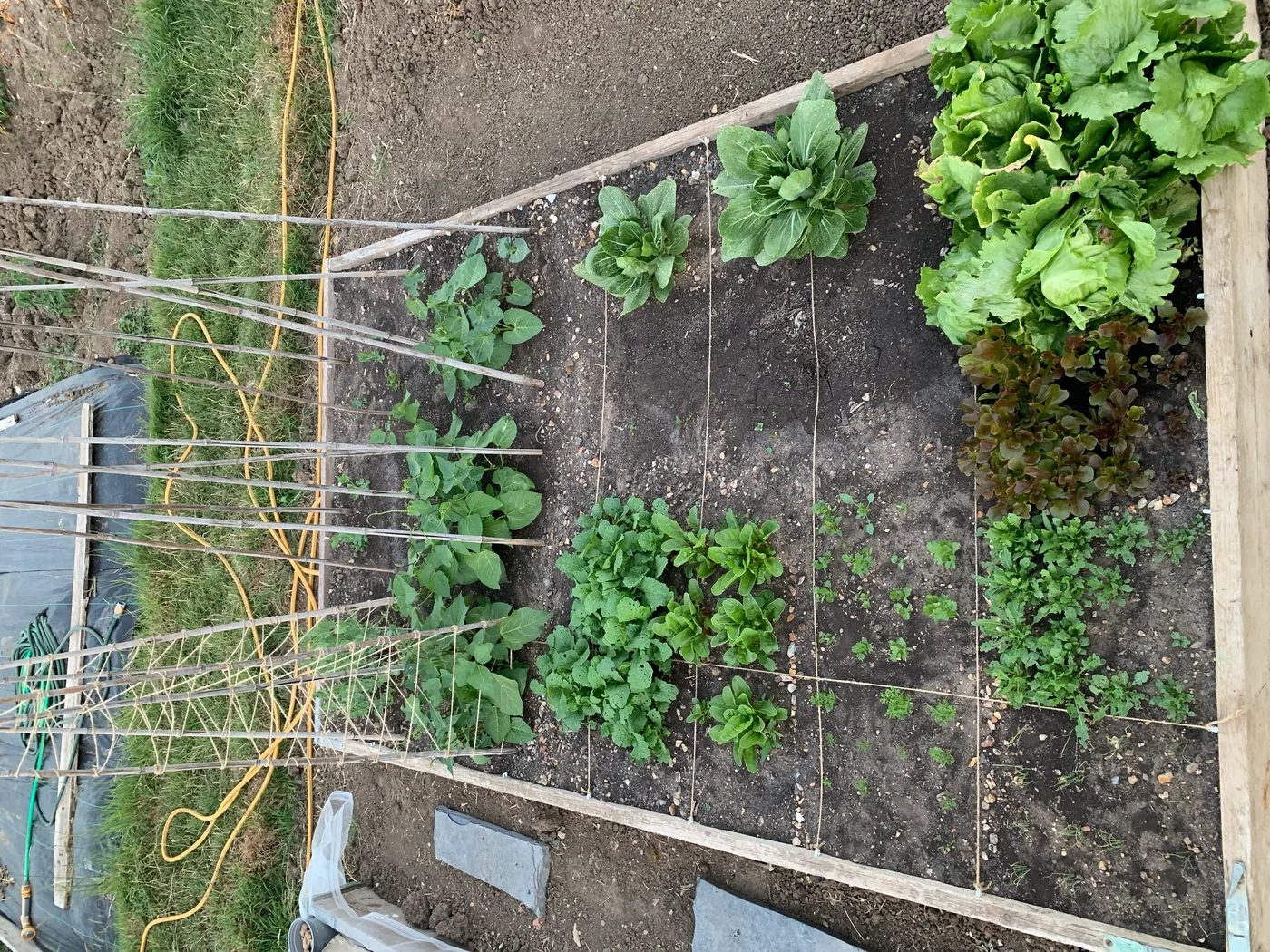
For anything that is going to be direct sown — carrots, beetroot, radishes, salad — the surface needs to be fine. Rake back and forth until the clods are gone. To make a drill, press the corner of the rake or a bamboo cane into the surface in a straight line. Shallow for small seeds, deeper for peas and beans.
Covering what is not ready
An uncovered bed in spring fills with weeds fast. If a bed is prepared but not going in for a few weeks, cover it — weed membrane, cardboard, anything that keeps the light off. I weight the edges down with bricks. When the time comes, a cross-cut in the membrane and you plant straight through it. It then keeps the weeds down for the whole season.
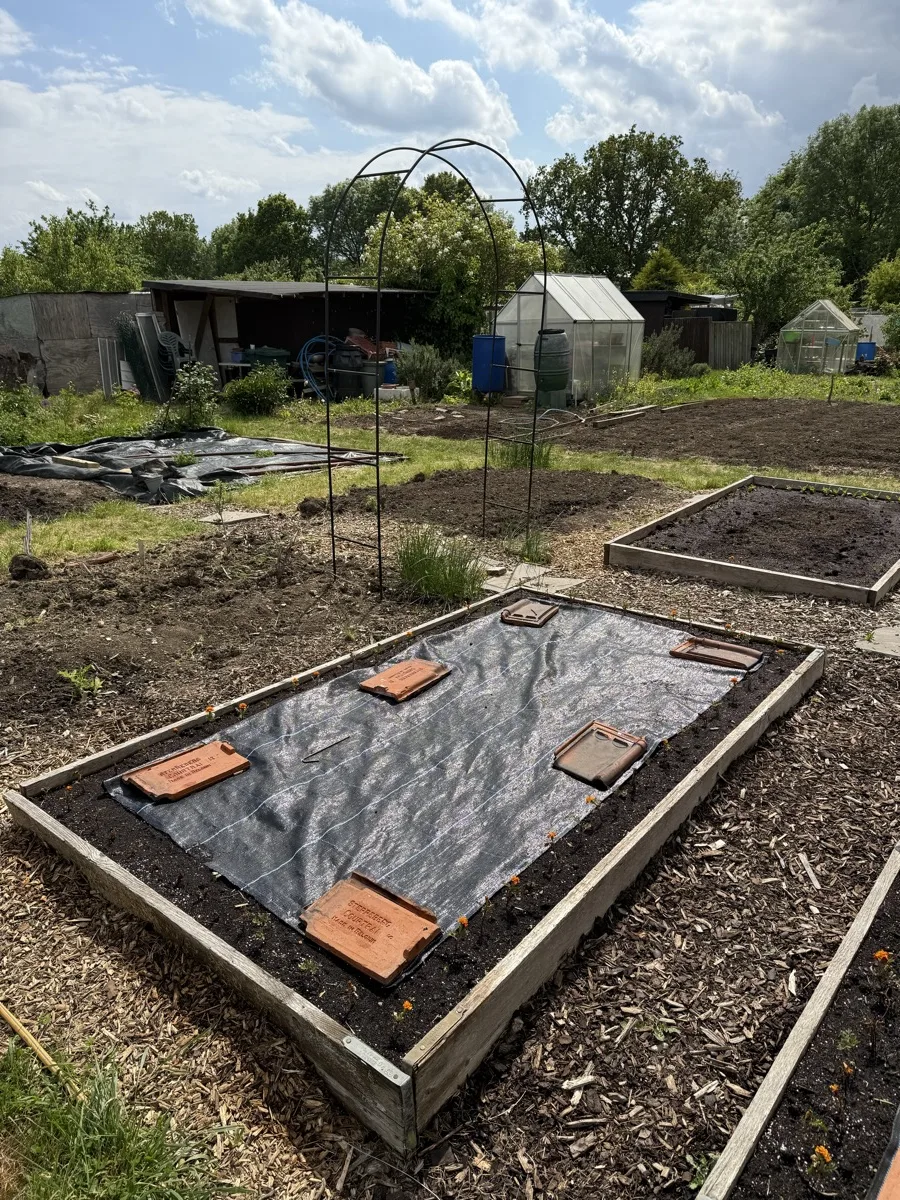
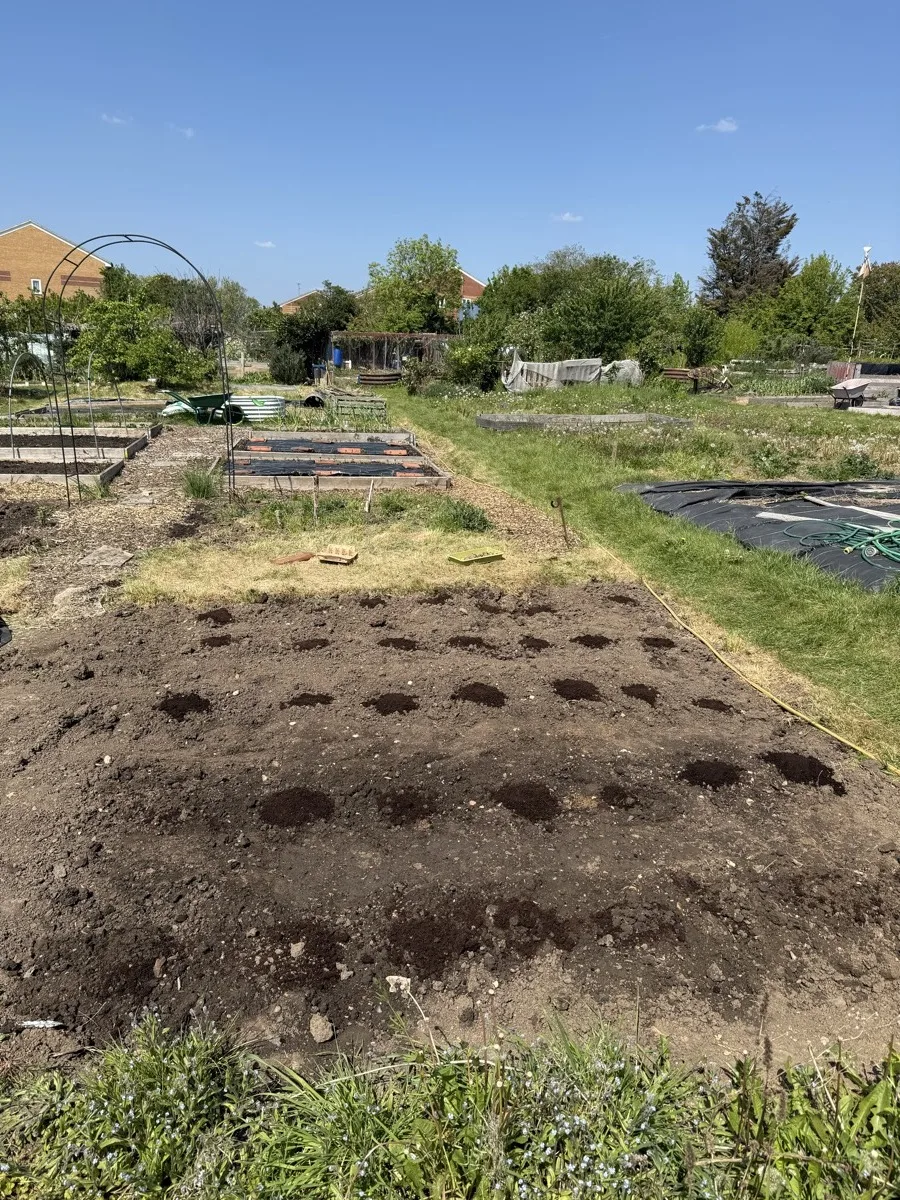
I use heavy-duty woven membrane held down at the edges with bricks. It also warms the soil slightly and holds moisture in — both useful in a UK spring that can turn cold without much warning.
Planting through membrane works well for big transplants — tomatoes, courgettes, squash. Cut an X, fold back the triangles, plant through.
What I used in this post
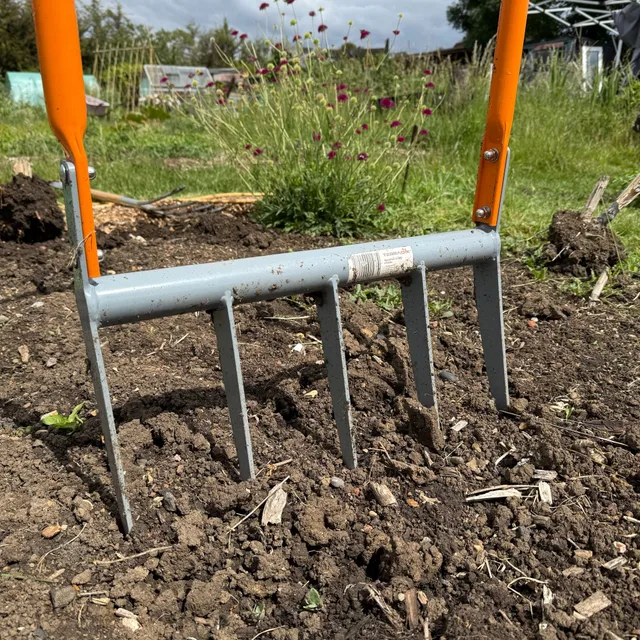
Terradix 5x300 broadfork
~£129A wide, beautifully made broadfork that breaks up heavy clay with your weight rather than your back. Not cheap, but a real pleasure — it's changed how I feel about digging.
The width is the joy — you cover far more with every lift.
Showa 370 gardening gloves
~£5My favourites — light, close-fitting and grippy, so you can still feel what you're doing. Cheap enough to own a few pairs.
Buy two pairs — one's always drying.
Galvanised ground pegs (50)
Galvanised pegs for pinning down weed membrane and netting so the wind doesn't take it. You always need more than you think.
Compare Galvanised ground pegs (50)Some links are affiliate links — we may earn a little, at no extra cost to you, towards the allotment shed.
Browse the kit we use →

Get personalised dates for your postcode
Every veg patch is different. Enter your postcode and we'll work out your frost date and tell you exactly what to sow right now.
Enter your postcode