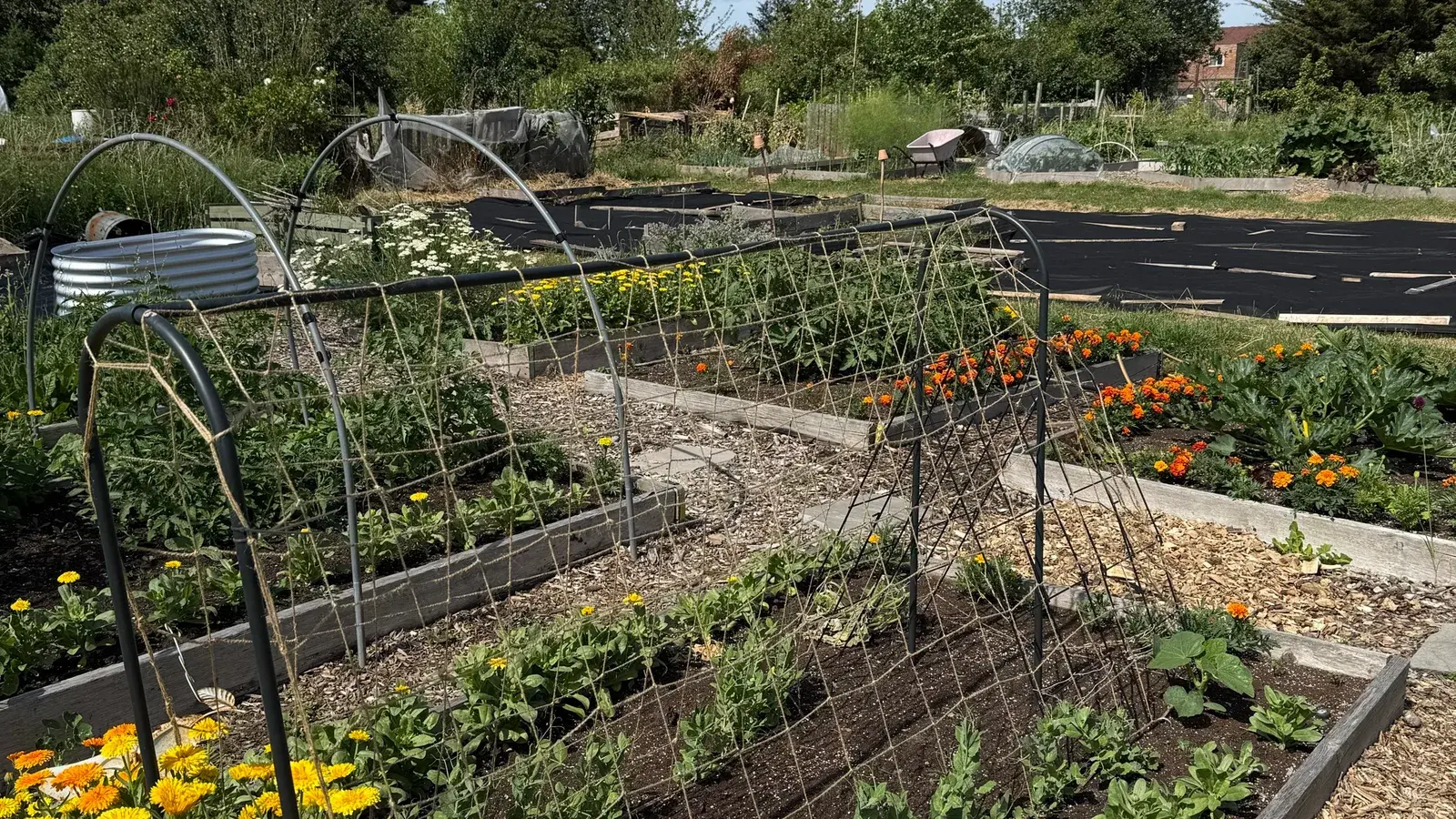
By the time the heat broke, my soil had set like a biscuit. You know the kind — a trowel bounces off it, and any hole you do manage crumbles in on itself in dust. Planting tender young plugs into that felt like a good way to lose them, and after the slugs had already had my sunflowers this year, I wasn't in the mood to lose anything else.
So the corn went in the way my potatoes did back in spring, and it's worked so well I'll be doing it this way from now on.
The bulb planter trick
It's very simple. I run my tape measure along the bed and use the bulb planter to pop out a neat hole at each mark — about 35 to 40 centimetres apart, in a block rather than a row, because sweetcorn is pollinated by the wind and wants neighbours on every side.
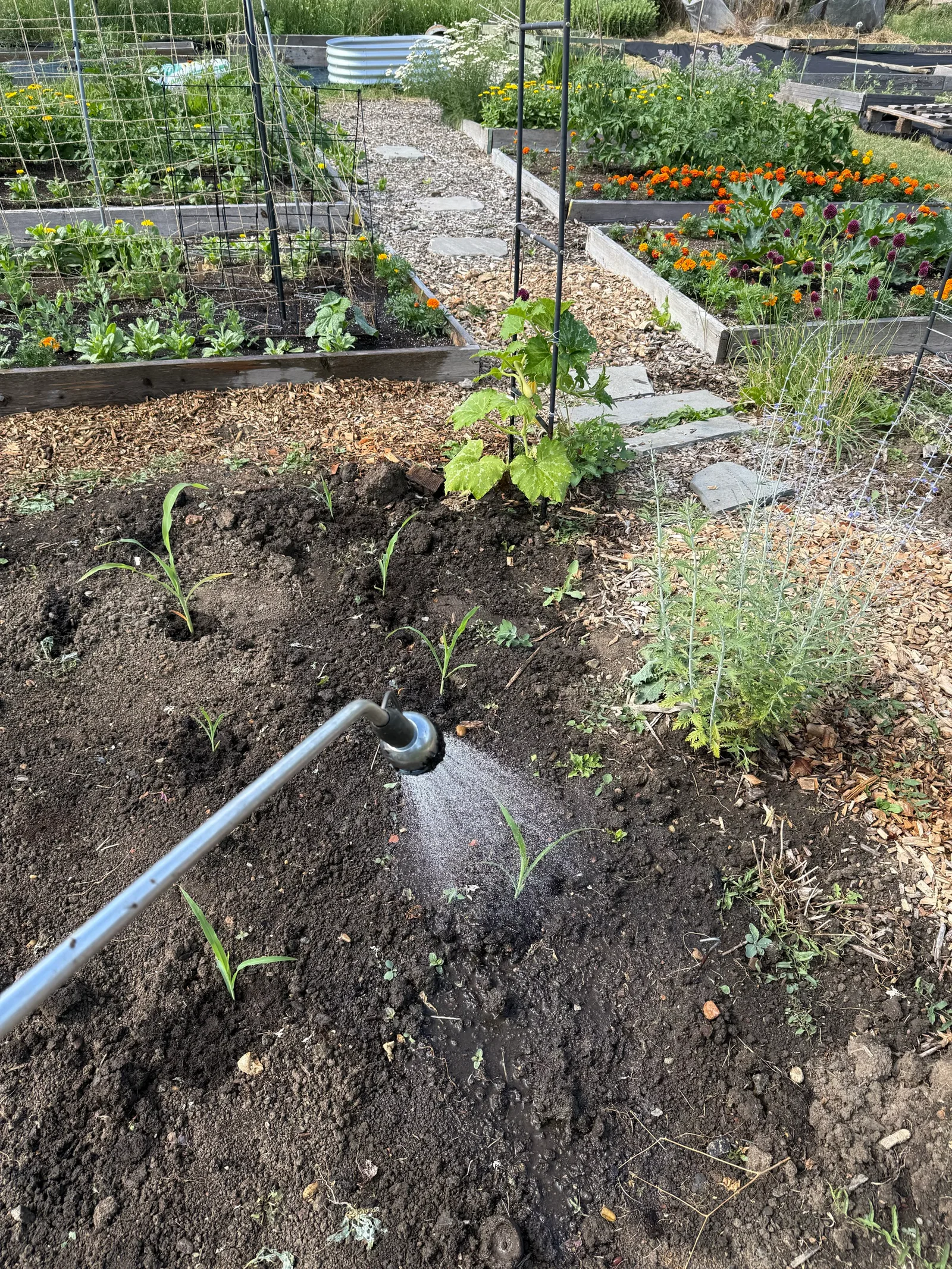
Then each hole gets filled with fresh compost, the corn plug goes into that, and everything gets watered in well. That's the whole method.
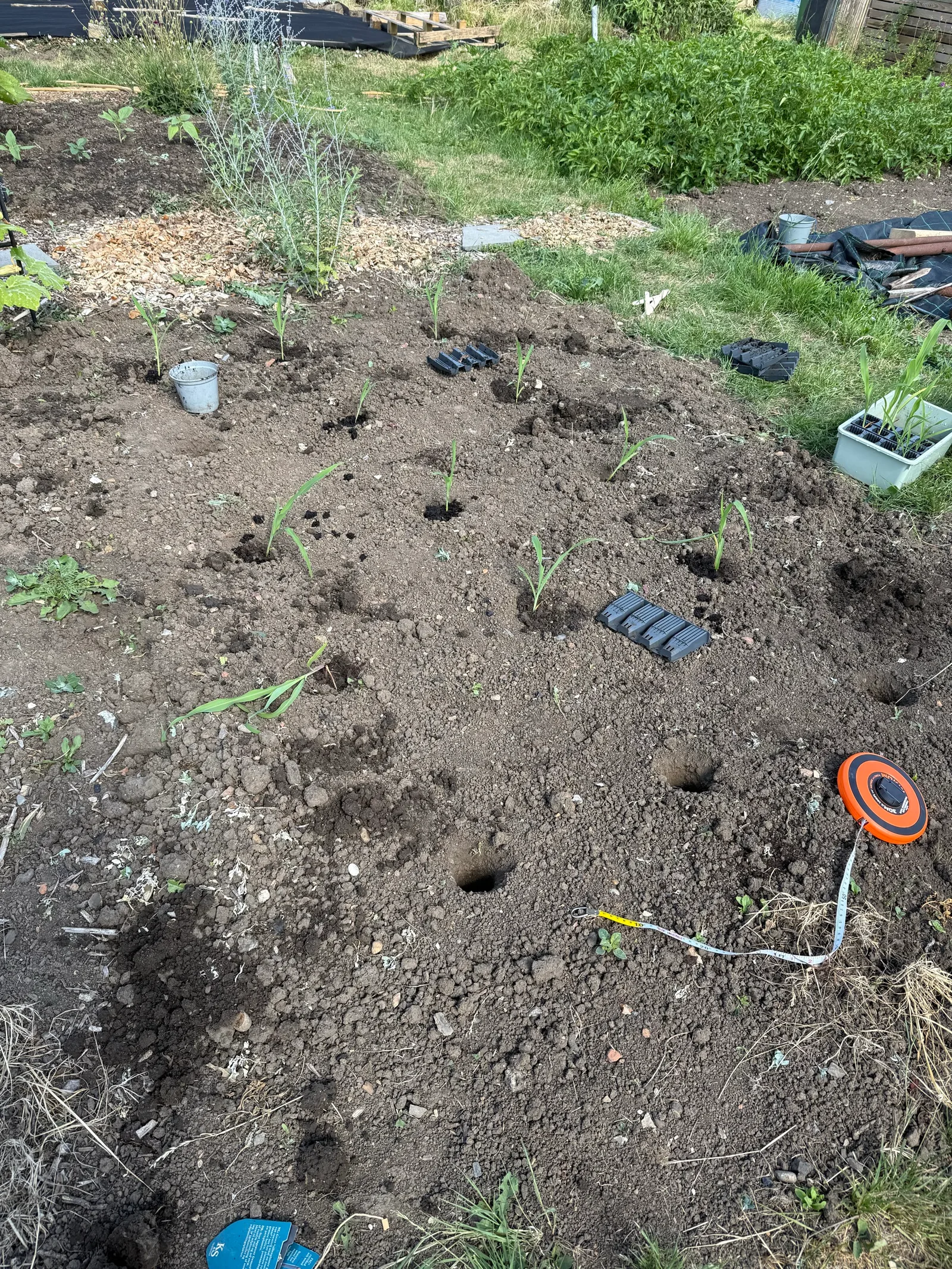
The reason it works: the roots start life in soft compost that actually holds water, instead of fighting soil that's set hard around them. The watering goes exactly where it's needed too — each compost pocket soaks it up like a sponge while the dry ground around it would just shrug it off. In a dry summer it's the difference between a plug that establishes and a plug that sulks.
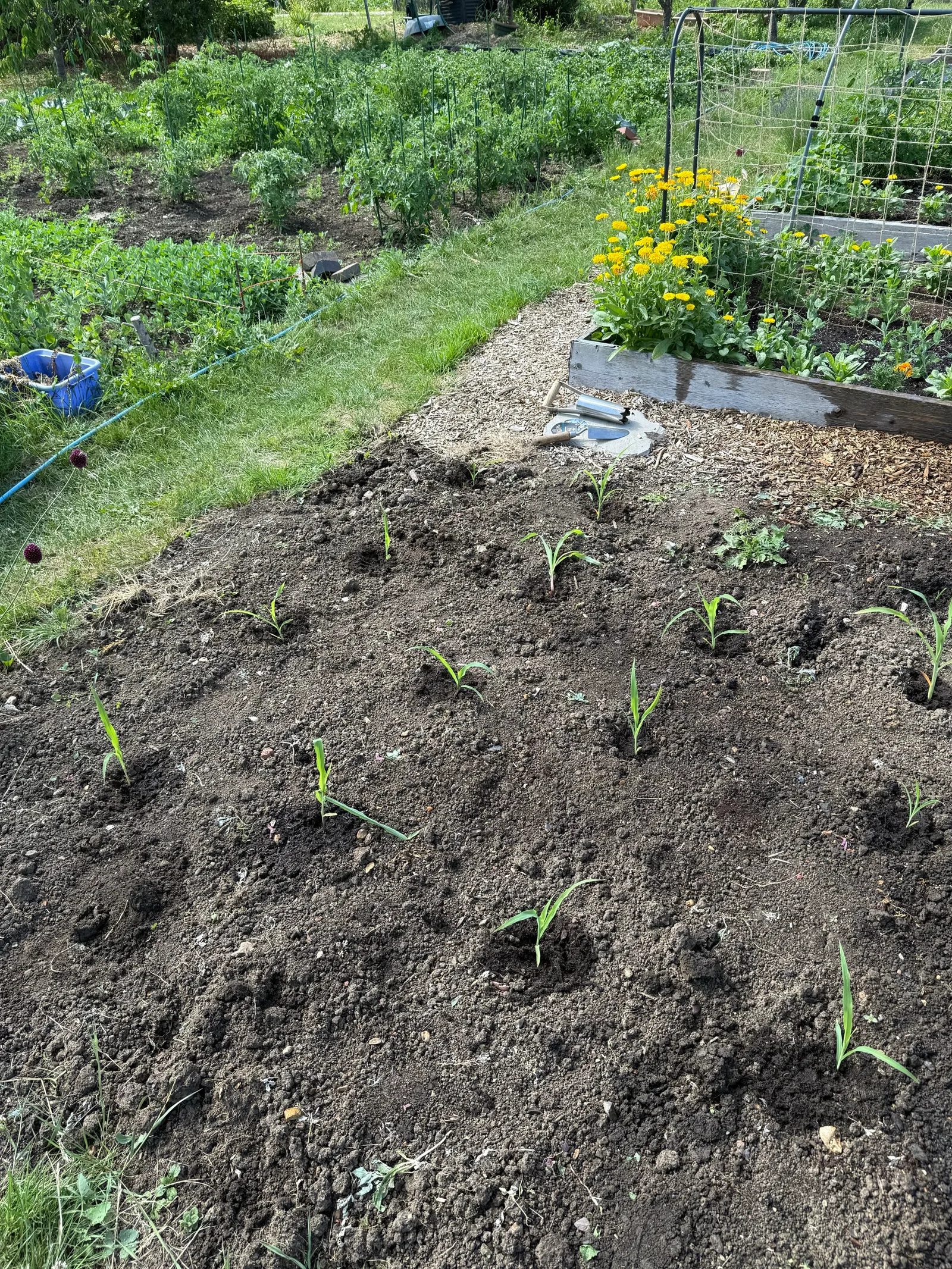
Sweetcorn always goes in a block, never a single row. The pollen falls from the tassels at the top onto the silks below, carried by the wind — in a block every plant catches its neighbours' pollen, and you get full cobs instead of gappy ones.
The same trick, underground
I planted my potatoes exactly this way earlier in the year — bulb planter, compost in the hole, seed potato into the compost. The difference is that potatoes disappear under the ridge, so you never get to see whether they're pleased about it.
The corn, you can watch. And just days after going in, it visibly perked up — greener, straighter, clearly happier than it had any right to be after sitting in plugs through a heatwave. There's something quietly wonderful about a plant telling you, in plain sight, that you did the right thing.
I won't pretend the timing isn't tight — corn planted this late is asking a lot of the back end of the season, and I'll need September to stay warm to see full cobs. But the plants are in, they're growing, and watching sweetcorn get taller by the week is one of the best shows on the plot. If the autumn is kind, we'll be eating cobs minutes after picking them — and if it isn't, the trick still earned its keep, and next year's corn goes in earlier. Into compost pockets, of course.
What I used in this post
Kent & Stowe stainless bulb planter
A sturdy stainless bulb planter with depth marks down the side — brilliant for popping in potatoes and bulbs at an even depth, even when the soil is firm.
The depth scale takes the guesswork out of spacing.
Gardena premium watering lance
A long watering lance that reaches the back of the bed and under the leaves, where the roots actually want it.
View on AmazonSome links are affiliate links — we may earn a little, at no extra cost to you, towards the allotment shed.
Browse the kit we use →

Get personalised dates for your postcode
Every veg patch is different. Enter your postcode and we'll work out your frost date and tell you exactly what to sow right now.
Enter your postcode