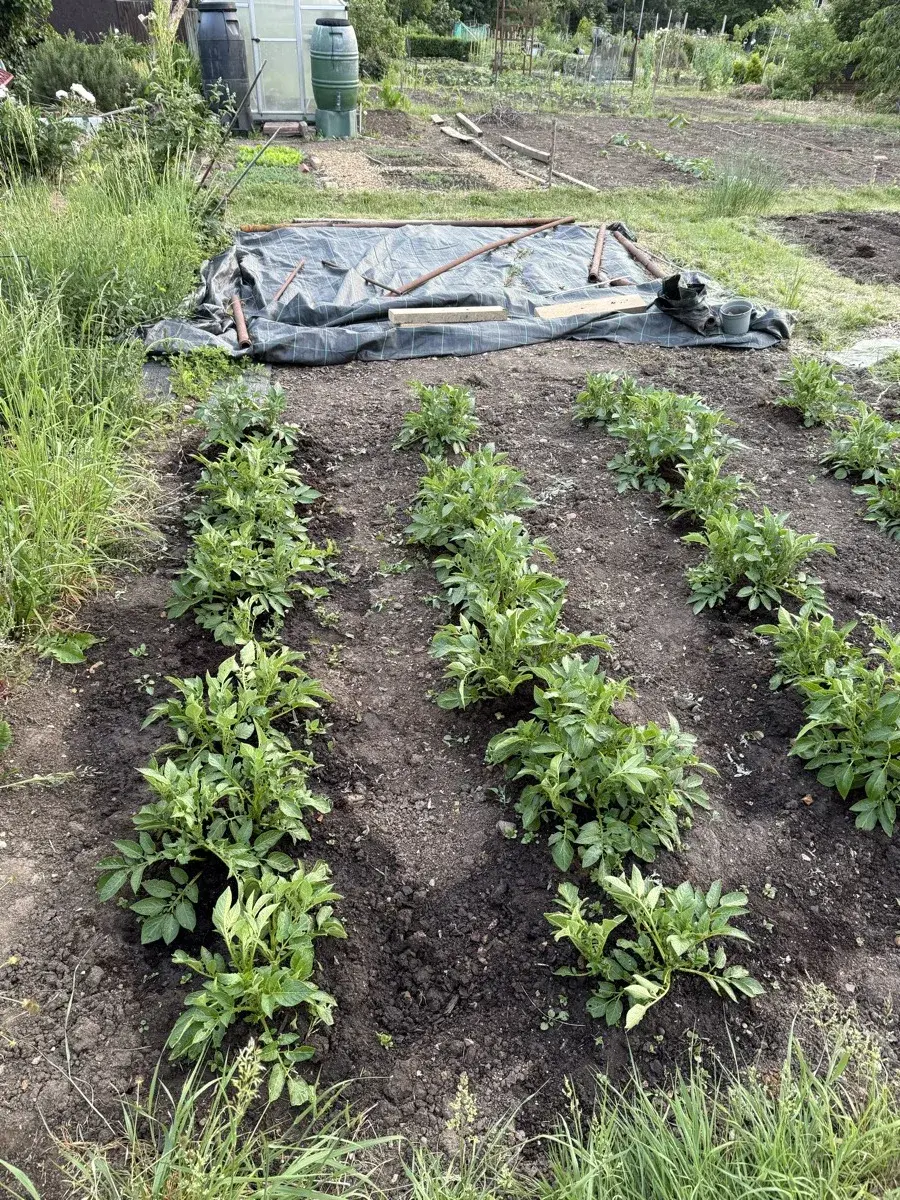
Digging over first
I dug the whole bed over with my big fork before anything went in. Potatoes need loose, well-worked soil — they need space to swell underground. I worked from one end, pushing the fork to its full depth, levering it forward, breaking up the clods as I went. This is also when I pulled out the bindweed roots. There were a lot of bindweed roots. There always are.
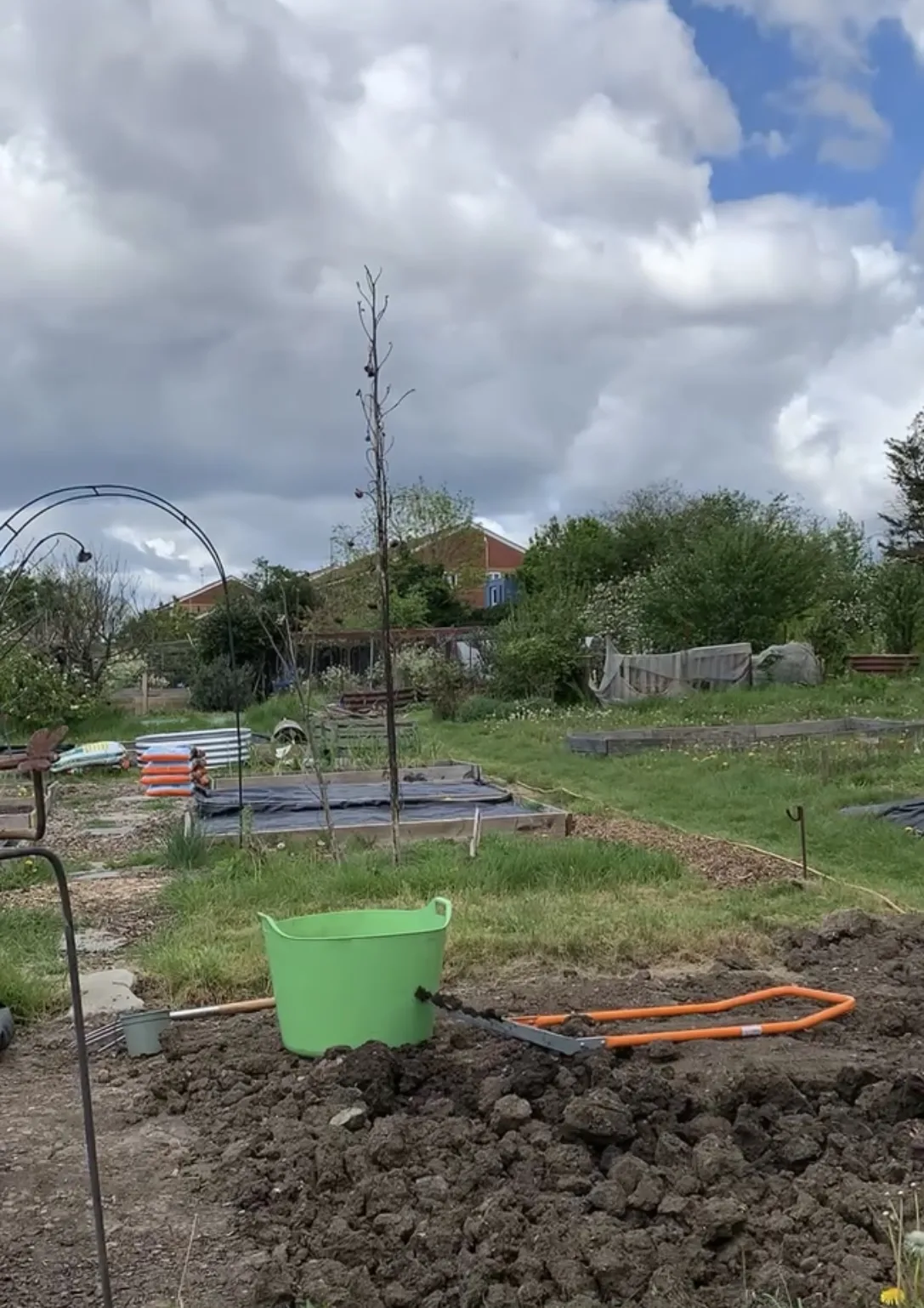
The bulb planter
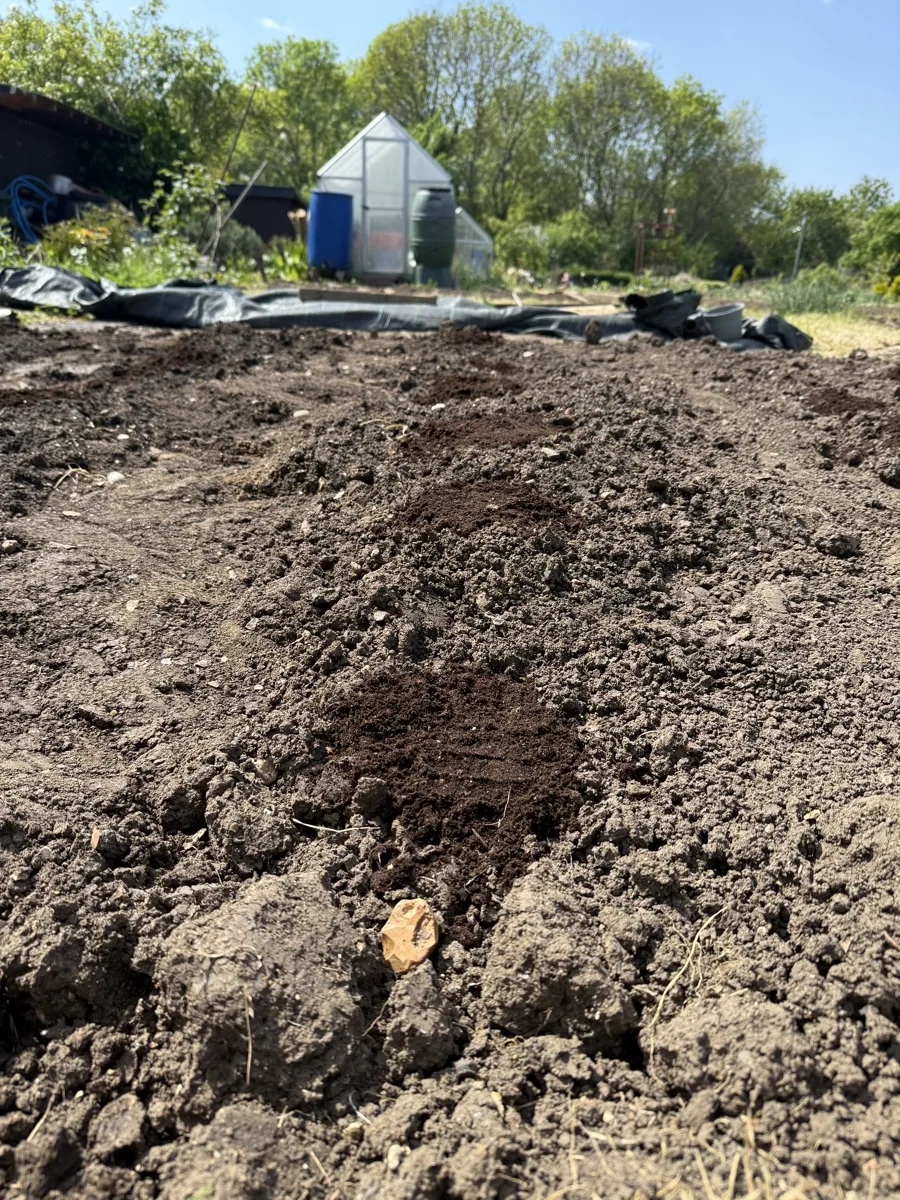
The bulb planter is what made this year different. You push it into the soil and pull it back out and it leaves a neat, consistent hole. I marked out a grid across the whole bed first — all the holes at once, evenly spaced — then went back along each row, popped a potato in each one, and covered over with compost. Much faster than a trowel. Everything ended up properly spaced rather than slightly guessed.
Space new potatoes about 30cm apart in rows 40–50cm apart. Mark your rows with canes first, then work along them with the planter.
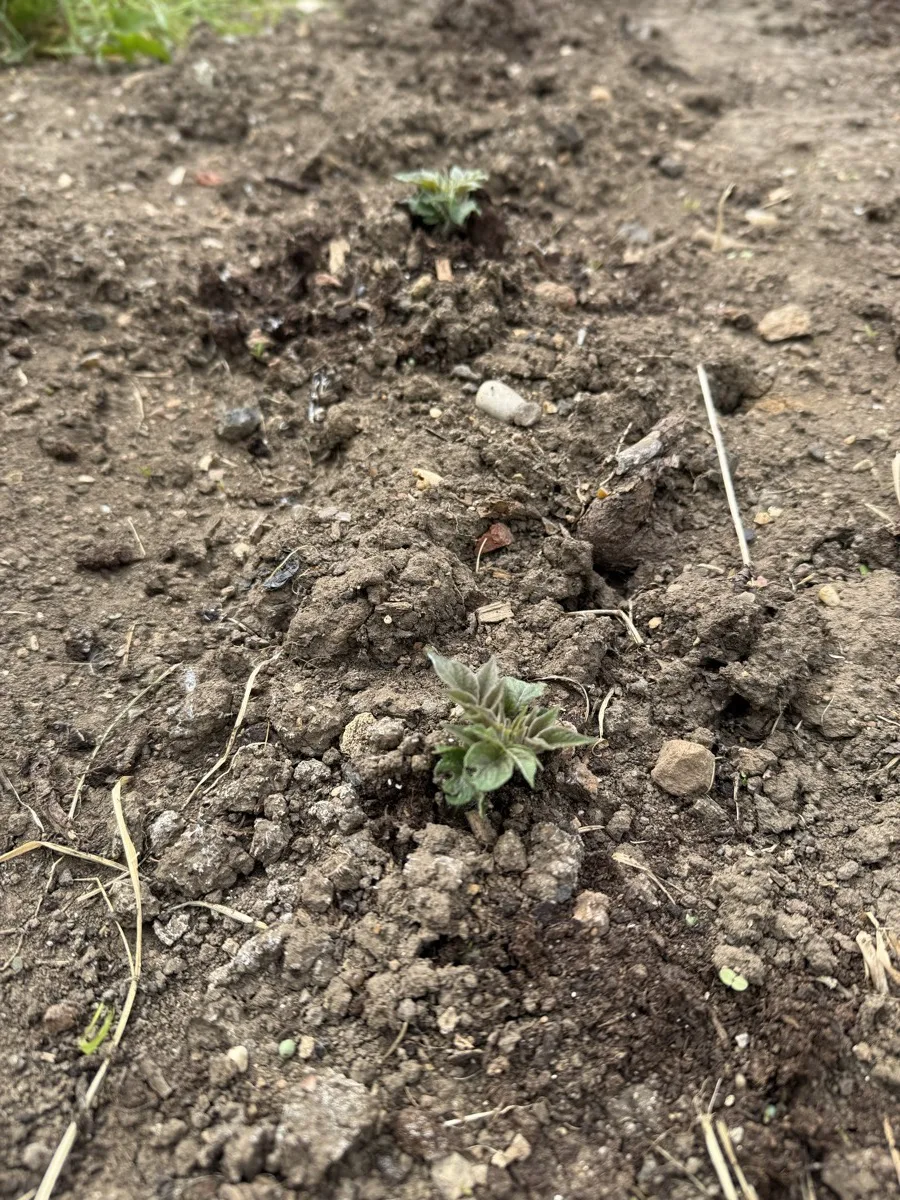
They popped up
The first shoots came through a couple of weeks later — tiny little things, easy to miss if you were not looking for them.
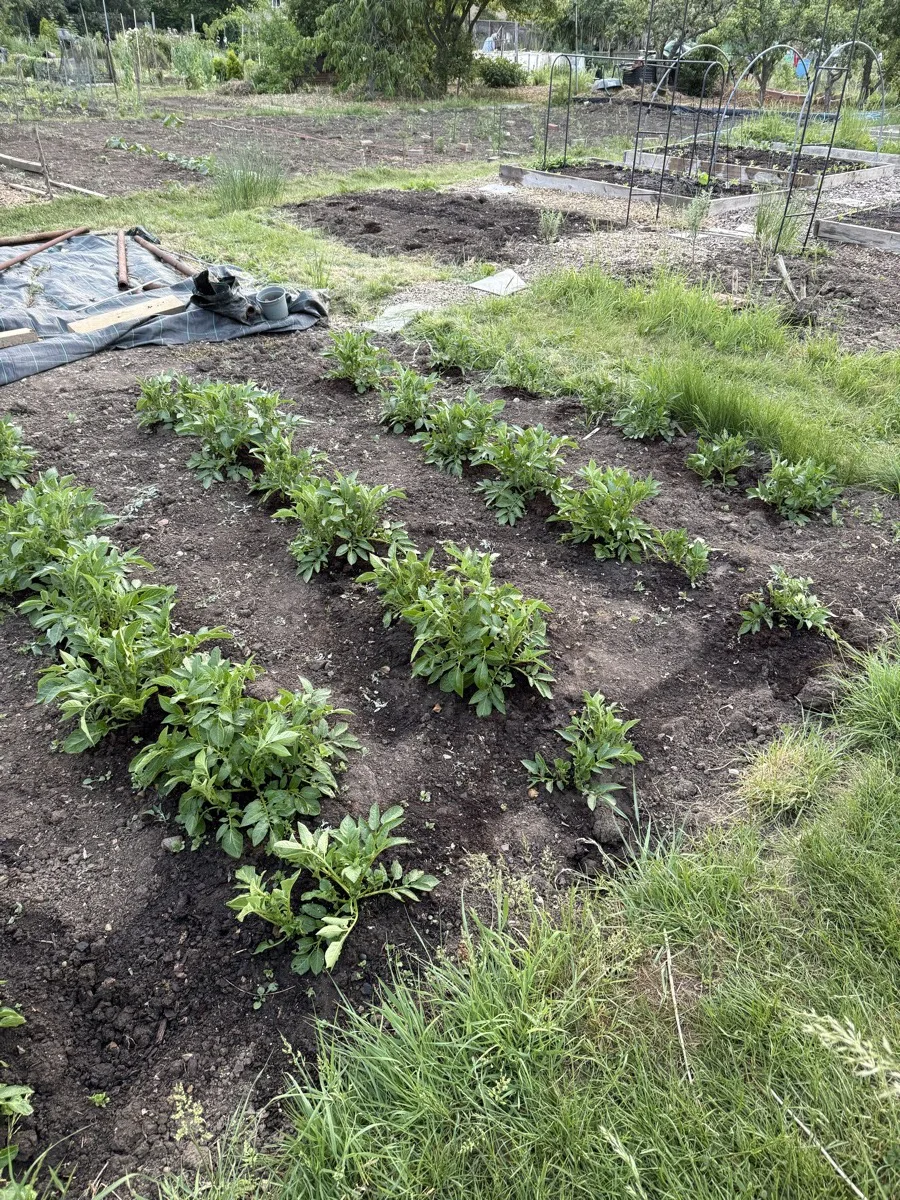
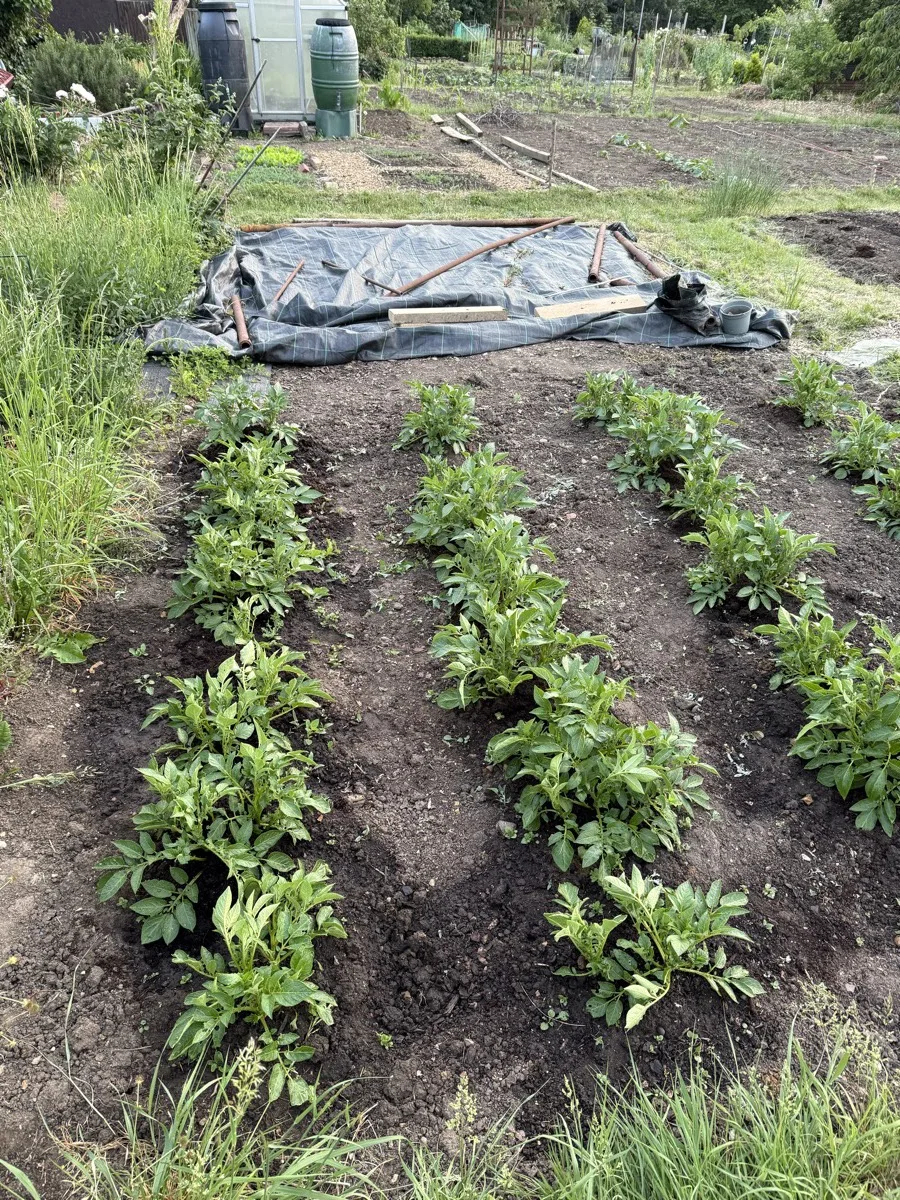
Once they were through, I covered them over with more compost — earthing up. It keeps the developing tubers out of the light (light turns them green and inedible) and gives the plant more stem underground to produce from. I have done this once. The plants have pushed back through and are now big and leafy and taking up proper space.
July
First earlies are ready roughly ten weeks after planting. The signal is flowers — once they start flowering, you can test by carefully digging down beside one plant and feeling for tubers. Egg-sized and they are ready.
New potatoes want to be small and waxy, boiled whole and eaten the same day. Still warm from the earth. I cannot wait for potato salad time.
Do not leave first earlies in the ground too long — they keep growing and lose the waxy texture. Harvest little and often once they reach egg-size.
What I used in this post
Kent & Stowe stainless bulb planter
A sturdy stainless bulb planter with depth marks down the side — brilliant for popping in potatoes and bulbs at an even depth, even when the soil is firm.
The depth scale takes the guesswork out of spacing.
Showa 370 gardening gloves
~£5My favourites — light, close-fitting and grippy, so you can still feel what you're doing. Cheap enough to own a few pairs.
Buy two pairs — one's always drying.
Thistlewood memory-foam kneeler
~£20A thick memory-foam kneeler that saves your knees through a long planting or weeding session. The pretty cover is a bonus.
View on AmazonSpear & Jackson carbon dibber
A proper carbon-steel dibber for making neat, even holes for seedlings and seeds. Solid in the hand and lovely to use.
View on AmazonWooden plant labels (100)
~£5Biodegradable wooden labels — write the variety in pencil and you'll actually remember what's what come spring.
View on AmazonSome links are affiliate links — we may earn a little, at no extra cost to you, towards the allotment shed.
Browse the kit we use →
Get personalised dates for your postcode
Every veg patch is different. Enter your postcode and we'll work out your frost date and tell you exactly what to sow right now.
Enter your postcode